Introduction to 3kW Tube laser cutter Technology
The industrial landscape of Queretaro has seen a significant transformation over the last decade, evolving into one of Mexico’s premier hubs for advanced manufacturing. At the heart of this evolution is the implementation of high-precision fiber laser technology. The 3kW tube laser cutter represents a critical equilibrium between power, precision, and operational cost, particularly when processing non-ferrous metals. For engineering firms in the Bajío region, mastering the nuances of this machinery is essential for maintaining a competitive edge in the automotive, aerospace, and electrical sectors.
laser cutting technology has moved beyond simple flat-sheet processing. The ability to handle complex tube geometries—including round, square, rectangular, and oval profiles—with a single setup has revolutionized production workflows. A 3kW fiber source provides the necessary energy density to penetrate reflective materials while maintaining a narrow kerf width, ensuring that tight tolerances required by international standards are consistently met.
The Specific Challenges of Processing Brass
Brass, an alloy of copper and zinc, is prized in Queretaro’s industrial sectors for its conductivity, corrosion resistance, and aesthetic appeal. However, from a laser cutting perspective, brass is classified as a “highly reflective” material. In the early days of CO2 lasers, cutting brass was notoriously difficult and dangerous for the equipment, as the beam would reflect back into the resonator, causing catastrophic failure.
The advent of fiber laser technology, operating at a wavelength of approximately 1.06 microns, changed the paradigm. Fiber lasers are absorbed much more efficiently by yellow metals. A 3kW power rating is particularly effective for brass because it provides enough “punch” to overcome the material’s initial reflectivity and high thermal conductivity. When the laser hits the brass surface, the 3kW intensity quickly melts the point of contact, transitioning the material into a state where it absorbs the beam even more readily.
Overcoming Back-Reflection
Modern 3kW tube laser cutters designed for the Queretaro market are equipped with sophisticated back-reflection isolation systems. These optical “one-way streets” protect the fiber source from any stray light that might bounce off the shiny brass surface. This is critical for maintaining the longevity of the machine and ensuring uninterrupted production cycles in high-volume environments like the El Marqués or Balvanera industrial parks.
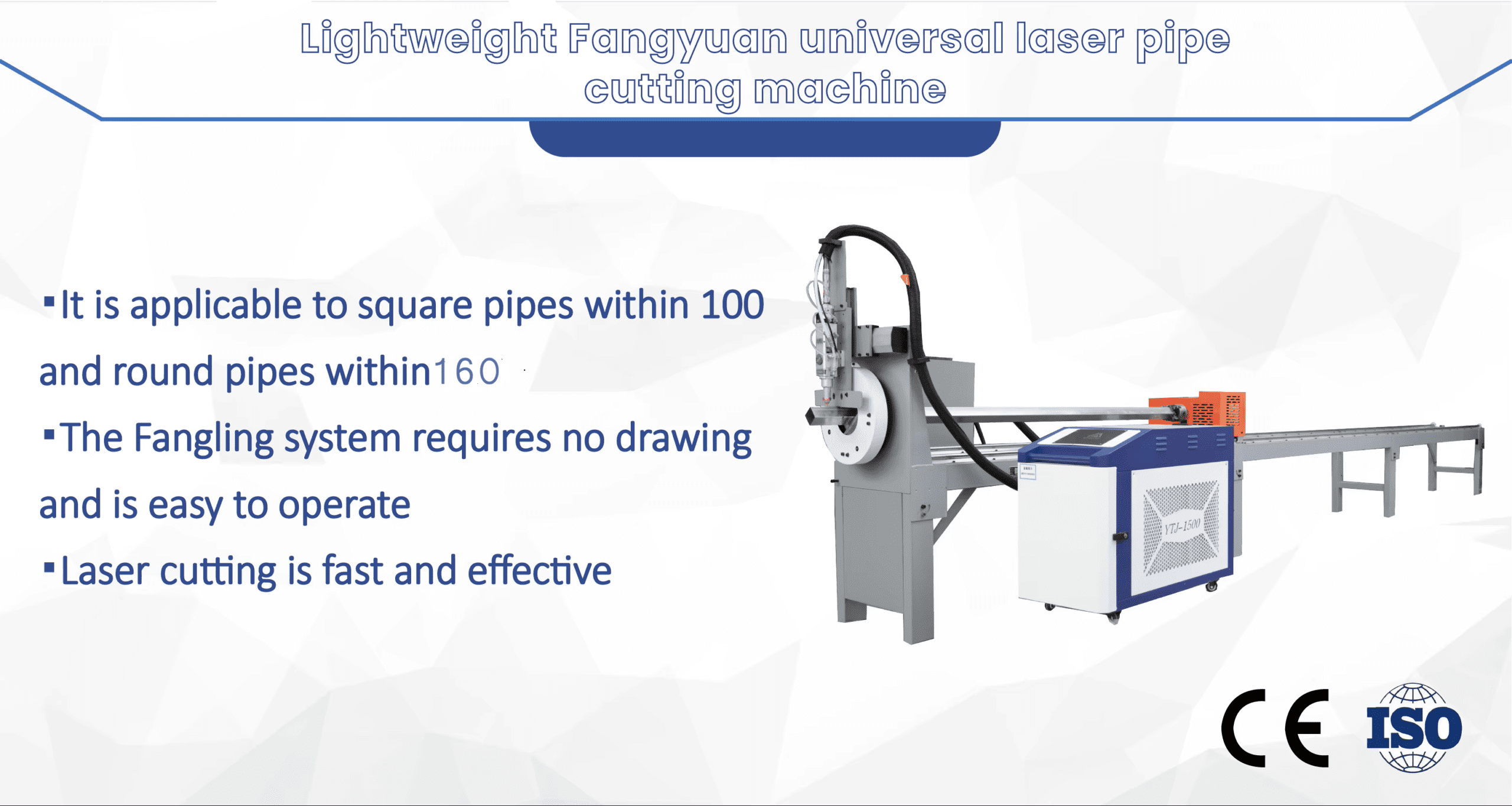
Technical Specifications of the 3kW Tube Laser Cutter
When evaluating a 3kW system for brass tube processing, several technical parameters must be scrutinized. The machine is not merely a laser source; it is a complex integration of motion control, optics, and material handling.
The Fiber Laser Source
The 3kW source is typically a multi-module fiber laser. This power level allows for high-speed cutting of brass tubes with wall thicknesses up to 6mm or 8mm, depending on the alloy composition. For thinner walls (1mm – 3mm), the 3kW system offers exceptionally high feed rates, which reduces the heat-affected zone (HAZ) and prevents the distortion of the tube’s structural integrity.
Rotary Axis and Chuck System
In tube laser cutting, the precision of the rotary axis is just as important as the laser itself. High-end machines feature pneumatic or hydraulic four-claw chucks that provide self-centering capabilities. For the diverse manufacturing requirements in Queretaro, these chucks must handle a variety of diameters—often ranging from 20mm to 220mm. The synchronization between the longitudinal movement of the gantry and the rotation of the tube allows for complex intersections and “fish-mouth” cuts that are essential for frame manufacturing and decorative architectural brass work.
Optimizing Laser Cutting Parameters for Brass
To achieve a burr-free finish on brass tubes, operators must fine-tune several variables. Unlike carbon steel, which often uses oxygen as an assist gas to create an exothermic reaction, brass is typically processed using high-pressure nitrogen or compressed air.
Assist Gas Selection
Nitrogen is the preferred assist gas for high-quality brass laser cutting. It acts as a mechanical force to blow the molten metal out of the kerf while preventing oxidation. This results in a clean, bright edge that often requires no post-processing—a major advantage for Queretaro-based shops looking to reduce labor costs. The 3kW power allows for the use of higher nitrogen pressures, ensuring that even at high speeds, the dross (slag) is effectively removed from the interior of the tube.
Focal Point Management
Brass requires a very stable focal point. Because the material dissipates heat rapidly, the laser must maintain a consistent energy density. Modern 3kW heads feature auto-focusing capabilities that adjust the lens position in real-time based on the material thickness and the specific alloy’s feedback. This is particularly important when cutting square brass tubes, where the thickness can vary slightly at the corners.

The Queretaro Industrial Context: Why 3kW?
Queretaro has positioned itself as a leader in the Mexican “Bajío” region by attracting Tier 1 and Tier 2 suppliers for the global automotive and aerospace industries. These sectors demand components that are not only precise but also produced with high repeatability.
Automotive and Electrical Applications
In the automotive sector, brass tubes are often used for fluid handling systems, bushings, and decorative interior trim. The 3kW tube laser cutter allows manufacturers to move from traditional sawing and drilling—which are slow and prone to error—to a fully automated “one-hit” process. Similarly, the electrical industry in Queretaro utilizes brass for high-conductivity busbars and connectors. The ability to perform complex laser cutting on these components ensures optimal fitment and electrical performance.
Economic Efficiency and ROI
While a 6kW or 12kW machine might offer faster speeds for thick materials, the 3kW system is often the “sweet spot” for Return on Investment (ROI) in Queretaro. The initial capital expenditure is significantly lower than ultra-high-power machines, and the electrical consumption is more manageable. For shops that primarily handle brass tubes under 6mm, the 3kW provides more than enough throughput to meet demanding production schedules without the excessive overhead of higher-wattage units.
Software Integration and Nesting
A 3kW tube laser cutter is only as efficient as the software driving it. In professional engineering environments, integration with CAD/CAM systems is mandatory. Software like Lantek or SigmaTube allows engineers to import 3D models and automatically generate the most efficient nesting patterns.
For brass, which is a more expensive raw material than mild steel, nesting optimization is vital. High-precision laser cutting software can minimize the “dead zone” at the ends of the tubes (the material held by the chucks), potentially saving thousands of dollars in material waste over a single production year. Furthermore, the software can manage “common line cutting,” where two parts share a single cut line, further increasing speed and reducing gas consumption.
Maintenance Protocols for High-Performance Cutting
To maintain the precision of laser cutting in the dusty or humid environments sometimes found in industrial zones, a strict maintenance schedule is required. Fiber lasers are generally low-maintenance compared to CO2 lasers, but they are not “maintenance-free.”
Optical Cleanliness
The protective window of the laser head is the most critical consumable. Even a tiny speck of brass dust can absorb laser energy, heat up, and shatter the lens. Operators in Queretaro must be trained to inspect and clean the optics in a “clean-room” style environment to ensure the 3kW beam remains undistorted.
Cooling Systems
A 3kW laser generates significant heat within the resonator and the cutting head. A dual-circuit water chiller is essential. One circuit cools the fiber source, while the other cools the optical head. In the temperate climate of Queretaro, maintaining the chiller’s coolant at a precise temperature (usually around 22-25°C) prevents thermal expansion of the components, which could otherwise lead to a drift in cutting accuracy.
Safety Considerations in Fiber Laser Operations
The 1.06-micron wavelength of a fiber laser is invisible to the human eye but can cause permanent retinal damage instantaneously. When laser cutting brass, the risk is slightly elevated due to the potential for beam reflection.
Professional 3kW tube laser cutters must be fully enclosed (Class 4 safety rating) with laser-rated glass observation windows. In Queretaro, compliance with international safety standards (such as CE or FDA) is not just a legal requirement but a necessity for protecting the skilled workforce. Safety interlocks on all doors and emergency stop buttons at multiple stations ensure that the high-power beam is only active under controlled conditions.
Conclusion: The Future of Brass Fabrication in Queretaro
The integration of 3kW tube laser cutter technology is a defining factor for the future of metal fabrication in Queretaro. As industries continue to demand lighter, stronger, and more complex components, the versatility of the fiber laser becomes indispensable. By understanding the specific requirements of brass—from its reflective properties to its thermal characteristics—local manufacturers can leverage 3kW systems to produce world-class products.
Investing in this technology is not merely about purchasing a machine; it is about adopting a more precise, efficient, and scalable approach to manufacturing. For the engineering community in Queretaro, the 3kW tube laser represents the perfect tool to bridge the gap between traditional craftsmanship and the requirements of Industry 4.0. Through careful parameter optimization, robust maintenance, and smart software integration, the potential for laser cutting in the region is virtually limitless.













