Introduction to 1.5kW Fiber Laser Technology
In the rapidly evolving landscape of industrial manufacturing, the 1.5kW fiber laser has emerged as a cornerstone for precision sheet metal fabrication. This power level represents a strategic equilibrium between operational efficiency and capital investment, particularly for shops focusing on thin to medium-gauge materials. In the context of modern engineering, laser cutting has transitioned from a specialized luxury to a fundamental necessity for maintaining competitive throughput and dimensional accuracy.
The 1.5kW fiber laser utilizes an optical fiber doped with rare-earth elements as its gain medium. Unlike traditional CO2 lasers, fiber technology offers superior beam quality, higher electrical efficiency, and significantly lower maintenance requirements. For manufacturers dealing with stainless steel, these attributes are critical. The wavelength of a fiber laser—typically around 1.06 microns—is absorbed more efficiently by metals, allowing for faster processing speeds and cleaner edges compared to older technologies.
The Industrial Landscape of Queretaro
Queretaro has solidified its position as Mexico’s premier industrial hub, specifically within the aerospace, automotive, and appliance sectors. The region’s infrastructure, centered around industrial parks like El Marqués, Querétaro Park, and the Aerotech Industrial Park, demands high-tier manufacturing capabilities. For local fabricators, the ability to process stainless steel with high precision is not just an advantage; it is a requirement to enter the supply chains of global Tier 1 and Tier 2 suppliers.
The demand for stainless steel components in Queretaro is driven by the need for corrosion resistance and structural integrity in harsh environments. Whether it is exhaust systems for the automotive industry or specialized brackets for aerospace interiors, the 1.5kW laser cutting system provides the versatility needed to handle the diverse alloy grades commonly used in the region, such as 304, 316, and 430 stainless steel.
 laser cutting machine” style=”max-width: 100%; height: auto; margin: 20px 0;”>
Technical Specifications and Stainless Steel Performance
When evaluating a 1.5kW system for stainless steel, engineers must look beyond the raw power. The system’s ability to maintain a stable beam profile is paramount. For stainless steel, a 1.5kW laser typically excels in thicknesses ranging from 0.5mm to 6mm. While it can push beyond these limits, the “sweet spot” for high-speed, burr-free laser cutting lies within this range.
One of the primary challenges in cutting stainless steel is managing the Heat Affected Zone (HAZ). Stainless steel has lower thermal conductivity and a higher thermal expansion coefficient than carbon steel. This means that excessive heat input can lead to warping or discoloration. The high energy density of a 1.5kW fiber laser allows for extremely high feed rates, which minimizes the time the beam spends on any single point, thereby reducing the HAZ and preserving the material’s mechanical properties and aesthetic finish.
The Importance of Assist Gases
In the laser cutting of stainless steel, the choice of assist gas is as critical as the laser power itself. For most high-quality applications in Queretaro’s industrial sectors, Nitrogen is the preferred choice. Nitrogen acts as a shielding gas, blowing away the molten metal before it can react with atmospheric oxygen. This results in a clean, oxide-free edge that is ready for welding or painting without the need for secondary cleaning processes.
While Oxygen can be used to increase cutting speeds in thicker sections of stainless steel by creating an exothermic reaction, it leaves a dark oxide layer on the cut edge. For the precision-heavy industries of Queretaro, where part aesthetics and weldability are non-negotiable, high-pressure Nitrogen systems integrated with the 1.5kW laser are the standard configuration.
Optimizing Parameters for Precision
Achieving the perfect cut requires a meticulous balance of several parameters: nozzle diameter, standoff distance, focal position, and gas pressure. For a 1.5kW system, the focal point is usually set slightly below the surface of the stainless steel sheet to ensure a wider kerf that facilitates the removal of molten material by the assist gas.
Modern CNC controllers used in these machines allow for “Fly-Cutting” and “Fast-Piercing” technologies. Fly-cutting allows the laser head to move in a continuous motion across a grid of holes without stopping, significantly reducing cycle times. For Queretaro-based shops looking to maximize their ROI, these software-driven optimizations are essential for high-volume production runs of stainless steel components.
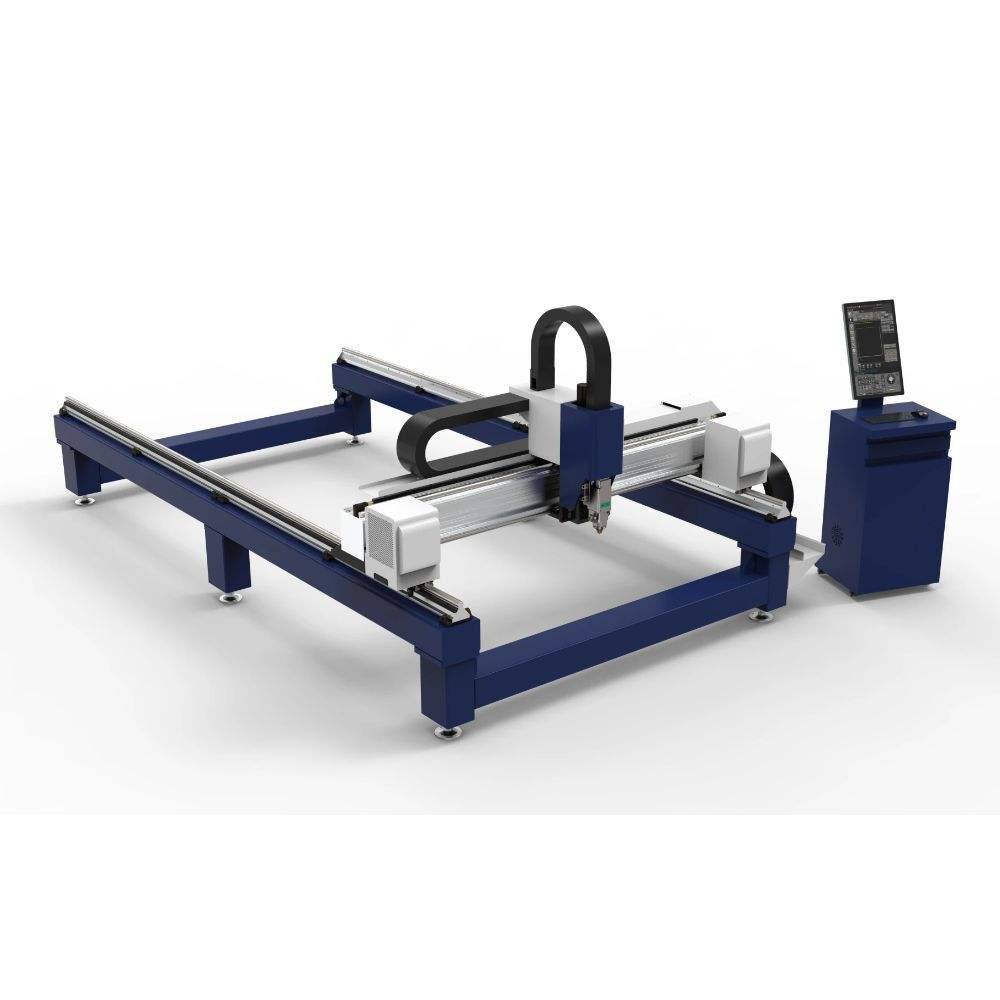
Maintenance and Longevity in High-Production Environments
The industrial environment in Queretaro can be demanding, with high ambient temperatures and consistent production schedules. A 1.5kW fiber laser is designed for 24/7 operation, but its longevity depends on a rigorous maintenance schedule. Unlike CO2 lasers, there are no mirrors to align or gas tubes to refill. However, the external optics, specifically the protective window (cover glass), must be inspected daily.
Contamination of the protective window by dust or metal splatter can cause the laser beam to defocus or, in extreme cases, damage the cutting head. Furthermore, the chiller system—responsible for maintaining the temperature of the laser source and the cutting head—must be kept in peak condition. In Queretaro’s climate, ensuring the chiller is properly sized and the coolant is free of contaminants is vital to prevent thermal drifting of the laser frequency.
Integration into the Smart Factory (Industry 4.0)
As Queretaro moves toward Industry 4.0, 1.5kW laser cutting machines are increasingly being integrated into networked environments. This allows for real-time monitoring of machine status, gas consumption, and power usage. For a manufacturing manager in a Queretaro industrial park, having access to data-driven insights means they can predict maintenance needs before a failure occurs, ensuring that production deadlines for critical stainless steel parts are always met.
Nesting software also plays a pivotal role. Advanced algorithms can optimize the layout of parts on a stainless steel sheet to minimize scrap. Given the high cost of stainless steel alloys compared to mild steel, even a 5% improvement in material utilization can result in significant annual savings, directly impacting the bottom line of the fabrication shop.
Economic Impact and Competitive Advantage
Investing in a 1.5kW sheet metal laser offers a strategic advantage for small to medium-sized enterprises (SMEs) in Queretaro. While 3kW or 6kW machines offer higher speeds on thicker plates, the 1.5kW machine is significantly more affordable in terms of both initial investment and operational costs (electricity and consumables). For the majority of sheet metal work—which typically falls under 5mm—the 1.5kW system provides nearly identical results to higher-powered machines at a fraction of the cost.
Furthermore, the compact footprint of many 1.5kW models makes them ideal for shops where floor space is at a premium. By bringing laser cutting capabilities in-house, Queretaro manufacturers can reduce lead times, eliminate the markups of outsourcing, and maintain tighter control over the quality of their stainless steel products.
Conclusion: The Future of Fabrication in Queretaro
The 1.5kW sheet metal laser is more than just a tool; it is a catalyst for industrial growth in regions like Queretaro. Its ability to process stainless steel with extreme precision, coupled with the efficiency of fiber technology, makes it an indispensable asset for any modern machine shop. As the aerospace and automotive sectors continue to expand in central Mexico, the reliance on high-quality laser cutting will only intensify.
For engineers and business owners, the decision to implement 1.5kW fiber technology is a step toward future-proofing their operations. By mastering the technical nuances of stainless steel processing—from gas selection to parameter optimization—manufacturers in Queretaro can continue to compete on a global stage, delivering world-class components that meet the most stringent engineering standards.













