
Introduction to 2kW Fiber laser cutting Technology
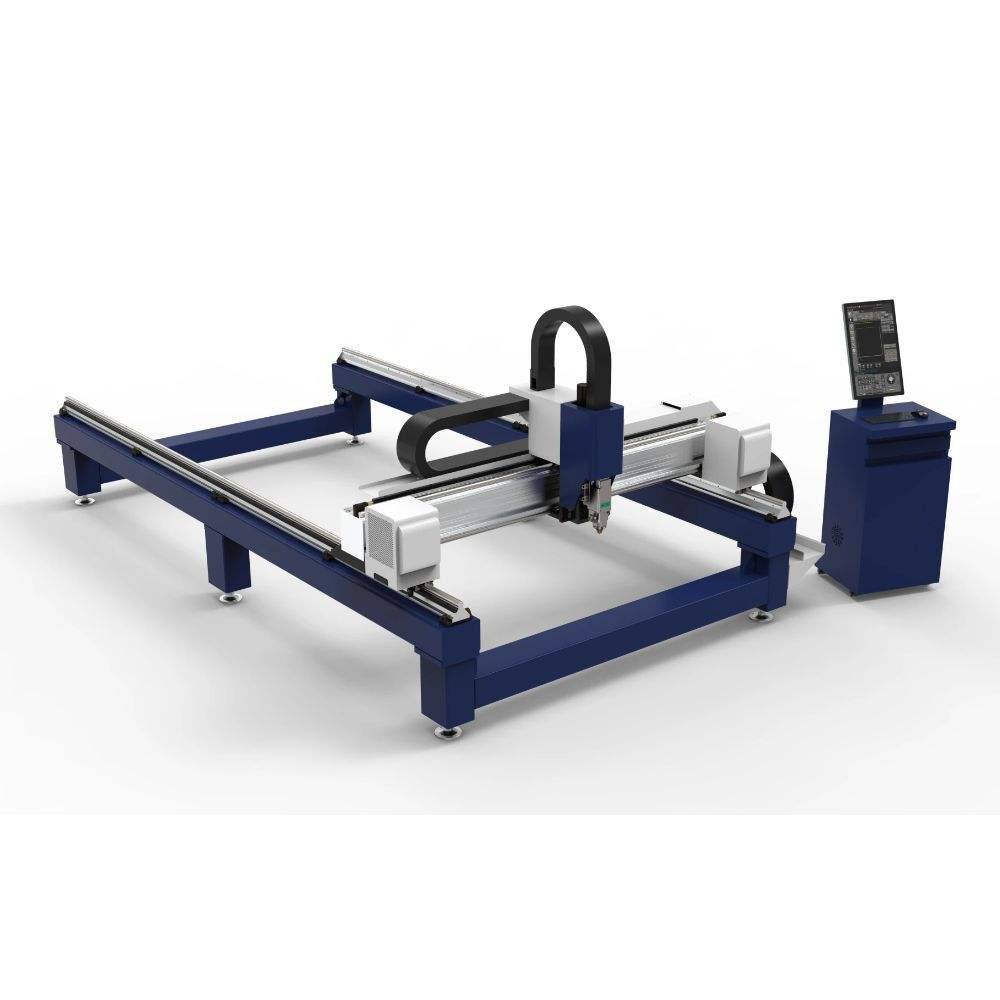
The advent of fiber laser technology has revolutionized the metal fabrication industry, particularly for high-precision applications involving non-ferrous metals. A 2kW fiber laser cutting machine represents a critical middle-ground in industrial power scaling, offering a perfect balance between capital investment and operational throughput. For manufacturers in Leon, an area increasingly defined by its growing industrial sophistication in automotive and architectural sectors, the integration of 2kW laser cutting systems has become a prerequisite for remaining competitive in a globalized market.
Unlike traditional CO2 lasers, fiber lasers utilize a solid-state gain medium, typically an optical fiber doped with rare-earth elements such as ytterbium. The resulting beam has a wavelength of approximately 1.06 microns, which is significantly more readily absorbed by metals—especially reflective ones like aluminum—compared to the 10.6-micron wavelength of CO2 lasers. This increased absorption rate allows a 2kW fiber laser to perform tasks that would previously have required a much higher-wattage gas laser, all while maintaining a smaller footprint and lower energy consumption.
The Industrial Landscape of Leon and Aluminum Demand
Leon has established itself as a strategic hub for metallurgical excellence. Whether considering the automotive supply chains or the specialized construction sectors, the demand for processed aluminum alloy components is at an all-time high. Aluminum is favored for its strength-to-weight ratio, corrosion resistance, and recyclability. However, its physical properties—specifically its high thermal conductivity and high reflectivity—present unique challenges during the laser cutting process. A 2kW fiber laser cutting machine is specifically engineered to overcome these hurdles, providing the power density required to pierce the material quickly before the heat can dissipate into the surrounding plate.

Technical Specifications and Performance Metrics
When evaluating a 2kW fiber laser cutting machine for aluminum alloy, engineers must look beyond the raw power output. The beam quality, often measured by the M2 factor, determines how tightly the laser can be focused. For aluminum, a tight focus is essential to create a narrow kerf and minimize the Heat Affected Zone (HAZ). A 2kW system typically offers a high-quality beam that allows for intricate geometries and fine detailing that mechanical shearing or plasma cutting cannot achieve.
Material Thickness and Cutting Speeds
In the context of aluminum alloys (such as the 1000, 3000, 5000, and 6000 series), a 2kW fiber laser provides a versatile range of capabilities. For thin-gauge sheets (1mm to 2mm), the machine can achieve cutting speeds exceeding 20 meters per minute, depending on the specific alloy and the auxiliary gas used. As the thickness increases to 4mm or 6mm, the speed naturally decreases, but the 2kW threshold ensures that the edge quality remains smooth with minimal dross. While 8mm is often considered the upper limit for high-quality production cutting on a 2kW system, it remains a viable option for components where absolute edge perfection is secondary to structural utility.
The Role of Auxiliary Gases: Nitrogen vs. Oxygen
The choice of assist gas is a defining factor in the success of laser cutting aluminum. For most high-end applications in Leon’s industrial sectors, Nitrogen is the preferred choice. Nitrogen acts as a shielding gas, preventing the oxidation of the aluminum at the cut edge. This results in a “bright” finish that is ready for welding or painting without further mechanical cleaning. Alternatively, some shops utilize compressed air for thinner materials to reduce costs, though this can introduce slight oxidation. Oxygen is rarely used for aluminum cutting as it can lead to an exothermic reaction that degrades the cut quality, unlike its beneficial role in cutting carbon steel.
Engineering Challenges with Aluminum Alloys
Aluminum is often described as a “difficult” material for lasers due to its reflective nature. In the early days of laser cutting, back-reflection was a significant risk, potentially traveling back up the delivery fiber and damaging the laser source. Modern 2kW fiber lasers are equipped with advanced back-reflection protection systems. These optical isolators and sensors detect reflected light and can shut down the beam in microseconds or redirect the energy safely, allowing operators in Leon to process high-reflectivity alloys like 6061-T6 or 5052-H32 with confidence.
Thermal Conductivity Management
Because aluminum conducts heat so efficiently, the laser must deliver energy faster than the material can wick it away. If the cutting speed is too slow, the heat builds up, causing the kerf to widen and the edge to melt excessively. A 2kW system provides the necessary irradiance (power per unit area) to maintain a stable melt pool. This is particularly important for the complex geometries required in automotive heat sinks or aerospace brackets, where dimensional stability is paramount.
Operational Best Practices for 2kW Systems
To maximize the lifespan and efficiency of a laser cutting machine, specific operational protocols must be followed. This is especially true in the dusty or high-traffic environments common in large-scale manufacturing plants. The maintenance of the cutting head is the most critical aspect. The protective window (lens) must be inspected daily for any signs of contamination. Even a microscopic speck of aluminum dust can absorb laser energy, heat up, and crack the lens, leading to costly downtime.
Nozzle Selection and Calibration
The nozzle directs the assist gas and helps stabilize the laser beam. For 2kW aluminum cutting, a double-layer nozzle is often recommended to provide a more laminar flow of Nitrogen, which helps in ejecting the molten aluminum from the kerf more effectively. Automatic nozzle cleaning and calibration cycles should be integrated into the machine’s software routine to ensure that the distance between the nozzle and the workpiece (the standoff distance) remains constant within microns.
Software Integration and Nesting
Efficiency in Leon’s workshops is not just about cutting speed; it is about material utilization. Advanced CAD/CAM software integrated with the laser cutting system allows for “nesting”—arranging parts on a sheet to minimize waste. Given the fluctuating price of aluminum, saving even 5% of material through intelligent nesting can result in significant annual cost savings. Furthermore, modern controllers allow for “fly-cutting,” where the laser head moves in a continuous motion without stopping between holes, significantly reducing the cycle time for perforated aluminum panels.
Applications in the Leon Region
The versatility of the 2kW fiber laser cutting machine makes it an asset across various sectors in Leon. In the architectural field, it is used to create custom aluminum facades and perforated sunshades that require both precision and aesthetic appeal. The automotive sector utilizes these machines for the production of lightweight structural components and internal brackets, where the 2kW power level is ideal for the typical gauges used in vehicle manufacturing.
Case Study: Automotive Prototyping
Consider a local supplier in Leon tasked with producing a prototype aluminum battery housing for an electric vehicle. The design requires intricate cooling fins and precise mounting holes. Using a 2kW fiber laser, the manufacturer can move from a CAD drawing to a finished part in minutes. The high-speed nitrogen-assisted cut ensures that the cooling fins are burr-free, ensuring optimal thermal contact without the need for secondary deburring processes. This speed-to-market is a decisive advantage for companies competing for international contracts.
Future-Proofing Your Fabrication Shop
Investing in a 2kW fiber laser cutting machine is a strategic move toward Industry 4.0. Most modern systems are now equipped with IoT (Internet of Things) capabilities, allowing shop managers in Leon to monitor machine performance, gas consumption, and error logs from remote locations. Predictive maintenance algorithms can alert technicians to potential motor or chiller failures before they occur, ensuring that the production line never grinds to a halt unexpectedly.
Environmental and Economic Considerations
From an environmental standpoint, fiber lasers are significantly more efficient than their CO2 predecessors. A 2kW fiber laser typically draws about one-third of the power of a 4kW CO2 laser while delivering comparable or superior cutting speeds on aluminum. This reduction in energy consumption directly translates to lower utility bills and a smaller carbon footprint, which is increasingly important as European and global regulations regarding industrial emissions become stricter.
Conclusion
The 2kW fiber laser cutting machine has proven itself as a workhorse for aluminum alloy fabrication. Its ability to handle the unique physical properties of aluminum—reflectivity and conductivity—with precision and speed makes it an indispensable tool for the modern workshop. For the industrial community in Leon, adopting this technology is not merely an upgrade; it is a fundamental shift toward higher quality, greater efficiency, and long-term sustainability. By mastering the nuances of gas selection, beam focus, and preventative maintenance, manufacturers can leverage the full potential of 2kW laser cutting to produce world-class aluminum components that meet the most rigorous engineering standards.
















