Introduction to 2kW Precision Laser Systems
The evolution of industrial manufacturing in Mexico, particularly within the burgeoning industrial corridors of Guadalajara, has been significantly accelerated by the adoption of fiber laser technology. At the forefront of this shift is the 2kW precision laser system, a power configuration that represents the ideal equilibrium between capital investment and operational versatility. For fabricators specializing in galvanized steel, the 2kW fiber laser offers a level of precision and speed that traditional mechanical shearing or plasma cutting methods cannot match.
In the context of modern engineering, laser cutting has transitioned from a high-end luxury to a fundamental necessity. The 2kW output is specifically calibrated to handle the rigors of medium-gauge materials, providing enough energy density to vaporize metal instantaneously while maintaining a narrow heat-affected zone (HAZ). This precision is critical when working with galvanized substrates, where the preservation of the zinc coating’s integrity near the cut edge is often a primary quality metric.
The Role of Fiber Laser Technology in Modern Fabrication
Fiber laser systems utilize a solid-state gain medium, typically an optical fiber doped with rare-earth elements such as ytterbium. This allows for a beam with a much smaller spot size and higher power density compared to legacy CO2 lasers. For a 2kW system, this means the energy is concentrated into a microscopic point, allowing for rapid piercing and high-speed traversal. In the competitive landscape of Guadalajara’s manufacturing sector, the ability to process more parts per hour with minimal secondary finishing is the difference between a profitable contract and an operational bottleneck.
Processing Galvanized Steel: Technical Considerations
Galvanized steel presents a unique set of challenges for any thermal cutting process. The material consists of a carbon steel core coated with a layer of zinc to prevent corrosion. Because zinc has a significantly lower melting point (approximately 419°C) than the underlying steel (approximately 1370°C-1500°C), the laser cutting process must be carefully managed to prevent the zinc from boiling off prematurely or contaminating the cut path.
When the laser beam interacts with the galvanized surface, the zinc coating tends to vaporize and expand. If the cutting parameters are not optimized, this vapor can interfere with the stability of the laser plasma or lead to excessive dross (slag) adherence on the underside of the workpiece. A 2kW system provides the necessary power to overcome the reflective nature of the zinc coating during the initial pierce while maintaining a stable kerf during high-speed movement.
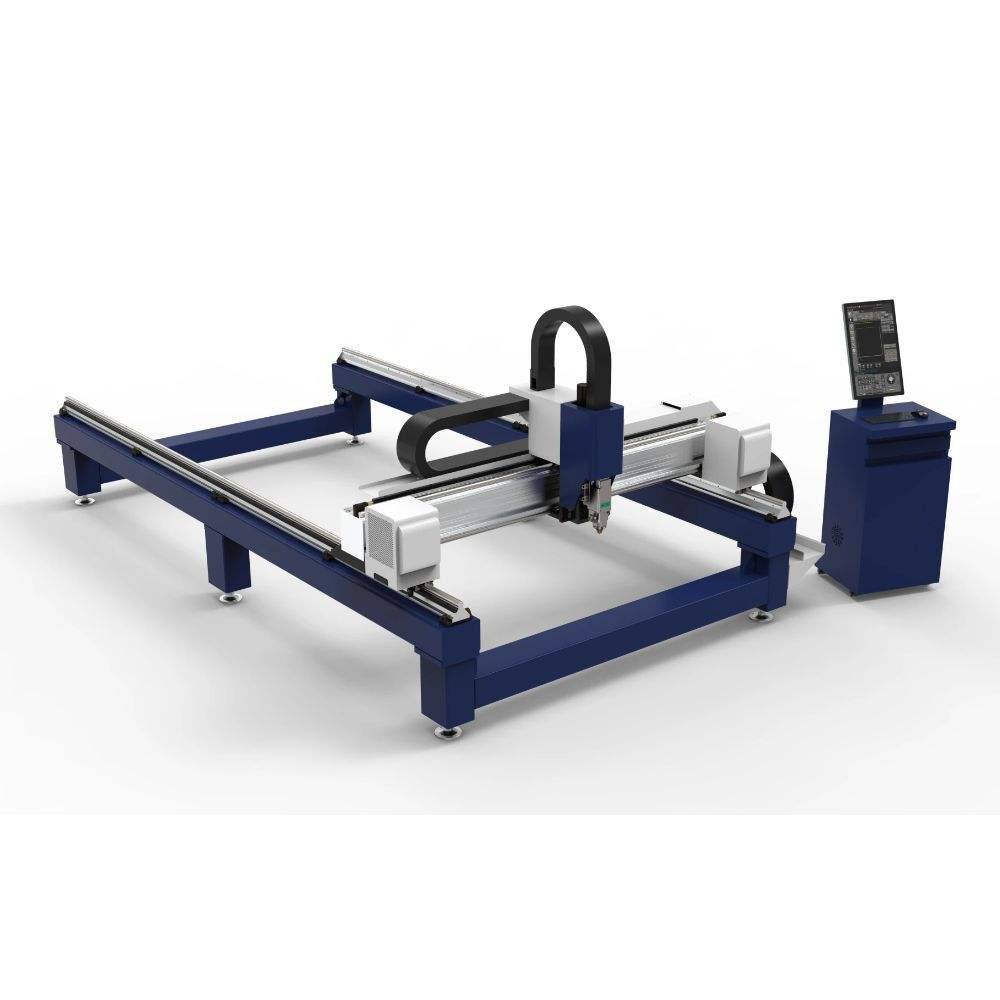
 laser cutting machine” style=”width: 100%; max-width: 800px; height: auto; margin: 20px 0;”>
Overcoming the Challenges of Zinc Coatings
One of the primary engineering hurdles in laser cutting galvanized steel is the “blowback” of zinc vapor. This vapor can cloud the protective window of the laser head, leading to thermal lensing or even damage to the optical components. Precision 2kW systems are equipped with high-pressure assist gas assemblies and specialized nozzle designs to create a supersonic gas flow that shields the optics and clears the molten material efficiently.
Furthermore, the choice of assist gas—typically nitrogen or oxygen—plays a vital role. For galvanized steel, nitrogen is often preferred because it acts as a cooling agent and prevents oxidation of the cut edge. This results in a “bright” finish that is ready for welding or assembly without the need for manual grinding. In the automotive and HVAC industries prevalent in Jalisco, this reduction in post-processing labor is a significant competitive advantage.
Guadalajara: A Hub for Precision Manufacturing
Guadalajara, often referred to as the “Silicon Valley of Mexico,” has expanded its industrial identity far beyond electronics. Today, it is a critical node for the automotive, aerospace, and construction sectors. The demand for galvanized steel components in these industries is immense, ranging from structural brackets and cable trays to complex automotive chassis reinforcements. The introduction of 2kW laser cutting systems into the local supply chain has allowed small and medium enterprises (SMEs) in the region to compete on a global scale.
The logistical advantages of being located in Guadalajara—proximity to major ports and a direct link to the North American market—mean that local shops must maintain high throughput. A 2kW laser system is the “workhorse” of these shops, capable of running multiple shifts with high reliability. The precision afforded by these machines ensures that components meet the stringent tolerances required by international OEMs (Original Equipment Manufacturers).
Strategic Advantages for Local Fabricators
For a fabricator in Guadalajara, investing in a 2kW precision laser is not just about the machine; it is about the ecosystem. The local availability of technical support, specialized gasses, and a skilled labor force trained in CNC (Computer Numerical Control) programming makes the 2kW fiber laser a sustainable investment. Precision laser cutting allows these shops to minimize material waste, which is crucial given the fluctuating costs of raw galvanized steel in the global market.
Optimizing Laser Cutting Parameters for 2kW Systems
To achieve the best results on galvanized steel, engineers must fine-tune several variables. The 2kW power level allows for efficient processing of material thicknesses ranging from 0.5mm to 6mm for high-quality edges, and up to 8mm or 10mm for structural applications. However, the “sweet spot” for galvanized material is typically in the 1mm to 4mm range.
Key parameters include:
- Feed Rate: For 2mm galvanized steel, a 2kW laser can often achieve speeds exceeding 20 meters per minute, depending on the complexity of the geometry.
- Gas Pressure: High-pressure nitrogen (15-20 bar) is essential to flush the molten zinc and steel out of the kerf before it can re-solidify.
- Nozzle Standoff: Maintaining a consistent distance (often 0.5mm to 1.0mm) between the nozzle and the plate is critical for maintaining gas dynamics.
- Frequency and Pulse Width: When cutting intricate details or sharp corners, modulating the laser frequency prevents over-heating of the material.
Assist Gas Selection: Nitrogen vs. Oxygen
While nitrogen is the standard for high-quality laser cutting of galvanized steel, oxygen can be used for thicker sections where speed is less important than the ability to pierce heavy material. However, oxygen reacts with the zinc and the iron, creating an exothermic reaction that can lead to a wider kerf and a charred edge. In the precision-heavy markets of Guadalajara, nitrogen remains the gold standard for maintaining the corrosion-resistant properties of the galvanized coating along the cut line.
Maintenance and Operational Longevity
The industrial environment in Guadalajara can be demanding, with high ambient temperatures and varying humidity levels. For a 2kW laser cutting system to maintain its precision, a rigorous maintenance schedule is mandatory. The fiber source itself is relatively low-maintenance compared to CO2 tubes, but the peripheral systems require constant attention.
The cutting head is the most vulnerable component. It contains a series of lenses and protective windows that must be kept pristine. Even a microscopic speck of dust can absorb laser energy, leading to thermal runaway and catastrophic lens failure. In galvanized applications, the presence of zinc dust makes effective fume extraction and enclosure pressurized air systems even more vital.
Cooling Systems and Optical Integrity
A 2kW laser generates significant heat, not just at the workpiece but within the laser source and the cutting head. A dual-circuit industrial chiller is required to maintain the temperature of the fiber source and the optics within a narrow range (usually ±1°C). In the Jalisco climate, ensuring the chiller is adequately sized and the coolant is free of contaminants is essential for preventing downtime. Regular calibration of the beam centering and focal point ensures that the laser cutting process remains consistent over thousands of hours of operation.
Conclusion
The 2kW precision laser system has redefined the capabilities of the metal fabrication industry in Guadalajara. By providing a reliable, high-speed solution for laser cutting galvanized steel, it has enabled local manufacturers to elevate their quality standards and reduce operational costs. As the region continues to grow as a global manufacturing powerhouse, the integration of such advanced fiber laser technology will remain a cornerstone of industrial progress, ensuring that “Made in Mexico” remains synonymous with precision and engineering excellence.







