Introduction to 1.5kW Fiber Laser Technology in Puebla’s Industrial Sector
The industrial landscape of Puebla, Mexico, has undergone a significant transformation over the last decade. As a primary hub for automotive manufacturing, aerospace components, and food processing equipment, the demand for high-precision fabrication has never been higher. At the center of this evolution is the 1.5kW fiber laser cutting system. This specific power rating represents a strategic “sweet spot” for many small to medium-sized enterprises (SMEs) in the region, offering a balance between capital investment and high-performance output, particularly when processing stainless steel.
In Puebla’s competitive market, the ability to deliver clean, precise, and rapid cuts on stainless steel is a prerequisite for Tier 2 and Tier 3 automotive suppliers. The 1.5kW laser cutting machine utilizes a solid-state laser source to generate a beam that is delivered via fiber optic cable to the cutting head. This technology is significantly more efficient than legacy CO2 systems, providing higher absorption rates in reflective metals like stainless steel and reducing operational overhead through lower energy consumption and minimal maintenance requirements.
The Technical Advantage of 1.5kW Power in Stainless Steel Fabrication
When engineering a production line for stainless steel, the choice of 1.5kW is often dictated by the material thickness profile. While higher power lasers (6kW to 20kW) are available, they often represent an unnecessary expenditure for shops focused on sheet metal between 0.5mm and 6mm. A 1.5kW fiber laser provides exceptional beam quality, characterized by a low Beam Parameter Product (BPP). This allows the laser to be focused into a incredibly small spot size, resulting in a high power density that vaporizes stainless steel instantly.
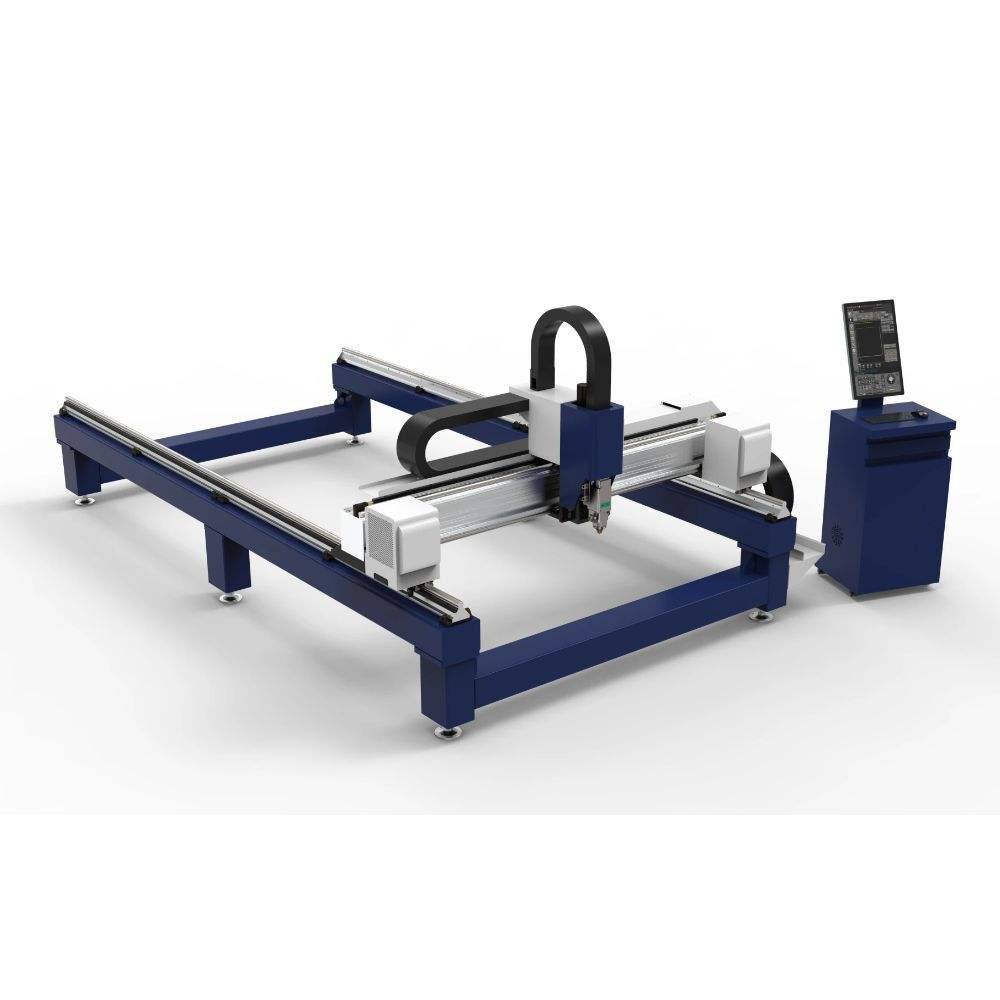
Processing Stainless Steel: Metallurgical and Mechanical Considerations
Stainless steel, particularly grades 304 and 316, is ubiquitous in Puebla’s food and pharmaceutical sectors due to its corrosion resistance. However, laser cutting this material requires a deep understanding of its thermal properties. Stainless steel has a lower thermal conductivity and a higher thermal expansion coefficient than carbon steel. This means that heat management during the laser cutting process is critical to prevent warping and to maintain the integrity of the material’s grain structure.
The Role of Assist Gases: Nitrogen vs. Oxygen
For high-quality stainless steel fabrication, the choice of assist gas is paramount. In the 1.5kW range, Nitrogen (N2) is the industry standard. Nitrogen acts as a shielding gas, blowing away the molten metal without allowing it to react with atmospheric oxygen. This results in a “bright” or “clean” cut edge that is free of oxides. For manufacturers in Puebla supplying the food industry, an oxide-free edge is mandatory to prevent future corrosion and to ensure that parts are ready for immediate welding or assembly without secondary cleaning.
Conversely, using Oxygen (O2) as an assist gas triggers an exothermic reaction, which can increase cutting speeds in thicker materials but leaves a darkened, oxidized edge. In 1.5kW systems, Oxygen is rarely used for stainless steel unless the material is exceptionally thick and edge quality is a secondary concern. The precision of Nitrogen-assisted laser cutting ensures that the Heat Affected Zone (HAZ) is kept to an absolute minimum, preserving the mechanical properties of the stainless steel alloy.
Optimizing Cutting Speeds and Feed Rates
Efficiency in a Puebla-based workshop is measured by throughput. For a 1.5kW system, the optimal cutting speed for 1mm stainless steel can exceed 20 meters per minute, depending on the machine’s motion system. As thickness increases to 3mm or 5mm, the feed rate must be calibrated to ensure the laser has sufficient dwell time to penetrate the material while the gas pressure is high enough to clear the kerf. Engineering teams must use nesting software to calculate the most efficient paths, minimizing “dead time” where the laser is not actively cutting.

Regional Environmental Factors in Puebla
Operating high-precision laser cutting machinery in Puebla presents unique environmental challenges that engineers must address. Puebla is situated at an average elevation of approximately 2,135 meters (7,000 feet) above sea level. This altitude affects the density of the air and the efficiency of cooling systems.
Cooling and Chiller Efficiency at Altitude
The fiber laser source and the cutting head require constant temperature regulation via a water chiller. At higher altitudes, the lower air density reduces the heat exchange efficiency of air-cooled chillers. It is recommended that operators in Puebla specify chillers with slightly higher capacities than those used at sea level to ensure the 1.5kW source remains within its optimal operating temperature (typically 20°C to 25°C). Overheating can lead to fluctuations in beam power and, in extreme cases, permanent damage to the laser diodes.
Gas Supply Logistics and Purity
Puebla’s industrial parks, such as those in Cuautlancingo or the Finsa area, have robust supply chains for industrial gases. However, the purity of Nitrogen is non-negotiable for stainless steel. High-purity Nitrogen (99.99% or higher) is required to achieve the silver-white finish demanded by high-end clients. Local fabricators often invest in Nitrogen generators or high-pressure bulk tanks to manage the high consumption rates associated with 1.5kW laser cutting, as the gas must be delivered at pressures between 15 and 25 bar to effectively clear the molten stainless steel from the cut path.
Maintenance and Calibration for Long-Term Precision
To maintain the competitive edge in the Puebla market, preventative maintenance of the laser cutting system is essential. Unlike CO2 lasers, fiber lasers do not have internal mirrors that require alignment, but the external optics—specifically the protective windows and the focusing lens—must be kept pristine.
Optical Integrity and Nozzle Selection
The 1.5kW beam is focused through a lens in the cutting head. Any dust or residue on the protective window can absorb laser energy, leading to “thermal shift,” where the focal point moves during the cut. This results in a loss of cut quality and potential dross formation on the underside of the stainless steel sheet. Furthermore, nozzle selection is critical. For stainless steel, double nozzles are often used to stabilize the gas flow. Operators must check the nozzle for centricity daily; if the laser beam is not perfectly centered in the nozzle orifice, the assist gas flow will be turbulent, ruining the edge quality.
Motion System and Calibration
The precision of laser cutting is only as good as the machine’s CNC motion system. In the high-vibration environments of many Puebla factories, the rack-and-pinion or linear motor systems must be lubricated and checked for backlash. Regular calibration of the capacitive height sensor is also necessary. This sensor maintains a constant distance (standoff) between the nozzle and the stainless steel sheet, compensating for any slight warping in the material. A deviation of even 0.1mm in standoff distance can significantly impact the focus and gas dynamics of a 1.5kW cut.
Economic Impact and ROI for Puebla Manufacturers
The decision to implement a 1.5kW fiber laser cutting system in a Puebla workshop is often driven by a Return on Investment (ROI) analysis. Compared to plasma cutting or waterjet, the fiber laser offers significantly lower cost-per-part on thin to medium stainless steel. The high speed of the 1.5kW laser reduces labor costs per unit, while the narrow kerf width minimizes material waste—a vital factor given the high cost of stainless steel alloys.
Energy Efficiency and Sustainability
In the context of Mexico’s evolving energy regulations and the push for “green” manufacturing in the automotive supply chain, the energy efficiency of fiber technology is a major asset. A 1.5kW fiber laser has a wall-plug efficiency of approximately 30-35%, compared to the 8-10% of CO2 lasers. This translates to lower electricity bills and a smaller carbon footprint, which is increasingly becoming a requirement for suppliers working with global OEMs like Volkswagen de México or Audi.
Market Versatility
While this guide focuses on stainless steel, the 1.5kW laser’s versatility allows Puebla shops to diversify. The same machine can cut carbon steel for structural brackets or aluminum for lightweight automotive components. This flexibility allows local businesses to pivot between industries, ensuring the machine remains utilized across multiple shifts, which is the key to rapid amortization of the equipment cost.
Conclusion: The Future of Fabrication in Puebla
The 1.5kW fiber laser cutting machine is more than just a tool; it is a catalyst for industrial sophistication in Puebla. By mastering the nuances of stainless steel processing—from gas dynamics and altitude-adjusted cooling to precise optical maintenance—local manufacturers can achieve world-class standards. As the region continues to attract international investment, those who leverage the precision and efficiency of 1.5kW laser cutting technology will be best positioned to lead the next generation of Mexican manufacturing. The combination of technical expertise and the right equipment ensures that Puebla remains a cornerstone of high-quality metal fabrication on the global stage.













