Introduction to 6kW Precision Laser Systems in Queretaro’s Industrial Hub
The state of Queretaro has solidified its position as the epicenter of Mexico’s aerospace and automotive sectors. As global manufacturers demand tighter tolerances and faster production cycles, the integration of high-power 6kW precision laser systems has become a necessity rather than a luxury. These systems represent the pinnacle of fiber laser technology, offering the specific power density required to process non-ferrous metals, particularly aluminum alloys, with unprecedented accuracy. In the context of the Bajío region’s industrial growth, the shift toward 6kW fiber technology marks a significant evolution from traditional mechanical shearing or lower-wattage laser solutions.
The 6kW precision laser system is engineered to bridge the gap between high-speed thin-sheet processing and the heavy-duty cutting of thicker plates. For engineering firms in Queretaro, this versatility is critical. Whether producing intricate components for jet engines or structural frames for automotive chassis, the ability to maintain a stable beam quality over extended operation periods is what defines a truly “precision” system. This guide explores the technical nuances of deploying these systems, focusing specifically on the challenges and advantages of working with aluminum alloys in one of North America’s most demanding manufacturing environments.
 laser cutting System for Plate and Tube” style=”width: 100%; max-width: 800px; height: auto; margin: 20px 0;”>
The Strategic Importance of Aluminum Alloy Processing
Aluminum alloys, such as the 5000 and 6000 series, are prized for their high strength-to-weight ratio and corrosion resistance. However, from a laser cutting perspective, they present unique challenges. Aluminum is highly reflective and possesses high thermal conductivity. These physical properties mean that a significant portion of the laser’s energy can be reflected back into the optics, potentially damaging the resonator, while the heat quickly dissipates throughout the workpiece, leading to thermal deformation if not managed correctly.
A 6kW system provides the necessary “punch” to overcome the initial reflectivity of aluminum. By delivering a concentrated burst of energy, the laser quickly transitions the material from a solid to a molten state, establishing a stable keyhole for the cut. In Queretaro’s aerospace cluster, where materials like 7075-T6 are common, the precision of the 6kW fiber source ensures that the heat-affected zone (HAZ) is minimized, preserving the mechanical integrity of the alloy. This is vital for parts that must undergo rigorous stress testing and certification.
Why 6000 Watts is the Optimal Threshold for Aluminum
While 3kW or 4kW lasers can cut aluminum, they often struggle with thicker sections (above 6mm) and require slower feed rates that can lead to dross accumulation. Conversely, systems exceeding 10kW may be overkill for many precision applications, introducing higher operational costs without a proportional increase in part quality for mid-range thicknesses. The 6kW threshold is widely considered the “sweet spot” for industrial aluminum processing.
At 6kW, the laser cutting process achieves a balance between speed and edge quality. For a 10mm aluminum plate, a 6kW system can maintain a consistent feed rate that prevents the “burr” or “dross” typically associated with slower speeds. Furthermore, the increased power allows for the use of compressed air or nitrogen as an assist gas at higher pressures, which effectively clears the molten material from the kerf, resulting in a mirror-like finish that requires little to no post-processing.
Technical Specifications and Performance Metrics
A precision 6kW laser system is defined by more than just its power output. It is a synergy of the laser source, the cutting head, the motion control system, and the structural frame. In Queretaro’s high-output environments, machine uptime is the primary KPI. Therefore, the specifications must reflect a build quality capable of 24/7 operation.
Overcoming Reflectivity in Laser Cutting
The primary technical hurdle in laser cutting aluminum is back-reflection. Modern 6kW fiber lasers are equipped with advanced back-reflection protection mechanisms. These systems use optical isolators and sensors that can detect reflected light in microseconds, either diverting the energy or shutting down the beam to protect the fiber feeding the cutting head. This is particularly important when processing polished aluminum or alloys with high silicon content.
In addition to hardware protection, the software plays a role. Precision systems utilize specialized “piercing protocols” where the laser ramps up power and frequency in stages. This ensures that the initial hole is created cleanly without a massive “splash” of molten metal or a spike in reflected energy. For engineers in Queretaro, this means higher reliability when processing expensive raw materials, reducing scrap rates significantly.
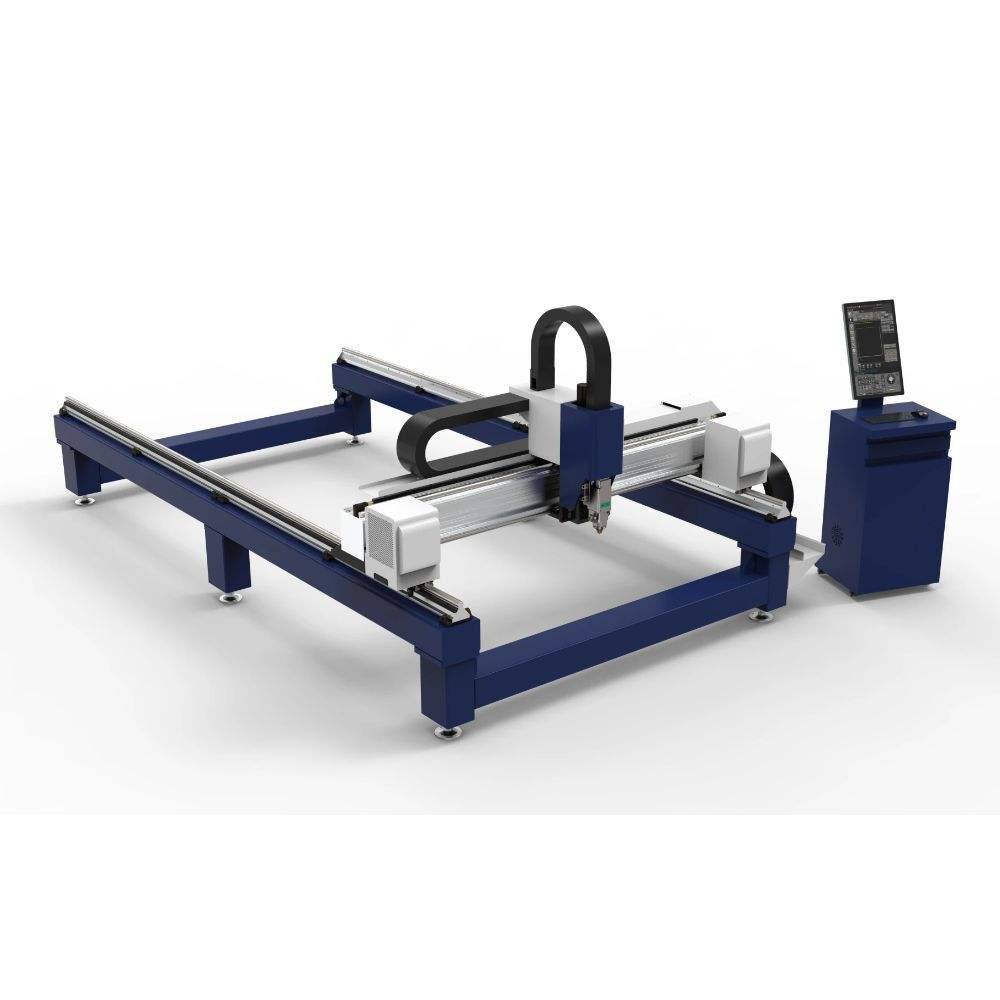 laser cutting machine” style=”width: 100%; max-width: 800px; height: auto; margin: 20px 0;”>
Motion Control and Precision Engineering
To leverage 6kW of power, the machine’s gantry and drive system must be exceptionally rigid. Precision laser cutting requires high acceleration and deceleration rates—often exceeding 1.5G—to maintain the programmed feed rate on tight corners and intricate geometries. If the motion system lags, the laser spends too much time in one spot, leading to “over-burning” on corners, which is a common defect in aluminum parts.
High-end systems in the Queretaro market typically feature helical rack-and-pinion drives or linear motors paired with absolute encoders. These components ensure that the machine knows its exact position within microns. When combined with a 6kW source, these systems can produce holes with diameters smaller than the material thickness—a feat previously difficult for fiber lasers in non-ferrous metals.
Material-Specific Applications: Aerospace and Automotive
Queretaro’s industrial landscape is dominated by the Tier 1 and Tier 2 suppliers for Boeing, Airbus, Bombardier, and various automotive OEMs. These industries have moved away from heavy steel toward aluminum alloys to meet fuel efficiency and performance standards. The 6kW precision laser is the primary tool driving this transition.
Processing 5000 and 6000 Series Alloys
The 5000 series (magnesium-alloyed) and 6000 series (silicon and magnesium-alloyed) are the workhorses of the Queretaro manufacturing sector. The 5052 alloy is frequently used for fuel tanks and intricate ducting, while 6061 is the standard for structural components. A 6kW laser cutting system handles these materials with distinct parameters:
- 5052 Aluminum: Known for its excellent weldability. The laser must maintain a high speed to prevent the magnesium from vaporizing excessively, which can affect the edge chemistry.
- 6061-T6 Aluminum: This heat-treated alloy is sensitive to thermal input. The precision 6kW system uses a narrow kerf width to minimize the area affected by the laser’s heat, ensuring the structural properties of the T6 temper remain intact as much as possible near the cut edge.
The ability to switch between these materials with pre-programmed “cut libraries” allows Queretaro shops to remain agile. A technician can transition from cutting 2mm 5052 shrouds to 12mm 6061 brackets in minutes, simply by changing the nozzle and selecting the corresponding tech table on the CNC controller.
Operational Efficiency and Economic Impact in Queretaro
Investing in a 6kW precision laser system is a strategic economic decision. In the competitive landscape of central Mexico, the cost per part is the ultimate metric. While the initial capital expenditure for a 6kW system is higher than a 3kW unit, the throughput gains often result in a faster return on investment (ROI).
Gas Selection and Cost Optimization
One of the largest operational costs in laser cutting aluminum is the assist gas. Nitrogen is typically used to achieve a clean, oxide-free edge, which is essential if the parts are to be welded or painted later. A 6kW system allows for higher cutting speeds, which paradoxically can reduce nitrogen consumption per meter of cut, as the laser spends less time on each part.
Furthermore, many shops in Queretaro are now adopting high-pressure air cutting for aluminum. With 6kW of power, the system can use filtered, dried compressed air to cut through aluminum alloys up to 6mm or 8mm. While the edge may have a slight oxide layer, the cost savings compared to bulk nitrogen are substantial, often reducing gas costs by 60% to 80%. This makes Queretaro-based suppliers more competitive on a global scale.
Maintenance, Support, and the Future of Laser Cutting in Mexico
The reliability of a 6kW laser system depends heavily on the local ecosystem. Queretaro benefits from a robust network of service engineers and spare parts distributors. For a precision system, maintenance focuses on the “optical path”—ensuring that the protective windows, lenses, and the fiber delivery cable are free from contamination. In the dusty environments sometimes found in industrial parks, high-efficiency filtration and climate-controlled enclosures for the resonator are mandatory.
Looking forward, the integration of Industry 4.0 features is the next step for laser cutting in Mexico. 6kW systems are now being equipped with real-time monitoring that tracks power stability, gas pressure, and even “nozzle health.” These systems can send alerts to a production manager’s smartphone in Juriquilla or El Marqués, ensuring that any deviation from precision standards is addressed before scrap is produced.
Conclusion
The 6kW precision laser system has become the backbone of modern aluminum fabrication in Queretaro. By providing the power to overcome reflectivity, the precision to meet aerospace tolerances, and the speed to satisfy automotive production schedules, this technology is driving the region’s industrial success. As aluminum continues to replace steel in high-performance applications, the mastery of 6kW laser cutting will remain a defining capability for any engineering firm looking to compete in the heart of Mexico’s manufacturing corridor.













