Comprehensive Guide to 1.5kW Precision Laser Systems for Carbon Steel in Leon
The industrial landscape of Leon has seen a transformative shift toward high-precision manufacturing, driven largely by the adoption of fiber laser technology. At the heart of this revolution is the 1.5kW precision laser system, a machine that offers the optimal balance between power, efficiency, and capital investment. For fabricators in Leon specializing in carbon steel components—ranging from automotive parts to agricultural machinery—understanding the nuances of this technology is essential for maintaining a competitive edge. This guide explores the technical architecture, operational strategies, and economic advantages of utilizing 1.5kW laser cutting systems for carbon steel processing.
The Architecture of 1.5kW Fiber Laser Technology
A 1.5kW fiber laser system represents a significant leap over traditional CO2 systems. Unlike gas lasers, fiber lasers generate the beam through a medium of optical fibers doped with rare-earth elements. This solid-state design allows for a much smaller beam diameter and a wavelength (typically around 1.06 microns) that is highly absorbed by metallic surfaces, particularly carbon steel. The 1.5kW power rating is specifically engineered for high-speed processing of thin to medium-gauge materials, making it a versatile workhorse for the diverse industrial needs of Leon.
The precision of these systems is governed by the CNC (Computer Numerical Control) interface and the motion control system. High-quality 1.5kW systems often utilize rack-and-pinion drives or linear motors to achieve positioning accuracies within microns. When performing laser cutting on carbon steel, this precision ensures that intricate geometries, such as small-diameter holes and complex tabs, are produced with repeatable tight tolerances.
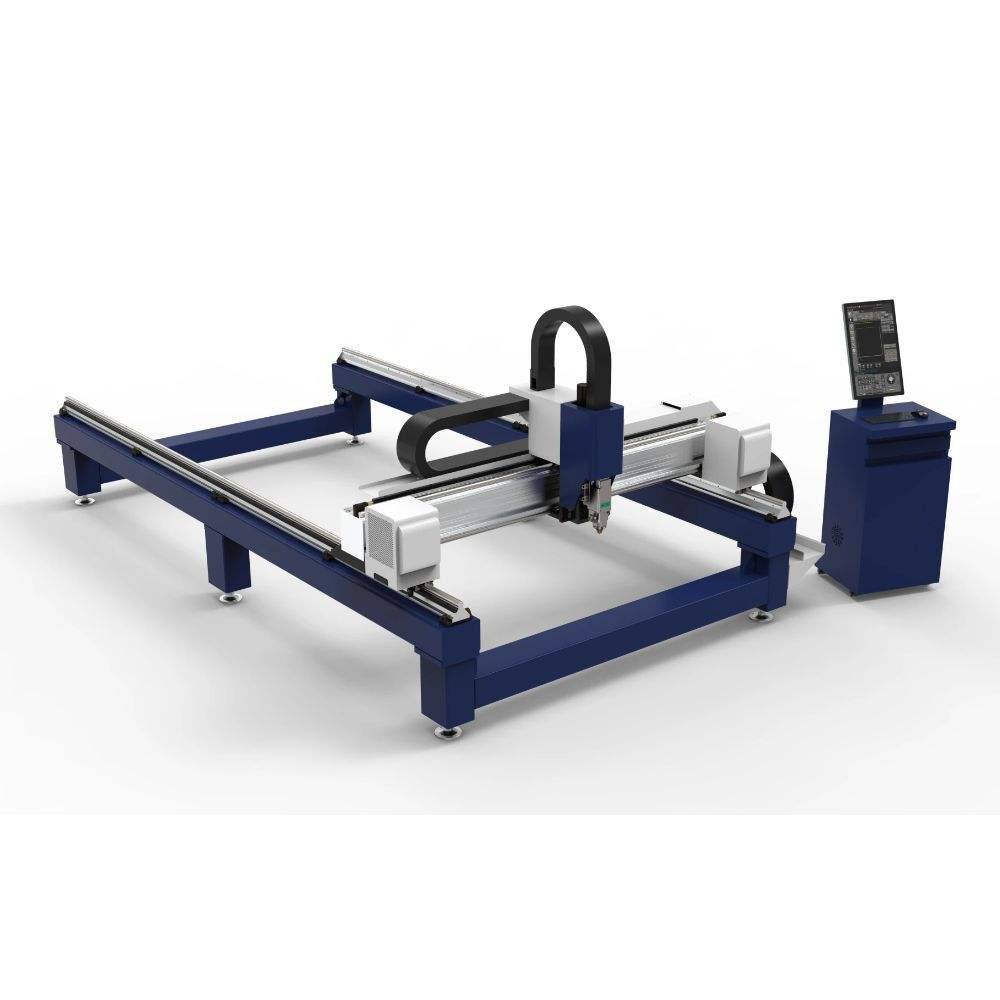
Optimizing Laser Cutting for Carbon Steel
Carbon steel is the most common material processed in Leon’s metalworking shops. A 1.5kW laser is exceptionally efficient at cutting carbon steel up to 12mm or 14mm in thickness, depending on the specific alloy and the assist gas used. The interaction between the fiber laser beam and the carbon steel involves a localized melting process, where the high-intensity energy density of the 1.5kW beam quickly reaches the material’s melting point.
In laser cutting carbon steel, the choice of assist gas is a critical engineering decision. For 1.5kW systems, oxygen (O2) is the standard choice for thicker sections. The oxygen facilitates an exothermic reaction, adding thermal energy to the cutting process and allowing for faster speeds on 6mm to 12mm plates. However, for thinner sheets (under 3mm), nitrogen (N2) can be used to achieve a “clean cut” or oxide-free edge, which is vital if the parts require subsequent painting or coating without the need for mechanical edge cleaning.
The Industrial Impact in Leon
Leon has established itself as a hub for the Bajio region’s manufacturing sector. The demand for precision laser cutting services in the automotive and footwear-machinery sectors has necessitated machines that can run multi-shift operations with minimal downtime. The 1.5kW system is particularly favored by small to medium enterprises (SMEs) in Leon because it provides industrial-grade output without the extreme electrical requirements of 6kW or 12kW systems.
Furthermore, the local supply chain in Leon has evolved to support these precision systems. Access to high-purity industrial gases and specialized technical support for fiber laser resonators ensures that local shops can maintain high OEE (Overall Equipment Effectiveness). By integrating 1.5kW laser cutting into their workflows, Leon-based fabricators can transition from traditional punching or plasma cutting to a cleaner, more accurate process that reduces secondary finishing costs.

Technical Parameters: Speed, Feed, and Focus
Achieving precision in carbon steel requires meticulous calibration of several key parameters. For a 1.5kW system, the cutting speed is the primary variable. If the speed is too high, the laser will fail to penetrate the material, leading to “slag” or dross on the bottom of the cut. If the speed is too low, the heat-affected zone (HAZ) widens, potentially warping thin carbon steel sheets and reducing the dimensional accuracy of the part.
Focus position is another critical factor. When laser cutting carbon steel with oxygen, the focal point is typically set slightly above or at the material surface to facilitate the exothermic reaction. In contrast, when using nitrogen for high-pressure cutting, the focal point is often buried deep within the material. A 1.5kW system requires a stable cutting head with automated focus adjustment to handle the variations in material flatness often found in hot-rolled carbon steel plates.
Nozzle Selection and Gas Pressure
The nozzle acts as the final conduit for both the laser beam and the assist gas. For 1.5kW precision work, nozzle diameter usually ranges from 1.0mm to 2.5mm. A smaller nozzle concentrates the gas flow, which is beneficial for fine detail work on thin carbon steel. Conversely, a larger nozzle allows for the higher volume of oxygen needed to clear the molten metal from thicker sections. Monitoring nozzle wear is essential; a slightly deformed nozzle can cause turbulence in the gas stream, leading to an asymmetrical kerf and poor edge quality.
Gas pressure must also be balanced. High-pressure nitrogen cutting (often exceeding 15 bar) requires robust plumbing and high-flow regulators. For oxygen cutting on carbon steel, the pressure is much lower (often between 0.5 and 2.0 bar) but must be extremely consistent. Fluctuations in oxygen pressure during laser cutting will result in visible “striations” on the cut edge, which may fall outside the aesthetic or technical specifications of the client.
Maintenance of the 1.5kW Precision System
While fiber lasers are known for their low maintenance compared to CO2 lasers, they are not maintenance-free. In the dusty environments sometimes found in industrial zones in Leon, the cooling system and the optical path must be protected. The 1.5kW resonator is cooled by a water chiller; if the water temperature fluctuates by even a few degrees, the beam stability can be compromised, leading to inconsistent laser cutting results.
The protective window (or cover glass) is the most frequently serviced component. This glass protects the expensive internal optics from back-splatter during the piercing process. In carbon steel cutting, piercing creates a significant amount of molten sparks. Using a “staged pierce” technique—where the laser power and gas pressure are ramped up gradually—can extend the life of the protective window and maintain the precision of the laser cutting process over long production runs.
Economic Feasibility and ROI
Investing in a 1.5kW precision laser system is a strategic move for any Leon-based metal shop. The return on investment (ROI) is realized through three main avenues: material savings, labor reduction, and increased throughput. Because the kerf width of a fiber laser is so narrow (often less than 0.2mm), parts can be nested very tightly on a carbon steel sheet. This “nesting optimization” significantly reduces scrap rates compared to traditional mechanical shearing or punching.
Labor costs are also reduced because the high-quality edge produced by the 1.5kW laser often eliminates the need for grinding or deburring. In the competitive Leon market, the ability to deliver “ready-to-weld” or “ready-to-paint” parts directly from the laser cutting machine allows shops to charge a premium for their services while reducing their internal lead times. Furthermore, the energy efficiency of the 1.5kW fiber source—which converts electrical energy to laser light at a rate of 30-40%—results in significantly lower utility bills compared to older technologies.
Safety Standards and Operational Training
Precision laser systems are Class 4 laser products, meaning they require strict safety protocols. In Leon, adherence to international safety standards (such as ISO or ANSI) is becoming a requirement for Tier 1 and Tier 2 automotive suppliers. A 1.5kW system should be housed in a light-tight enclosure with laser-safe viewing windows. This protects operators from reflected infrared radiation, which is invisible to the human eye but can cause permanent retinal damage.
Training is equally important. An operator must understand not just how to load a CAD file, but how to interpret the “spark shower” during the cutting process. By observing the direction and color of the sparks, an experienced operator can fine-tune the laser cutting parameters in real-time, preventing part failure and optimizing the feed rate for the specific grade of carbon steel being processed.
Conclusion
The 1.5kW precision laser system is a cornerstone of modern industrial fabrication in Leon. Its ability to process carbon steel with high speed, extreme accuracy, and low operational costs makes it an indispensable tool for the region’s manufacturing sector. By mastering the technical requirements of assist gas selection, focus optimization, and routine maintenance, local fabricators can leverage laser cutting technology to meet the rigorous demands of the global supply chain. As Leon continues to grow as a center for engineering excellence, the 1.5kW fiber laser will remain at the forefront of its metalworking capabilities.













