Optimizing 1.5kW Sheet Metal laser cutting for Brass in Guadalajara’s Industrial Sector
Guadalajara, often referred to as the “Silicon Valley of Mexico,” has evolved into a sophisticated hub for electronics, aerospace, and high-end decorative manufacturing. Within this industrial ecosystem, the demand for precision brass components has surged. Utilizing a 1.5kW fiber laser cutting system offers a strategic advantage for local workshops and factories. While 1.5kW is considered entry-to-mid-level in terms of raw power, its performance in thin-to-medium gauge brass is exceptional when calibrated correctly. This guide explores the technical nuances of processing brass, the specific environmental considerations of the Jalisco region, and the engineering parameters required to achieve world-class results.
The Physics of Fiber Laser Cutting on Highly Reflective Alloys
Brass is an alloy primarily composed of copper and zinc. From an engineering perspective, it presents a unique challenge for laser cutting due to its high thermal conductivity and high optical reflectivity. In the early days of CO2 lasers, cutting brass was nearly impossible or highly dangerous for the machine because the 10.6-micrometer wavelength was reflected back into the resonator, causing catastrophic failure. However, the 1.5kW fiber laser operates at a wavelength of approximately 1.07 micrometers. This shorter wavelength is absorbed much more efficiently by “yellow metals” like brass and copper.
At 1.5kW, the energy density at the focal point is sufficient to overcome the material’s reflectivity threshold almost instantly. Once the initial piercing is achieved and the material reaches its melting point, the absorption rate increases significantly. This allows the laser cutting process to proceed with high stability, provided the optical path is protected by “back-reflection” sensors, a standard feature in modern fiber laser heads used in Guadalajara’s competitive manufacturing landscape.
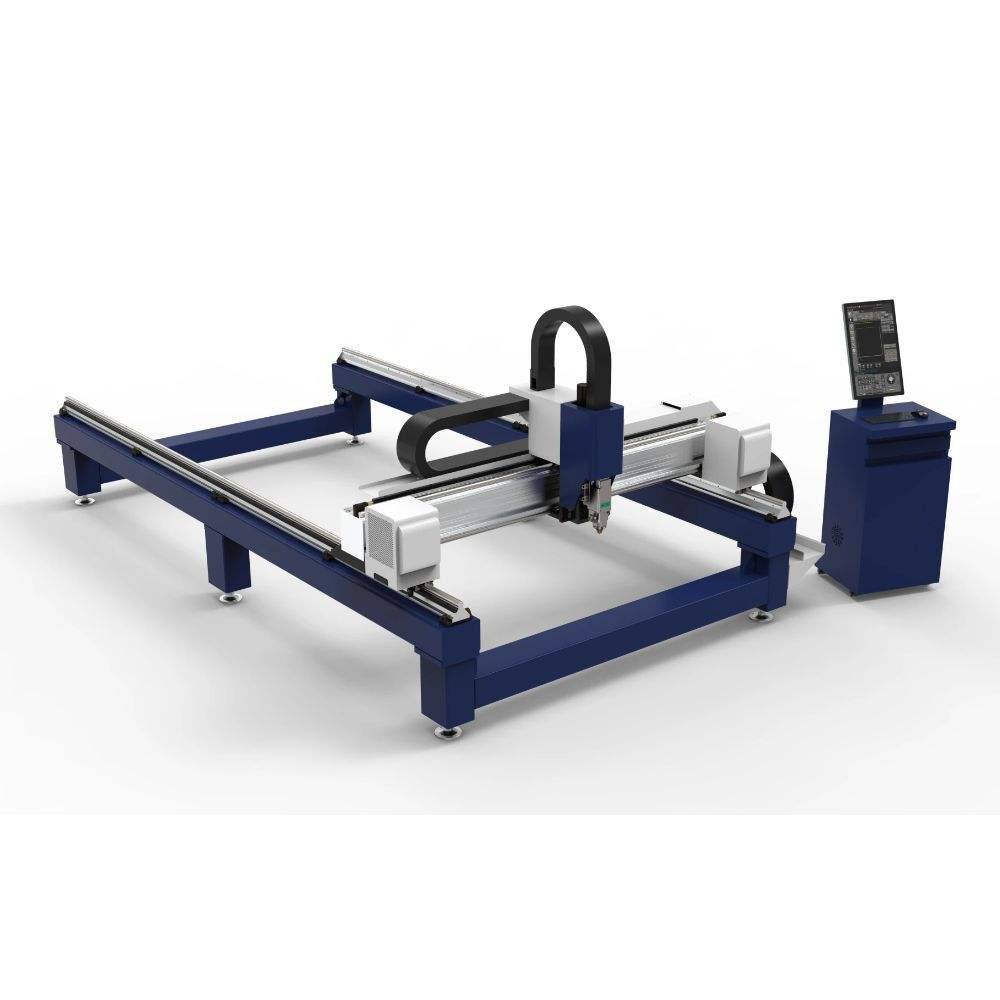 laser cutting machine for Sheet Metal”>
Technical Parameters for 1.5kW Brass Fabrication
To maximize the efficiency of a 1.5kW system, operators must balance power, speed, and gas pressure. For brass, the “sweet spot” usually lies within the 1mm to 4mm thickness range. While a 1.5kW laser can technically sever 5mm brass, the quality of the edge and the speed of the cut may not be economically viable for high-volume production in Guadalajara’s fast-paced markets.
Assist Gas Selection: Nitrogen vs. Oxygen
The choice of assist gas is the most critical factor in determining the edge quality of brass. For the majority of laser cutting applications in Guadalajara—especially in the jewelry and electronics sectors—Nitrogen is the preferred medium. High-pressure Nitrogen (typically between 16 and 20 bar) acts as a mechanical force to eject the molten brass from the kerf before it can oxidize. This results in a “clean” or “bright” cut edge that requires little to no post-processing.
Oxygen can be used for thicker brass plates to increase cutting speed through an exothermic reaction. However, this produces an oxidized, darkened edge. In the context of Guadalajara’s decorative hardware industry, where brass is often polished or plated, the dross and oxidation caused by Oxygen are usually unacceptable, making high-purity Nitrogen the industry standard for 1.5kW operations.
Focal Position and Nozzle Geometry
For brass, the focal point should generally be positioned slightly below the surface of the material or exactly at the center of the sheet thickness. This ensures that the kerf is wide enough for the assist gas to effectively clear the melt. Using a double-layer nozzle is recommended for 1.5kW laser cutting of brass, as it stabilizes the gas flow and protects the protective window from potential spatter during the piercing phase. Nozzle diameters between 1.5mm and 2.5mm are typically employed depending on the specific gauge of the sheet metal.
Environmental and Infrastructure Considerations in Guadalajara
Operating a 1.5kW fiber laser in Guadalajara requires attention to the local climate and infrastructure. The city’s elevation (approx. 1,500 meters) and its temperate but occasionally humid climate can impact the performance of the laser’s cooling system and the stability of the beam path.
Chiller Performance and Humidity Control
The 1.5kW fiber source and the cutting head both require precise temperature regulation via a dual-circuit water chiller. In Guadalajara, where afternoon temperatures can reach 30°C (86°F), the chiller must be sized correctly to prevent “thermal drift.” Furthermore, high humidity during the rainy season (June to September) can lead to condensation on the internal optics. It is vital that the laser cutting room is climate-controlled or that the machine is equipped with a refrigerated air dryer for the assist gas and pneumatic lines to prevent moisture contamination.
Electrical Stability in the Jalisco Industrial Corridor
While Guadalajara has robust industrial infrastructure, voltage fluctuations can still occur. A 1.5kW fiber laser is a sensitive electronic instrument. To protect the laser source and the CNC controller, a high-precision voltage stabilizer and a proper grounding system are non-negotiable. This ensures that the laser cutting process remains consistent, preventing “striations” or “burn marks” on the brass caused by power dips during the cut.
Applications of Laser-Cut Brass in the Local Market
The versatility of the 1.5kW laser cutting machine has opened new doors for Guadalajara-based manufacturers. By moving away from traditional stamping or manual sawing, companies are achieving tolerances within ±0.05mm, which is essential for several key sectors:
- Electrical Components: Brass is an excellent conductor. 1.5kW lasers are used to cut busbars, terminals, and connectors for the electronics assembly plants in the Tlaquepaque and Zapopan districts.
- Architectural Hardware: Guadalajara has a rich tradition of craftsmanship. Laser cutting allows for intricate patterns in brass plates used for luxury door handles, lighting fixtures, and furniture inlays.
- Jewelry and Fashion: The “Capital of Jewelry” (Guadalajara) utilizes small-format 1.5kW lasers to create highly detailed brass bases for gold-plated jewelry, significantly reducing material waste compared to traditional casting.
Maintenance and Safety for High-Reflectivity Cutting
Maintaining a 1.5kW laser when cutting brass requires a more rigorous schedule than cutting carbon steel. The primary concern is the integrity of the protective windows. Even with high-pressure gas, the reflective nature of brass can cause microscopic particles to bounce back toward the lens.
Optical Inspection
Operators should inspect the protective window every 4 to 8 hours of continuous brass cutting. Any sign of “pitting” or dust accumulation will cause the laser beam to scatter, reducing the 1.5kW effective power and potentially damaging the internal collimating lenses. Using high-quality, original manufacturer consumables is essential for maintaining the beam quality required for precise laser cutting.
Safety Protocols
Brass reflects a significant portion of the laser beam during the first few milliseconds of the piercing process. This “stray light” is invisible to the human eye but can cause permanent retinal damage. In Guadalajara’s industrial environments, it is imperative that the laser cutting machine is fully enclosed (Class 1) or that all personnel in the vicinity wear OD6+ rated safety goggles specifically tuned to the 1064nm to 1080nm wavelength. Furthermore, cutting brass produces zinc oxide fumes, which can be toxic. A high-volume dust extraction and filtration system is mandatory to ensure a safe working environment for the local workforce.
The Economic Advantage of 1.5kW Systems
For many shops in Guadalajara, jumping to a 3kW or 6kW laser represents a massive capital investment that may not be necessary. A 1.5kW system provides the ideal balance of “Price-to-Performance” for brass sheets under 4mm. The lower power consumption translates to lower utility bills, and the maintenance costs for a 1.5kW fiber source are significantly lower than those of high-power variants. By mastering the parameters of laser cutting for brass, local manufacturers can offer competitive pricing on the international stage, leveraging Mexico’s trade agreements and Guadalajara’s logistical advantages.
Conclusion
The implementation of 1.5kW sheet metal laser technology for brass fabrication represents a significant step forward for Guadalajara’s manufacturing sector. By understanding the material science of brass, optimizing Nitrogen assist gas parameters, and accounting for the local environmental conditions, engineers can produce high-precision components that meet the rigorous standards of the aerospace and electronics industries. As laser cutting continues to replace traditional methods, the ability to efficiently process reflective alloys will remain a cornerstone of Jalisco’s industrial competitiveness. Mastering this technology not only improves production speed but also ensures the level of detail and quality that has made Guadalajara a global leader in specialized manufacturing.













