Comprehensive Engineering Guide: 2kW Precision Laser Systems for Stainless Steel
The industrial landscape of Toluca, Mexico, has undergone a significant transformation, evolving into a premier hub for automotive, aerospace, and food processing industries. At the heart of this manufacturing excellence lies the adoption of advanced fiber laser technology. Specifically, the 2kW precision laser system has emerged as the industry standard for processing stainless steel, offering an optimal balance between capital investment, operational efficiency, and metallurgical integrity. This guide explores the technical intricacies of deploying 2kW laser cutting technology within the unique environmental and industrial context of the State of Mexico.
The Physics of 2kW Fiber Laser Technology
A 2kW fiber laser operates at a wavelength of approximately 1.064 micrometers. Unlike traditional CO2 lasers, the fiber laser’s beam is generated within an active optical fiber and delivered via a flexible transport fiber to the cutting head. This solid-state architecture eliminates the need for complex mirror alignments and reduces the internal power loss significantly. For stainless steel, the 1.064μm wavelength is particularly advantageous because the material’s absorption rate is significantly higher in the near-infrared spectrum compared to the 10.6μm wavelength of gas lasers. This higher absorption allows for faster processing speeds and a more concentrated heat-affected zone (HAZ).
In a 2kW system, the beam quality, often measured by the M² factor, is critical. A precision system typically maintains an M² value of less than 1.1, ensuring a nearly perfect Gaussian beam profile. This precision allows the energy to be focused into a spot size as small as 30 to 50 microns. When applied to stainless steel, this high power density facilitates rapid sublimation and melting, which is essential for achieving the “mirror-like” edge finish required in medical and food-grade applications common in Toluca’s industrial parks.

Stainless Steel Material Dynamics in Toluca
Stainless steel, particularly grades 304 and 316, is characterized by high chromium and nickel content. These elements provide excellent corrosion resistance but also introduce challenges in thermal processing. Stainless steel has a lower thermal conductivity and a higher thermal expansion coefficient than carbon steel. Consequently, precision laser cutting requires sophisticated pulse-width modulation and frequency control to prevent warping and dross accumulation.
In the Toluca region, manufacturers often deal with varying gauges of stainless steel for automotive exhaust systems and industrial kitchen equipment. A 2kW system is engineered to handle these materials with high efficiency. For 304 stainless steel, a 2kW source can comfortably process thicknesses up to 8mm, with the “sweet spot” for high-speed production falling between 1mm and 5mm. Within this range, the laser can maintain feed rates that maximize throughput without compromising the perpendicularity of the cut edge.
Optimizing Laser Cutting Parameters for Precision
Achieving precision in laser cutting involves the delicate synchronization of several variables: focal position, gas pressure, nozzle geometry, and feed rate. When processing stainless steel, Nitrogen (N2) is the preferred assist gas. The role of Nitrogen is twofold: it mechanically expels the molten metal from the kerf and acts as a shielding gas to prevent oxidation. Because Nitrogen cutting is an endothermic process, the 2kW laser must provide sufficient energy to sustain the melt without the “help” of an exothermic reaction (as seen with Oxygen cutting in carbon steel).
For a 2kW system, the focal point is typically positioned slightly below the surface of the material or even at the bottom of the plate for thicker sections. This “negative focus” ensures that the beam energy is distributed in a way that creates a wider kerf at the bottom, allowing the high-pressure Nitrogen (often delivered at 14-18 bar) to clear the melt efficiently. This prevents the formation of “burrs” or “dross,” which are costly to remove in post-processing.
Environmental Considerations: Altitude and Climate in Toluca
Toluca sits at an elevation of approximately 2,660 meters above sea level. For precision laser engineering, this altitude introduces specific variables that must be addressed. The lower atmospheric pressure affects the density of the air, which can influence the cooling efficiency of the laser’s chiller system and the behavior of the assist gas as it exits the nozzle.
The 2kW laser source and the cutting head generate significant heat. At higher altitudes, air-cooled components are less efficient. Therefore, a high-performance, dual-circuit water chiller is mandatory. One circuit cools the fiber laser source to maintain wavelength stability, while the second circuit cools the optical components in the cutting head to prevent thermal shift. Thermal shift can cause the focal point to “drift” during long production runs, leading to inconsistent cut quality. Engineers in Toluca must ensure that chillers are rated for the local atmospheric conditions to maintain a constant operating temperature of 22°C to 25°C.
Mechanical Rigidity and Motion Control
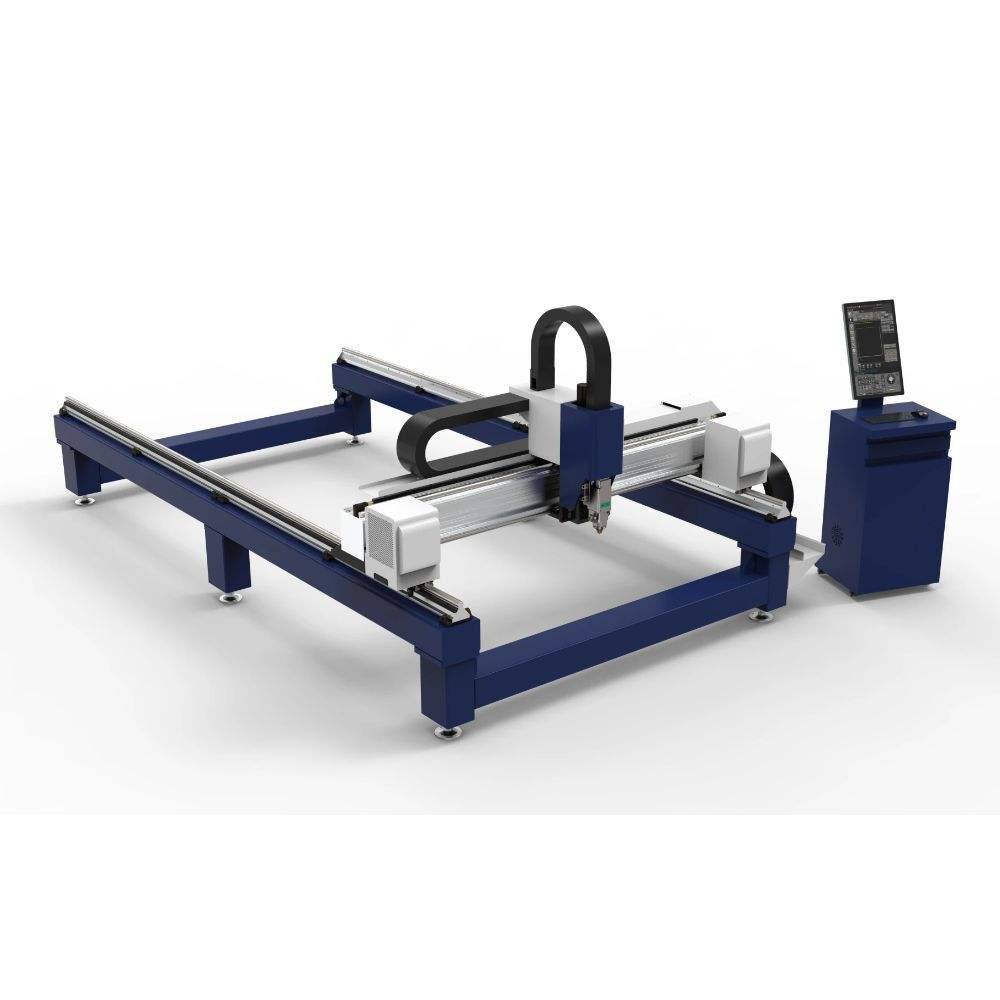
A 2kW laser source is only as precise as the motion system carrying it. In stainless steel fabrication, where tolerances are often measured in microns, the mechanical design of the gantry is paramount. Precision systems utilize a reinforced gantry, often made of extruded aluminum or welded steel that has undergone stress-relieving heat treatment. This ensures that the high accelerations (up to 1.2G or higher) required for thin-gauge laser cutting do not induce vibrations that would manifest as “chatter” marks on the stainless steel edge.
The integration of high-resolution AC servo motors and precision rack-and-pinion systems allows for positioning accuracies of ±0.03mm. In Toluca’s competitive automotive supply chain, this level of repeatability is non-negotiable. Furthermore, the CNC controller must feature advanced look-ahead capabilities, allowing the machine to adjust its speed dynamically when navigating tight corners or intricate geometries, ensuring that the heat input remains constant regardless of the path complexity.
Maintenance Protocols for Industrial Longevity
To maintain the precision of a 2kW laser system in a demanding environment like Toluca, a rigorous maintenance schedule is required. The optical path must be kept under positive pressure with clean, dry air to prevent dust contamination. Even a single speck of dust on a protective window can absorb laser energy, leading to “thermal lensing” or, in worst-case scenarios, the destruction of the optical element.
Gas Purity and Delivery Systems
The quality of the cut in stainless steel is directly proportional to the purity of the Nitrogen gas. For high-precision applications, a purity level of 99.99% (Grade 4.0) or higher is recommended. In Toluca, where industrial gas supply chains are robust, many facilities opt for bulk liquid nitrogen tanks or high-capacity Nitrogen generators. A 2kW system cutting 3mm stainless steel can consume Nitrogen at a rate of 40 to 60 cubic meters per hour; therefore, the delivery plumbing must be sized correctly to prevent pressure drops that would result in inconsistent cut quality.
Economic Impact and ROI for Toluca Manufacturers
Investing in a 2kW precision laser system offers a compelling Return on Investment (ROI) for Mexican fabricators. While higher power lasers (12kW to 30kW) are available, they often represent overkill for the majority of stainless steel components produced in the region. The 2kW system offers lower electrical consumption, reduced gas usage, and lower maintenance costs. By mastering the parameters of a 2kW source, shops can achieve edge qualities that eliminate the need for secondary grinding or polishing, significantly reducing the total cost per part.
Conclusion: The Future of Precision Fabrication
As Toluca continues to consolidate its position as a global manufacturing powerhouse, the role of precision laser cutting will only grow. The 2kW fiber laser represents the perfect intersection of technology and utility for stainless steel processing. By understanding the metallurgical requirements of the material, the atmospheric challenges of the High Plateau, and the mechanical requirements of the motion system, engineers can leverage these tools to produce world-class components. Precision is not merely a specification; it is a competitive advantage that defines the success of the modern industrial enterprise in Mexico.













