Introduction to 2kW Precision Laser Systems in Queretaro’s Industrial Landscape
Queretaro has established itself as the epicenter of Mexico’s aerospace and automotive sectors. Within this high-tech corridor, the demand for precision engineering has driven the adoption of advanced fiber laser technology. Among the various power configurations available, the 2kW precision laser system has emerged as the versatile workhorse for small to medium-scale manufacturing. This power level provides the optimal balance between electrical efficiency, capital investment, and the ability to process reflective alloys, specifically brass, which is a staple in the region’s electrical and decorative hardware industries.
The implementation of laser cutting technology in Queretaro’s industrial parks—such as El Marqués and Balvanera—requires a deep understanding of material science and optical physics. Unlike standard carbon steel, brass presents unique challenges due to its high thermal conductivity and optical reflectivity. A 2kW system, when configured with the correct beam delivery optics and assist gases, can achieve tolerances that meet the most stringent international standards, making it an indispensable asset for local Tier 2 and Tier 3 suppliers.

The Technical Advantage of 2kW Fiber Lasers
Fiber laser technology operates at a wavelength of approximately 1.064 microns. This specific wavelength is significantly better absorbed by non-ferrous metals compared to the 10.6 microns of traditional CO2 lasers. In a 2kW system, the energy density at the focal point is sufficient to overcome the initial reflectivity of brass, allowing for a stable “keyhole” welding effect that facilitates clean separation. This power level is particularly effective for brass thicknesses ranging from 0.5mm to 6mm, which covers the majority of industrial applications in the Queretaro manufacturing hub.
Furthermore, the 2kW power rating allows for high-speed processing without the excessive heat-affected zone (HAZ) associated with higher-power units. By maintaining a narrow kerf width, engineers can nest parts more tightly, maximizing material utilization—a critical factor when dealing with expensive alloys like brass C26000 or C36000.
Processing Brass: Overcoming Reflectivity and Thermal Conductivity
Brass is an alloy of copper and zinc, both of which are notorious for their ability to reflect laser radiation and dissipate heat rapidly. In the context of laser cutting, these properties can lead to equipment damage if not managed correctly. Back-reflection is the primary concern; if the laser beam is reflected back into the delivery fiber, it can cause catastrophic failure of the laser source. Modern 2kW systems utilized in Queretaro are equipped with advanced back-reflection isolation modules that monitor and divert reflected energy, ensuring the longevity of the optical components.
Optimizing Beam Parameters for Brass
To achieve a precision finish on brass, the 2kW system must be finely tuned. This involves adjusting the pulse frequency, duty cycle, and the focal position. For thinner brass sheets (under 2mm), a high-frequency pulse with a slightly negative focal position often yields the cleanest edge. As the thickness increases toward the 5mm or 6mm limit of a 2kW source, a continuous wave (CW) mode may be required to maintain enough energy density to push the molten metal through the bottom of the cut. The use of Nitrogen as an assist gas is standard in Queretaro’s precision shops to prevent oxidation and ensure a bright, solder-ready edge.
Assist Gas Dynamics in Precision Cutting
The role of the assist gas in 2kW laser cutting of brass cannot be overstated. High-pressure Nitrogen (typically 15-20 bar) is used to mechanically blow the molten brass out of the kerf. Because brass has a lower melting point than steel but a higher fluidity, the nozzle design and gas flow must be laminar to avoid dross (slag) adhesion on the underside of the part. Local engineers in Queretaro often utilize specialized “high-flow” nozzles that maintain a consistent pressure curtain around the beam, which is essential for maintaining the aesthetic requirements of architectural brass components.
Applications of 2kW Laser Systems in Queretaro
The versatility of the 2kW precision system allows it to serve multiple sectors within the Bajío region. From intricate electrical components to robust mechanical spacers, the applications are diverse and demanding.
Electrical and Electronic Components
Queretaro is home to numerous manufacturers of electrical switchgear and connectors. Brass is the preferred material for these components due to its excellent electrical conductivity. A 2kW laser cutting system allows for the production of complex busbars and terminal strips with high repeatability. The precision of the fiber laser ensures that hole diameters and slot dimensions remain within microns, which is vital for automated assembly lines where components must interface perfectly with plastic housings and other metallic parts.
Aerospace and Automotive Shims
In the aerospace sector, particularly around the Queretaro Aerospace Park, brass shims are frequently used for tolerance take-up in landing gear assemblies and engine mounts. These shims often require complex geometries that would be difficult or expensive to produce via traditional stamping. The 2kW laser provides the flexibility to produce small batches of custom shims with no tooling costs, significantly reducing lead times for MRO (Maintenance, Repair, and Overhaul) operations.
Machine Architecture and Motion Control
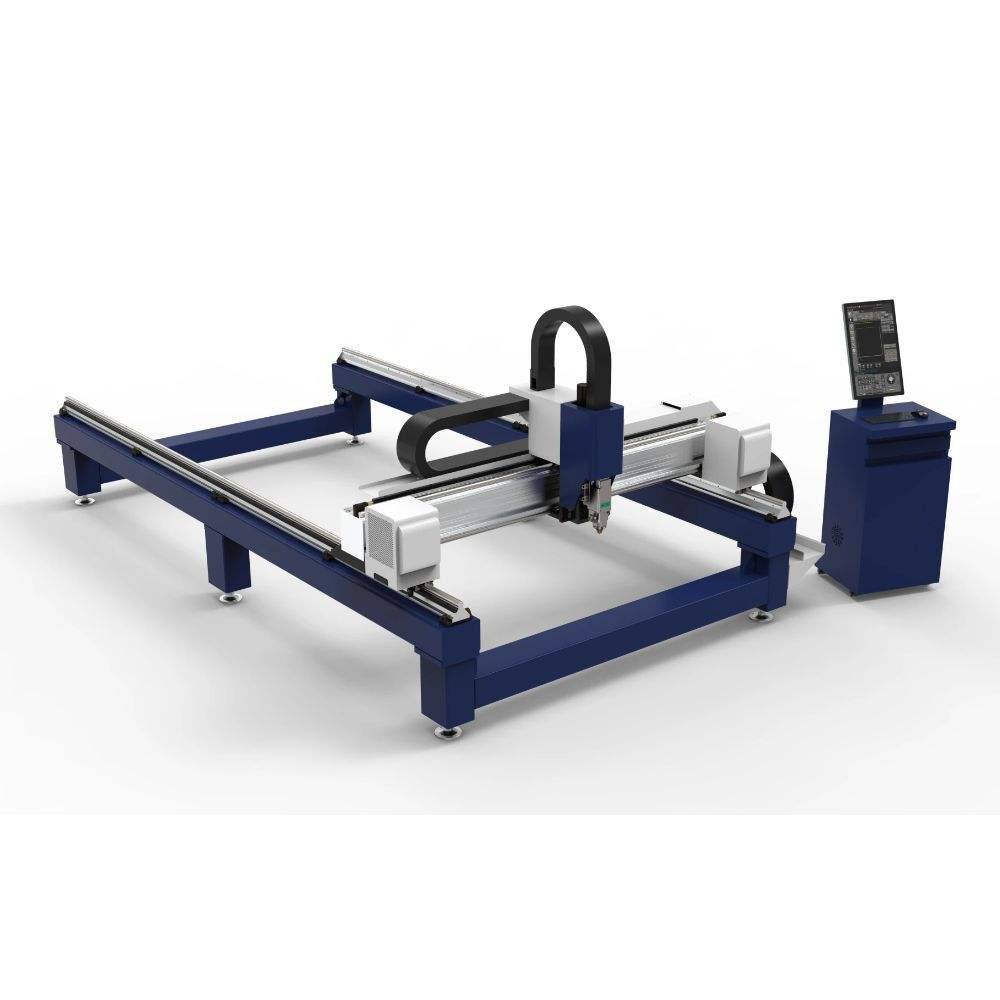
A 2kW laser source is only as good as the motion system it is paired with. For precision laser cutting of brass, the machine frame must be vibration-dampened and thermally stable. Most high-end systems in the Queretaro market utilize a gantry-style design with linear motors or high-precision rack-and-pinion drives. The CNC controller must be capable of “look-ahead” processing, which allows the machine to decelerate into corners and accelerate out of them while simultaneously modulating the laser power. This prevents “over-burning” at the corners, a common defect when processing high-conductivity materials like brass.
The Importance of the Cutting Head
The cutting head of a 2kW system contains the collimating lens and the focusing lens. For brass processing, these optics must be kept perfectly clean. Even a microscopic speck of dust can absorb enough laser energy to crack the lens. Many shops in Queretaro operate in climate-controlled environments to minimize dust and humidity, which can also affect the beam quality. Automatic focus adjustment is another critical feature, allowing the system to compensate for any slight deviations in material flatness across the cutting bed.
Maintenance Protocols for High-Reflectivity Metal Cutting
Operating a 2kW laser for brass requires a more rigorous maintenance schedule than cutting mild steel. The protective windows (cover slips) must be inspected daily. Because brass tends to “spatter” more than steel, the likelihood of debris hitting the protective window is higher. Furthermore, the cooling system (chiller) must be maintained at a precise temperature (usually within +/- 0.1 degree Celsius) to ensure the stability of the laser wavelength and the health of the diodes.
Training and Skill Development in Queretaro
The success of laser cutting operations in Queretaro is also tied to the local workforce. Institutions like UNAQ (Universidad Aeronáutica en Querétaro) and various technical centers provide a steady stream of technicians trained in CNC programming and laser safety. Understanding the specific parameters for brass—such as the relationship between feed rate and gas pressure—is a specialized skill that adds significant value to the local manufacturing ecosystem.
Conclusion: The Future of Precision Fabrication in Mexico
The 2kW precision laser system represents a critical technology for Queretaro’s continued industrial growth. As the global supply chain shifts toward “nearshoring,” Mexican manufacturers are being asked to produce increasingly complex parts with tighter tolerances. By mastering the laser cutting of challenging materials like brass, local companies can move up the value chain, transitioning from simple assembly to high-precision component manufacturing.
The integration of 2kW systems provides a scalable solution that meets the current needs of the automotive and aerospace industries while remaining adaptable for future innovations in green energy and advanced electronics. For any facility in Queretaro looking to enhance its metallurgical capabilities, the 2kW fiber laser stands as the definitive tool for precision, efficiency, and reliability in brass processing.













