Introduction to 3kW Precision Laser Systems in Queretaro
The industrial landscape of Queretaro, Mexico, has undergone a radical transformation over the last decade, evolving into a premier hub for aerospace, automotive, and heavy machinery manufacturing. Central to this evolution is the adoption of advanced fabrication technologies, specifically the 3kW precision fiber laser system. This power rating represents a critical “sweet spot” for regional manufacturers, offering a balance between high-speed throughput and the meticulous accuracy required by international quality standards such as AS9100 and IATF 16949. In the context of carbon steel fabrication—the backbone of Queretaro’s industrial output—the 3kW laser cutting system provides an unmatched competitive advantage in terms of edge quality and operational cost-efficiency.
The Strategic Importance of Queretaro’s Industrial Corridor
Queretaro’s strategic location along the NAFTA/USMCA corridor necessitates a manufacturing infrastructure that can respond rapidly to supply chain demands. Local facilities in industrial parks like El Marqués, Balvanera, and Parque Industrial Querétaro are increasingly moving away from traditional CO2 lasers and mechanical punching in favor of fiber technology. The 3kW precision system is particularly suited for this environment because it handles the most common gauges of carbon steel used in automotive chassis components, structural brackets, and aerospace tooling with high repeatability. The integration of laser cutting into these workflows allows Queretaro-based firms to minimize secondary finishing processes, thereby reducing lead times for global exports.
 laser cutting machine” style=”width: 100%; max-width: 800px; height: auto; margin: 20px 0;”>
Technical Specifications of the 3kW Fiber Laser
From an engineering perspective, a 3kW fiber laser system is characterized by its high wall-plug efficiency and superior beam quality. Unlike CO2 lasers, which rely on a complex arrangement of mirrors and gas mixtures, fiber lasers generate the beam within an ytterbium-doped optical fiber. This beam is then delivered via a flexible fiber optic cable to the cutting head, eliminating the need for beam path compensation and reducing maintenance overhead. For a 3kW system, the beam quality (expressed as M²) is typically near 1.1, allowing for an incredibly small focal spot size. This high power density is what enables the precision required for intricate geometries in carbon steel.
Wavelength and Beam Quality
The 1.07-micron wavelength of the fiber laser is approximately ten times shorter than that of a CO2 laser. This shorter wavelength is more readily absorbed by metallic surfaces, particularly carbon steel. In Queretaro’s high-precision shops, this means that more of the 3kW of energy is converted into heat at the material surface rather than being reflected. The result is a narrower kerf width and a significantly reduced heat-affected zone (HAZ), which is vital for maintaining the metallurgical integrity of high-carbon or alloyed steels that might otherwise become brittle during thermal processing.
Drive Systems and Positional Accuracy
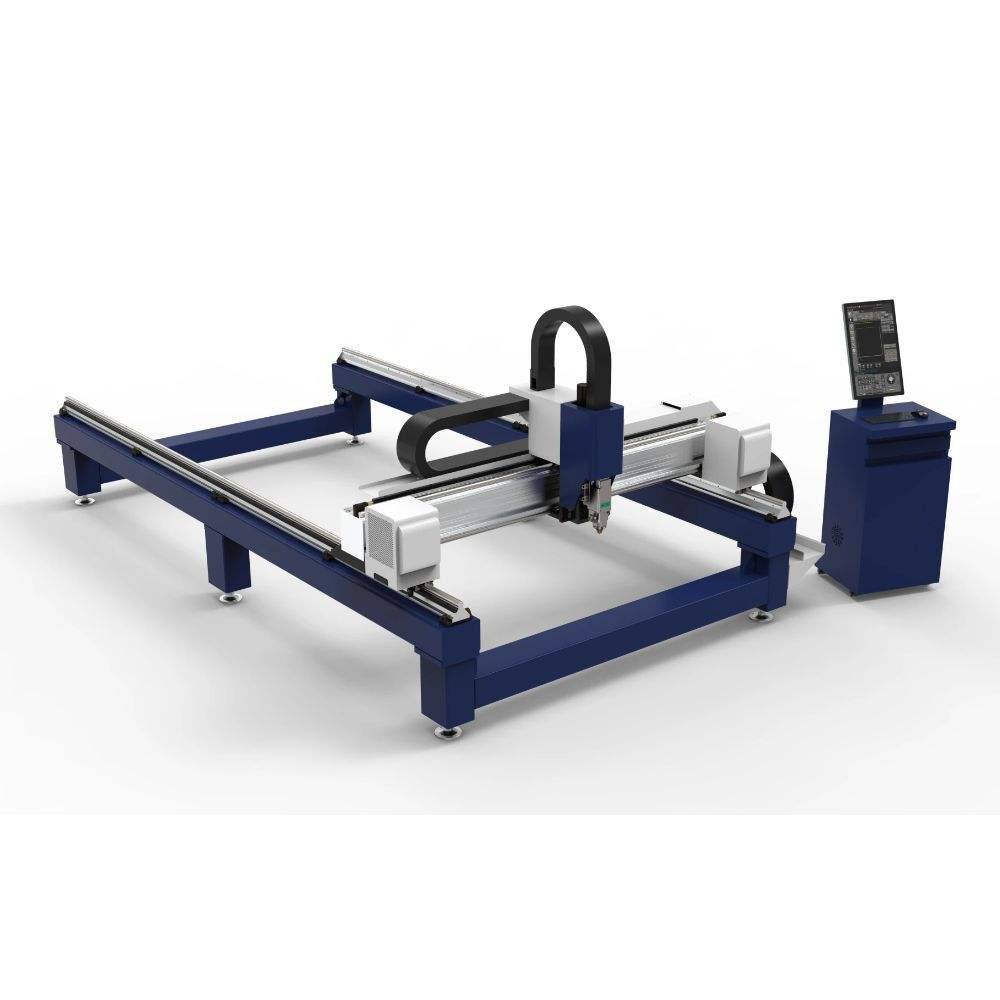
A 3kW laser source is only as effective as the motion system it is paired with. Precision systems in this class typically utilize high-torque AC servo motors and precision-ground rack-and-pinion systems or linear motors. In the demanding production environments of Queretaro, positional accuracy of ±0.03mm and repeatability of ±0.02mm are standard requirements. These specifications ensure that large batches of carbon steel parts, whether they are small washers or large structural plates, remain dimensionally consistent over thousands of cycles. The use of a rigid, stress-relieved gantry frame is essential to dampen vibrations during high-speed directional changes, which can exceed 1.2G of acceleration in top-tier 3kW models.
Optimizing Carbon Steel Laser Cutting
Carbon steel, while highly weldable and cost-effective, presents unique challenges during the laser cutting process. The material’s carbon content and surface finish (such as mill scale or oil) can influence the stability of the cut. For 3kW systems, the optimization of parameters is a science that involves balancing power, speed, gas pressure, and focal position. In Queretaro’s fabrication shops, technical operators must be adept at adjusting these variables to account for different grades of steel, ranging from standard A36 to high-strength low-alloy (HSLA) variants.
Material Grade Considerations: A36 to 1045
The most common material processed by 3kW lasers in Central Mexico is A36 hot-rolled steel. The challenge with A36 is the presence of surface oxides or “scale,” which can cause the laser beam to scatter or create dross on the underside of the cut. Precision systems mitigate this through advanced piercing technologies, such as multi-stage pulsing, which creates a clean entry hole without splashing molten metal onto the nozzle. For higher carbon steels like 1045, the 3kW system must be tuned to prevent excessive hardening of the cut edge, which could complicate subsequent machining or tapping operations.
Thickness Capacities and Edge Quality
A 3kW fiber laser is exceptionally efficient at processing carbon steel in the 1mm to 12mm range, often achieving cutting speeds that far exceed traditional methods. While the maximum capacity for a 3kW source on carbon steel can reach 20mm or even 25mm with oxygen assist, the “precision” aspect is most evident in the 3mm to 10mm range. Within this window, the laser can produce a square edge with minimal taper and a surface roughness (Ra) that often eliminates the need for grinding. This is particularly important for Queretaro’s automotive suppliers who provide components for assembly lines where fitment tolerances are extremely tight.
Assist Gas Selection: Oxygen vs. Nitrogen
The choice of assist gas is a critical decision in the laser cutting of carbon steel. Oxygen is the traditional choice for carbon steel because it triggers an exothermic reaction, adding thermal energy to the cutting process and allowing for greater thicknesses to be cut with 3kW of power. However, this leaves an oxide layer on the edge that must be removed before painting or welding. Increasingly, Queretaro manufacturers are utilizing high-pressure nitrogen for thinner carbon steel (up to 4mm or 6mm). Nitrogen cutting is a purely mechanical process that “pushes” the molten metal out of the kerf, resulting in a bright, oxide-free edge that is immediately ready for powder coating—a significant boost to lean manufacturing objectives.
Operational Best Practices for Queretaro Manufacturers
Operating a 3kW precision laser in Queretaro requires more than just high-end hardware; it requires a commitment to operational excellence. The region’s altitude (approximately 1,820 meters above sea level) results in lower atmospheric pressure, which can subtly affect the cooling efficiency of the laser’s chiller and the behavior of the assist gas. Engineering teams must ensure that the chiller units are rated for these conditions to maintain the laser source at a constant temperature, typically within ±1°C, to prevent beam instability.
Thermal Management and Heat Affected Zones (HAZ)
During the laser cutting of thick carbon steel, heat accumulation in the workpiece can lead to “self-burning” or “thermal runaway,” especially in small features or sharp corners. Advanced 3kW systems utilize “cool-cut” technologies or water-mist cooling to dissipate heat during the process. Furthermore, the CNC software must be capable of sophisticated “lead-in” strategies and corner-slowing algorithms to ensure that the heat input remains consistent across the entire geometry of the part. This precision ensures that the mechanical properties of the carbon steel are preserved, which is a non-negotiable requirement for structural aerospace components produced in the Queretaro cluster.
Nozzle Selection and Focal Alignment
The nozzle is the final point of contact between the machine and the process. For 3kW precision cutting, the use of double-layer nozzles is standard for oxygen cutting, while large-diameter single nozzles are preferred for nitrogen. Automatic nozzle changers and cleaning stations are highly recommended for Queretaro’s high-volume shops to reduce downtime and human error. Additionally, automated focal alignment—where the machine uses a sensor to determine the exact position of the beam’s waist relative to the material surface—is essential for maintaining consistency across different batches of carbon steel that may have slight variations in flatness.
Maintenance and Longevity in High-Production Environments
To maintain the “precision” in a 3kW laser system, a rigorous preventative maintenance schedule is mandatory. In the dusty environments sometimes found near industrial construction zones in Queretaro, the integrity of the optical path is paramount. Even though the fiber laser is largely “maintenance-free,” the external optics—specifically the protective windows (cover slips)—must be inspected and cleaned daily. A contaminated cover slip will absorb laser energy, leading to thermal shift, where the focus point moves during the cut, resulting in a loss of precision and potential damage to the cutting head.
The linear guides and drive components also require regular lubrication and calibration. Using a laser interferometer for annual geometric calibration ensures that the machine’s X and Y axes remain perfectly perpendicular, a factor that is often overlooked but critical for the accuracy of large-format carbon steel parts. For companies operating in Queretaro, sourcing local technical support and genuine spare parts is vital to minimizing Mean Time To Repair (MTTR) and maximizing the Return on Investment (ROI) of the system.
Conclusion: The Future of Precision Fabrication
The 3kW precision laser system has established itself as an indispensable tool for the modern Queretaro fabrication facility. By offering a perfect blend of power and accuracy, it enables local manufacturers to meet the rigorous demands of the global carbon steel market. As the region continues to attract high-tech investment, the ability to perform high-speed, high-precision laser cutting will remain a primary differentiator for successful enterprises. Through the careful selection of assist gases, optimization of cutting parameters, and a disciplined approach to maintenance, Queretaro’s engineers can continue to push the boundaries of what is possible in metal fabrication, ensuring the region’s position as a leader in industrial innovation for years to come.













