Advanced 3kW Fiber laser cutting for Aluminum Alloys in the Queretaro Industrial Corridor
The industrial landscape of Queretaro has undergone a radical transformation over the last decade, evolving into one of North America’s premier hubs for aerospace, automotive, and high-tech manufacturing. Central to this evolution is the adoption of advanced fabrication technologies, specifically the 3kW fiber laser cutting machine. As manufacturers in regions like El Marqués, Jurica, and Colón strive for tighter tolerances and higher throughput, the technical nuances of processing aluminum alloys have become a focal point of engineering excellence. This guide explores the integration of 3kW fiber laser technology within the Queretaro industrial sector, focusing on the specific challenges and solutions associated with aluminum alloy fabrication.

The Technical Advantage of 3kW Fiber Laser Technology
Fiber laser technology operates at a wavelength of approximately 1.06 microns, which is significantly more efficient than the 10.6 microns of traditional CO2 lasers. For a 3kW power rating, this wavelength allows for a much smaller focal spot and higher energy density. When cutting aluminum, a material known for its high thermal conductivity and reflectivity, this energy density is critical. The 3kW threshold represents a “sweet spot” for many Queretaro-based job shops, providing enough power to penetrate mid-range plate thicknesses (up to 10mm or 12mm) while maintaining high speeds on thinner gauge sheets (1mm to 4mm) used in automotive heat shields and aerospace brackets.
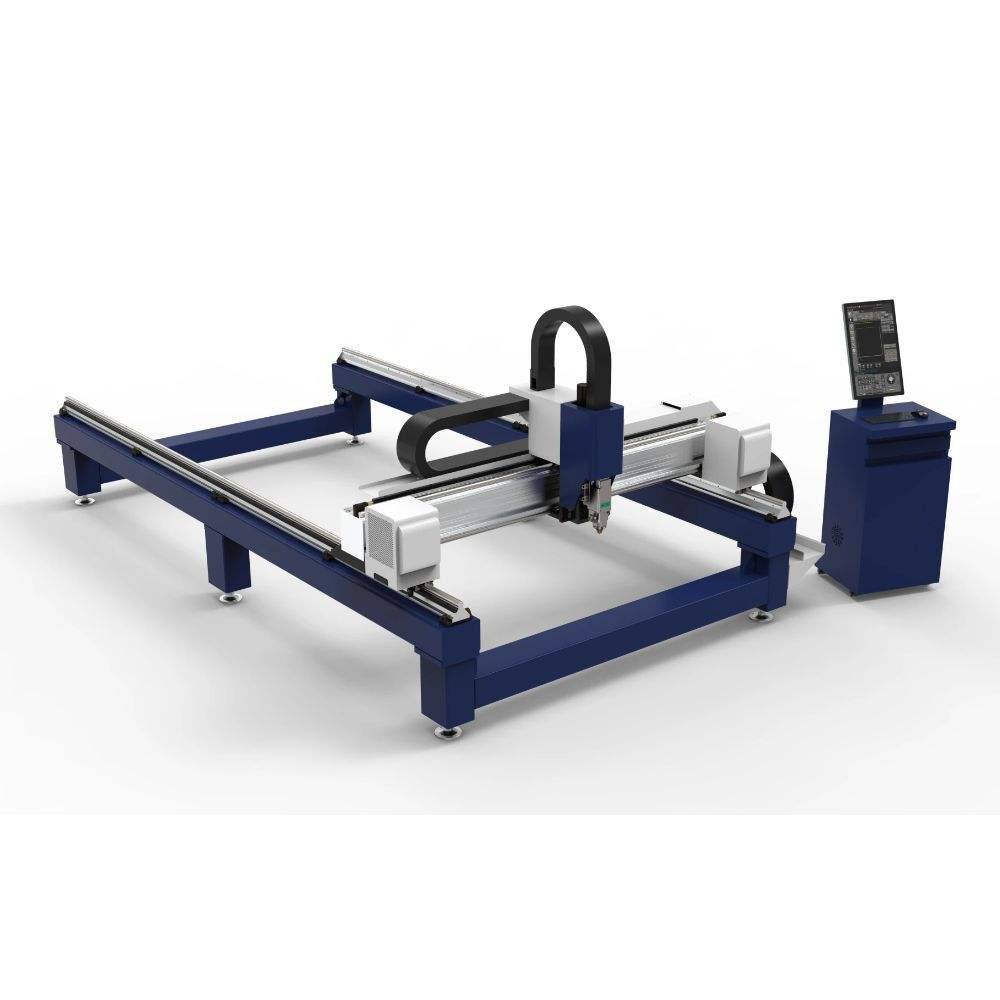
The 3kW fiber laser cutting system utilizes a solid-state laser source, where the laser beam is generated in an active fiber and delivered via a flexible transport fiber to the cutting head. This eliminates the need for complex mirror systems and beam path purging, resulting in a machine that is not only more robust but also significantly cheaper to maintain in the dusty or high-temperature environments often found in large industrial parks.
Processing Aluminum Alloys: Overcoming Reflectivity and Thermal Conductivity
Aluminum is notoriously difficult for traditional laser systems. Its high reflectivity can cause “back-reflection,” where the laser beam bounces off the material surface and returns through the delivery fiber, potentially damaging the laser source. However, modern 3kW fiber laser cutting machines are equipped with back-reflection isolators and advanced sensing technology that allows them to process even highly reflective 5000 and 6000 series alloys without risk to the hardware.
Furthermore, aluminum’s high thermal conductivity means that heat dissipates rapidly away from the cut zone. This requires a high-intensity energy source to reach the melting point quickly before the surrounding material can absorb the heat. The 3kW fiber laser provides the necessary power density to achieve a “keyhole” effect, where the material is vaporized and melted instantaneously, allowing for a narrow kerf and minimal Heat Affected Zone (HAZ). This is particularly important for Queretaro’s aerospace sector, where material properties must remain consistent to meet stringent safety standards.
Optimizing Cutting Parameters for Queretaro’s Manufacturing Standards
To achieve high-quality edges in aluminum alloy cutting, engineers must meticulously calibrate several variables. In Queretaro’s competitive market, the difference between a part that requires post-process deburring and one that is “ready-to-ship” often dictates profit margins.
1. Assist Gas Selection: For aluminum, nitrogen is the preferred assist gas. High-pressure nitrogen (typically between 15 and 20 bar) acts as a mechanical force to eject molten material from the kerf while preventing oxidation. This results in a bright, clean edge. While some shops use compressed air to reduce costs, the resulting edge often exhibits a slight oxide layer which can interfere with subsequent welding or painting processes.
2. Nozzle Geometry: A double-layer nozzle is often recommended for 3kW fiber laser cutting of thicker aluminum plates. This design helps stabilize the gas flow and ensures that the pressure is concentrated directly on the melt pool, reducing the occurrence of dross (burrs) on the bottom edge of the workpiece.
3. Focal Position: Unlike carbon steel, where the focus is often on the surface, aluminum cutting usually requires a negative focus—meaning the focal point is positioned inside or near the bottom of the material. This ensures that the kerf is wide enough at the bottom to allow for efficient melt ejection.
Regional Industrial Integration: Aerospace and Automotive
The demand for 3kW fiber laser cutting in Queretaro is driven largely by the “Bajío” region’s dominance in high-end manufacturing. Companies supplying Tier 1 and Tier 2 automotive manufacturers require components made from 6061-T6 or 5052 aluminum. These alloys are favored for their strength-to-weight ratio but require precise laser cutting to maintain their structural integrity.
In the aerospace sector, where Queretaro hosts giants like Bombardier and Airbus suppliers, the 3kW fiber laser is used for intricate ductwork, interior panels, and structural reinforcements. The ability of the fiber laser to maintain a consistent beam quality over long production runs ensures that the thousandth part is as accurate as the first. This level of repeatability is essential for AS9100 certification compliance, which is a standard requirement for many local facilities.
Operational Efficiency and ROI in the Mexican Market
For a manufacturing plant in Queretaro, the return on investment (ROI) for a 3kW fiber laser cutting machine is often realized through energy savings and increased throughput. Fiber lasers boast a wall-plug efficiency of about 30-35%, compared to the 8-10% seen in CO2 systems. Given the rising energy costs in industrial zones, this reduction in kilowatt-hour consumption directly impacts the bottom line.
Moreover, the speed of laser cutting on aluminum thin-to-mid sheets is unparalleled. A 3kW system can cut 2mm aluminum at speeds exceeding 20 meters per minute, depending on the machine’s motion system (linear motors vs. rack and pinion). When combined with automated loading and unloading systems, a single 3kW machine can replace multiple older units, freeing up valuable floor space in Queretaro’s increasingly expensive industrial real estate.
Maintenance and Environmental Considerations
The environment in Queretaro can be challenging for high-precision machinery. The region experiences significant temperature fluctuations and occasional high dust levels. Therefore, the 3kW fiber laser cutting machine must be paired with a high-performance industrial chiller and a robust filtration system. The chiller must maintain the laser source and the cutting head within a narrow temperature range (usually ±1°C) to prevent thermal drift, which can affect cut accuracy.
Preventative maintenance schedules should focus on the protective windows of the cutting head. When laser cutting aluminum, the high-pressure gas and the molten metal can lead to “spatter.” If the protective window is contaminated, the laser energy will be absorbed by the debris, leading to a “thermal lens” effect or, worse, a cracked lens. Regular inspection and cleaning in a controlled, clean-room environment are essential for maintaining the machine’s peak performance.
The Future of Fiber Laser Cutting in the Bajío Region
As Queretaro continues to position itself as a “Smart Industry” leader, the role of 3kW fiber laser cutting will expand into more integrated workflows. We are seeing a shift toward Industry 4.0, where the laser cutting machine is connected to the cloud for real-time monitoring of gas consumption, power usage, and cutting efficiency. This data-driven approach allows Queretaro manufacturers to predict maintenance needs before a failure occurs, ensuring 24/7 operation for demanding supply chains.
Furthermore, the versatility of the 3kW power level allows it to handle not just aluminum, but also copper and brass—materials that were once considered “un-cuttable” by lasers. This flexibility is vital for the growing electric vehicle (EV) component market in Mexico, where aluminum and copper are primary materials for battery enclosures and busbars.
Conclusion
The 3kW fiber laser cutting machine represents a critical technological pillar for the Queretaro manufacturing sector. By mastering the complexities of aluminum alloy fabrication—from managing reflectivity to optimizing nitrogen assist gas pressures—local engineers are setting new benchmarks for quality and efficiency. As the region’s industrial base continues to mature, the precision and reliability of fiber laser technology will remain the cornerstone of competitive manufacturing in the heart of Mexico. Investing in high-quality laser cutting infrastructure is no longer an option but a necessity for any firm looking to participate in the global aerospace and automotive supply chains centered in Queretaro.













