Introduction to 1.5kW Fiber laser cutting in Monterrey’s Industrial Sector
Monterrey, Nuevo León, stands as the industrial backbone of Mexico, often referred to as the “Sultana del Norte.” In this high-output environment, the metal-mechanical and automotive sectors demand precision, speed, and cost-efficiency. The 1.5kW fiber laser cutting machine has emerged as the definitive solution for small to medium enterprises (SMEs) and specialized workshops focusing on carbon steel fabrication. This power range offers a strategic balance between capital investment and operational capability, particularly for those processing thin to medium-gauge materials.
Fiber laser technology utilizes an optical fiber doped with rare-earth elements as the gain medium. Unlike traditional CO2 lasers, fiber lasers operate at a wavelength of approximately 1.06 microns, which is more readily absorbed by metals, especially carbon steel. This guide explores the technical nuances of operating a 1.5kW system within the specific industrial context of Monterrey, focusing on optimizing laser cutting parameters for carbon steel.
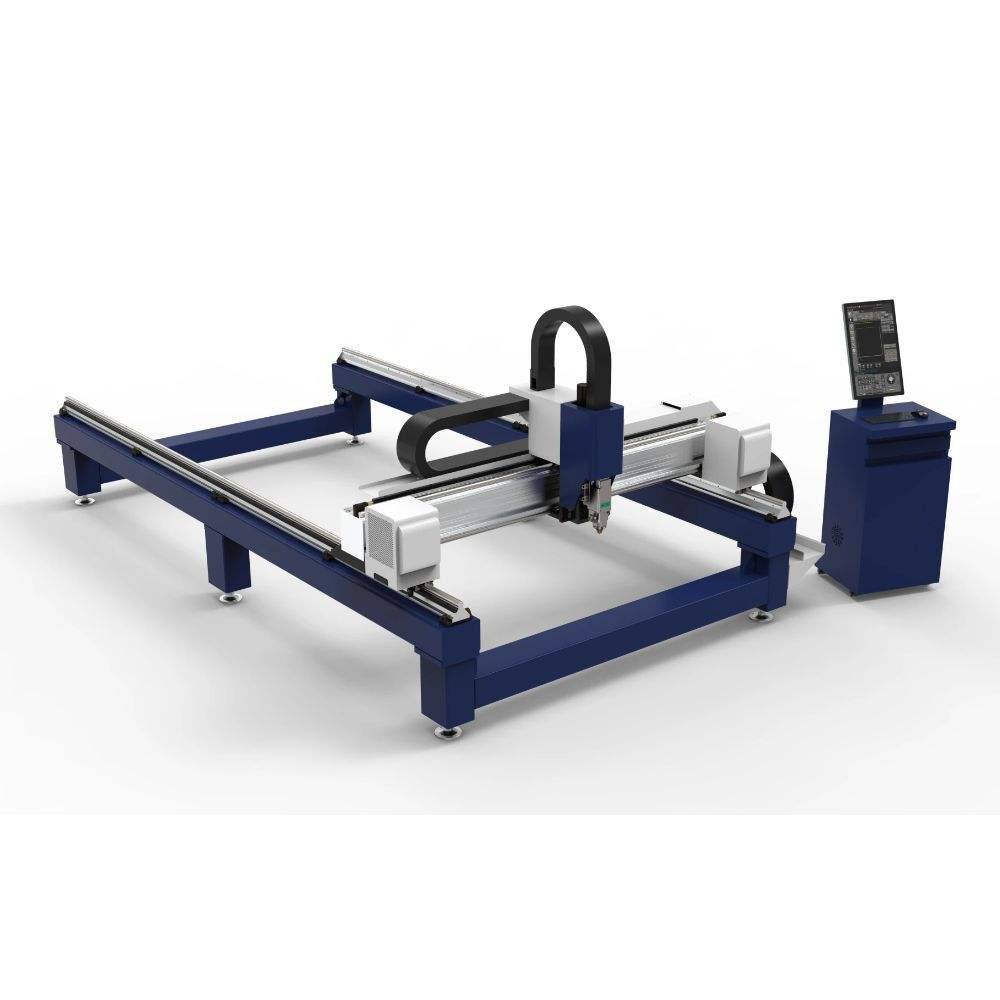
Technical Specifications of the 1.5kW Fiber Laser
Power Density and Beam Quality
A 1.5kW fiber laser source provides a concentrated beam of high-intensity light. The “quality” of this beam, often measured by the Beam Parameter Product (BPP), determines how tightly the laser can be focused. For carbon steel applications, a 1.5kW machine typically utilizes a 50-micron or 100-micron transport fiber. This allows for a small focal spot, resulting in high power density that can vaporize or melt carbon steel instantly at the point of contact. This precision is vital for the intricate geometries required by Monterrey’s Tier 2 and Tier 3 automotive suppliers.
Wavelength Advantages
The 1.06-micron wavelength of the fiber laser is highly efficient for carbon steel. Because the material reflects less of the energy compared to CO2 lasers (10.6 microns), more power is converted into heat within the kerf. This results in faster cutting speeds and a narrower Heat Affected Zone (HAZ), which is critical for maintaining the structural integrity of the steel parts used in construction and heavy machinery.
Processing Carbon Steel: Thickness and Performance
Optimal Thickness Ranges
While a 1.5kW fiber laser can technically pierce carbon steel up to 14mm or 16mm, its “production” or “sweet spot” range is typically between 1mm and 10mm. Within this range, the machine achieves a balance of edge quality and speed that maximizes throughput. In Monterrey’s fabrication shops, where high-volume production of brackets, plates, and enclosures is common, the 1.5kW system excels at 3mm to 6mm thicknesses, often reaching speeds that significantly outperform plasma or waterjet alternatives.
Cutting Speeds and Efficiency
For a 1.5kW machine, typical cutting speeds for carbon steel are as follows:
- 1mm Carbon Steel: 18 – 22 meters per minute.
- 3mm Carbon Steel: 4.5 – 6 meters per minute.
- 6mm Carbon Steel: 1.8 – 2.4 meters per minute.
- 10mm Carbon Steel: 0.8 – 1.2 meters per minute.
These speeds demonstrate why laser cutting is the preferred method for the “Just-in-Time” (JIT) manufacturing cycles prevalent in the Monterrey industrial corridor. The ability to move from CAD design to finished part in minutes reduces lead times and inventory costs.

The Role of Assist Gases in Carbon Steel Fabrication
Oxygen (O2) Cutting
When laser cutting carbon steel, Oxygen is the most common assist gas used for thicknesses above 2mm. The process relies on an exothermic reaction; the Oxygen reacts with the heated iron in the steel, creating additional thermal energy that aids the melting process. This allows for thicker cuts with relatively low laser power. However, Oxygen cutting leaves a thin layer of iron oxide on the cut edge, which may need to be removed before painting or powder coating—a common step in Monterrey’s appliance manufacturing industry.
Nitrogen (N2) and Compressed Air
For thinner carbon steel (under 2mm) or when a clean, oxide-free edge is required, Nitrogen is used. Nitrogen acts as a shielding gas, blowing away the molten metal without reacting with it. This results in a “bright” edge. In Monterrey, many shops are also adopting high-pressure dry compressed air for 1.5kW systems. While the cut quality is slightly lower than Nitrogen, the significant reduction in gas costs makes it a highly competitive option for structural components where aesthetics are secondary to functional precision.
Environmental Considerations in Monterrey
Temperature and Humidity Management
Monterrey is known for its extreme climate, with summer temperatures often exceeding 40°C. For a 1.5kW fiber laser, thermal management is paramount. The laser source and the cutting head must be maintained at a stable temperature to prevent “thermal drift,” which can affect the focal point and cut quality. High-quality industrial chillers are mandatory. Operators must ensure that the chiller’s cooling capacity is rated for the local ambient conditions, often requiring a “tropicalized” setup or an air-conditioned enclosure for the laser source and electrical cabinets.
Dust and Particle Filtration
The laser cutting of carbon steel produces significant amounts of fine dust and iron oxide fumes. Given the environmental regulations in the Monterrey metropolitan area (monitored by SEMARNAT and local authorities), a robust dust extraction and filtration system is essential. This not only protects the environment but also prevents particulates from settling on the machine’s precision racks, pinions, and optical components, extending the lifespan of the equipment.
Maintenance Protocols for High-Performance Cutting
Optical Care
The 1.5kW system relies on a series of protective windows and lenses. Even a microscopic speck of dust on the protective window can absorb laser energy, heat up, and shatter the glass, potentially damaging the expensive cutting head. Daily inspections in a clean environment are required. In Monterrey’s industrial parks, where ambient dust can be high, pressurized cutting heads that maintain a positive internal pressure are highly recommended.
Mechanical Calibration
To maintain the precision required for aerospace or automotive parts, the machine’s gantry must be perfectly aligned. Regular checks of the X and Y axis perpendicularity, as well as the Z-axis height sensing calibration, ensure that the laser cutting remains consistent across the entire bed. Lubrication of the linear guides should be performed according to the duty cycle, typically every 40 to 80 hours of operation.
Economic Impact and ROI for Monterrey Businesses
Nearshoring and the USMCA Context
With the rise of “nearshoring,” many companies are moving production closer to the North American market. Monterrey is the primary beneficiary of this trend. Investing in a 1.5kW fiber laser cutting machine allows local shops to compete with international manufacturers by offering high-precision components with low overhead. The 1.5kW power level is particularly attractive because it requires less electrical infrastructure compared to 10kW+ systems, making it easier to integrate into existing facilities.
Operational Cost Analysis
The primary costs of laser cutting in Monterrey include electricity, assist gases, and consumables (nozzles and protective windows). Because fiber lasers have a wall-plug efficiency of about 30-35% (compared to 10% for CO2), the electrical cost per part is remarkably low. When cutting carbon steel with Oxygen, the gas consumption is also relatively low, leading to a rapid Return on Investment (ROI), often achieved within 12 to 18 months for shops running two shifts.
Conclusion
The 1.5kW fiber laser cutting machine represents a versatile and powerful tool for the Monterrey carbon steel fabrication market. By understanding the technical requirements of the laser-material interaction, optimizing assist gas usage, and accounting for the local environmental challenges, manufacturers can achieve world-class precision. Whether producing components for the heavy machinery of the construction sector or intricate parts for the automotive industry, the 1.5kW fiber laser provides the reliability and efficiency necessary to thrive in Mexico’s most competitive industrial landscape.
As technology continues to evolve, the integration of CNC automation and advanced software will further enhance the capabilities of these machines, ensuring that Monterrey remains at the forefront of global manufacturing excellence. For any workshop looking to upgrade from traditional methods, the transition to fiber laser cutting is not just an equipment upgrade—it is a strategic move toward long-term industrial viability.













