Introduction to 1.5kW Tube laser cutting in Toluca
The industrial landscape of Toluca, State of Mexico, has rapidly evolved into one of the most significant manufacturing hubs in North America. As the region continues to attract automotive, aerospace, and heavy machinery industries, the demand for high-precision metal fabrication has surged. At the forefront of this technological shift is the 1.5kW tube laser cutting machine. This specific power configuration—1500 watts of fiber laser energy—represents the “sweet spot” for many manufacturers specializing in stainless steel tube processing. It offers an ideal balance between capital investment, operational efficiency, and the high-quality finish required by modern engineering standards.
In Toluca’s competitive market, the ability to process stainless steel with speed and accuracy is a prerequisite for Tier 1 and Tier 2 suppliers. Whether it is for exhaust systems, structural frames, or architectural components, the 1.5kW tube laser provides the versatility needed to handle various geometries, including round, square, rectangular, and oval profiles. This guide explores the technical nuances, operational advantages, and regional considerations for deploying 1.5kW laser cutting technology in the Toluca industrial corridor.
The Strategic Importance of Toluca’s Industrial Sector
Toluca is home to several major industrial parks, such as Exportec and Parque Industrial Lerma, where precision is not just an advantage but a requirement. The local economy is heavily integrated with global supply chains, meaning that local fabricators must meet international standards for tolerance and edge quality. Implementing a 1.5kW tube laser system allows local shops to transition from manual saw cutting and drilling to fully automated laser cutting. This transition significantly reduces lead times and eliminates the need for secondary finishing processes, which is critical in a high-output environment like Toluca.

Technical Capabilities of the 1.5kW Fiber Laser
The 1.5kW fiber laser source is engineered for high-speed processing of thin to medium-gauge metals. Unlike CO2 lasers of the past, fiber laser technology utilizes an optical fiber doped with rare-earth elements to amplify light. This results in a beam with a much smaller spot size and higher energy density. For stainless steel, which has a high absorption rate for the 1.06-micron wavelength of fiber lasers, the 1.5kW output is exceptionally efficient.
Power Output and Material Interaction
At 1500 watts, the laser beam can penetrate stainless steel with remarkable precision. The interaction between the beam and the material is characterized by a narrow kerf width, which minimizes material waste and allows for intricate designs that would be impossible with mechanical methods. In the context of laser cutting, the 1.5kW power level is particularly effective for stainless steel wall thicknesses ranging from 1mm to 5mm. While it can cut thicker materials, its peak efficiency—measured in millimeters per minute—is found within this range, making it perfect for the majority of automotive and furniture applications found in the Toluca region.
Stainless Steel Thickness Thresholds
When processing stainless steel, specifically grades 304 and 316, the 1.5kW laser provides clean, burr-free cuts. For a 1mm stainless tube, the machine can achieve cutting speeds exceeding 15-20 meters per minute. As the thickness increases to 3mm or 4mm, the speed decreases, but the structural integrity of the cut remains high. For manufacturers in Toluca working on high-end commercial kitchen equipment or medical devices, this power level ensures that the chromium-oxide protective layer of the stainless steel is minimally disturbed, preserving the material’s corrosion resistance.
Optimizing Stainless Steel Tube Processing
Cutting stainless steel presents unique challenges compared to carbon steel. The material’s thermal conductivity and viscosity when molten require precise control over the laser parameters and auxiliary gases. To achieve the best results in a 1.5kW system, operators must focus on the synergy between the laser frequency, duty cycle, and gas pressure.
Auxiliary Gas Selection: Nitrogen vs. Oxygen
In the laser cutting of stainless steel, the choice of auxiliary gas is paramount. For 1.5kW systems, Nitrogen is almost universally preferred. Nitrogen acts as a shielding gas that prevents oxidation during the melting process. This results in a “bright” or “silver” cut edge that does not require descaling or painting. In Toluca’s industrial applications, where stainless steel is often chosen for its aesthetic and hygienic properties, Nitrogen-assisted cutting is the standard. While Oxygen can be used to cut thicker sections by adding exothermic energy, it leaves a dark oxide layer that must be mechanically removed, increasing labor costs.
Minimizing the Heat-Affected Zone (HAZ)
One of the primary advantages of the 1.5kW fiber laser is its ability to concentrate heat into a very small area. This minimizes the Heat-Affected Zone (HAZ), which is critical for maintaining the mechanical properties of the stainless steel tube. Excessive heat can lead to warping or “sugaring” on the inside of the tube. By fine-tuning the focal point and utilizing high-pressure Nitrogen, the 1.5kW system ensures that the heat is dissipated quickly, leaving the surrounding material unaffected. This is especially important for thin-walled tubes used in the aerospace components manufactured in the State of Mexico.
Key Components of the Tube Laser System
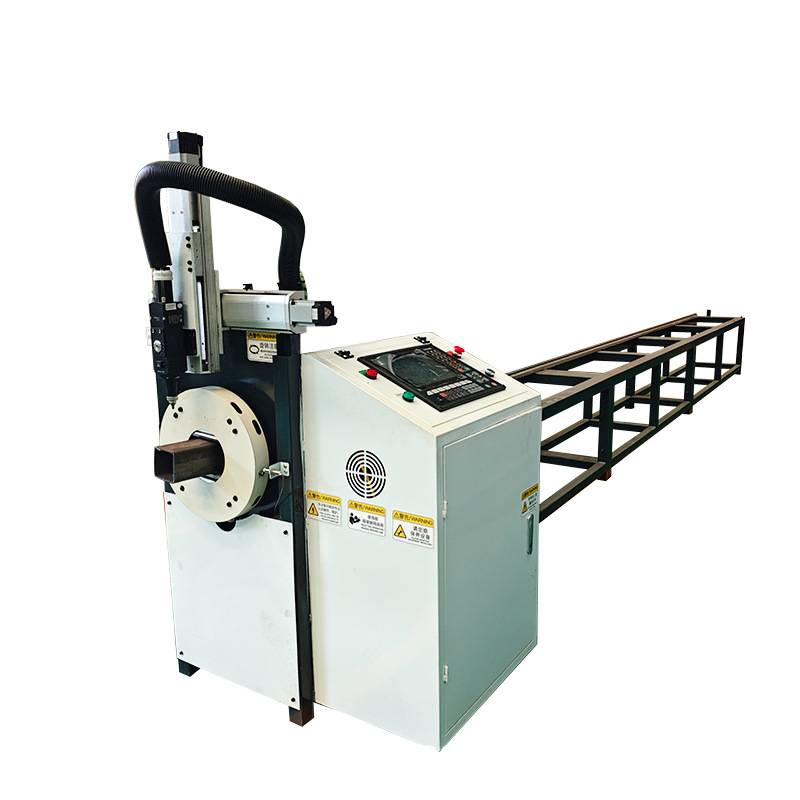
A 1.5kW tube laser is more than just its power source; it is a complex assembly of high-precision components designed to handle long, often heavy, cylindrical or prismatic workpieces. For a facility in Toluca, selecting a machine with robust mechanical components is essential for long-term reliability.
Precision Chucks and Support Systems
The chuck system is the heart of the tube laser. Most 1.5kW machines feature pneumatic or electric chucks that automatically center and clamp the tube. In stainless steel processing, where surface finish is vital, the chuck jaws must be designed to grip the material firmly without scratching or deforming it. Furthermore, as the laser head moves along the tube, an intelligent support system must prevent the tube from sagging, which would otherwise lead to dimensional inaccuracies. High-end models used in Toluca often incorporate “active” supports that adjust their height in real-time based on the tube’s rotation.
Fiber Laser Source and Cutting Head
The reliability of the 1.5kW source (often from brands like IPG, Raycus, or nLIGHT) determines the machine’s uptime. Coupled with an auto-focus cutting head, the system can automatically adjust the beam’s focus based on the material thickness and shape. This automation is vital for Toluca’s factories that run multiple shifts, as it reduces the reliance on highly skilled manual intervention and ensures consistency across thousands of parts.
Applications in Toluca’s Manufacturing Landscape
The versatility of 1.5kW laser cutting technology makes it applicable across various sectors within the Toluca valley. The ability to cut complex notches, holes, and end-profiles in a single pass has revolutionized how local engineers design products.
Automotive and Transportation Components
Toluca is a pillar of Mexico’s automotive industry. 1.5kW tube lasers are used to produce seat frames, exhaust manifolds, and chassis reinforcements. The precision of the laser allows for “tab-and-slot” designs, where parts fit together perfectly for welding, reducing the need for expensive jigs and fixtures. Stainless steel’s strength-to-weight ratio makes it ideal for these applications, and the fiber laser handles it with ease.
Industrial Furniture and Architectural Accents
Beyond heavy industry, there is a growing market in Toluca for high-end stainless steel furniture and architectural features. The 1.5kW laser can cut intricate patterns into square tubes for office partitions, handrails, and decorative facades. The high-speed laser cutting capability ensures that these aesthetic products can be mass-produced at a competitive price point while maintaining a premium look.
Operational Considerations for the Toluca Region
Operating high-tech machinery in Toluca requires consideration of the local environment. Factors such as altitude and power stability can influence the performance of a 1.5kW fiber laser.
Altitude and Environmental Factors
Toluca sits at an elevation of approximately 2,660 meters (8,730 feet). High altitude results in lower air density, which can affect the cooling efficiency of the laser’s chiller system. It is crucial for manufacturers to ensure that their water chillers are rated for the local climate and that the laser source is kept in a temperature-controlled environment to prevent condensation. Additionally, the compressed air systems used for pneumatic components must be adjusted for the lower atmospheric pressure to ensure consistent clamping force in the chucks.
Power Stability and Infrastructure
While Toluca has robust industrial infrastructure, voltage fluctuations can be detrimental to sensitive fiber laser electronics. Installing a high-quality voltage stabilizer and surge protector is a mandatory investment for any 1.5kW laser cutting installation in the region. This protects the laser source and the CNC controller from power spikes, ensuring a long operational lifespan and preventing costly downtime.
Maintenance and Longevity of the Laser System
To maintain the precision of a 1.5kW tube laser in a dusty industrial environment like Toluca, a strict maintenance schedule is required. The optical components, including the protective windows and lenses, must be inspected and cleaned daily to prevent “thermal lensing” or permanent damage from metal splatter. The guide rails and rack-and-pinion systems should be lubricated regularly to ensure smooth movement. Because fiber lasers have few moving parts compared to CO2 lasers, the primary focus remains on cleanliness and the integrity of the gas delivery system.
Conclusion
The 1.5kW tube laser cutter is a transformative tool for the stainless steel fabrication industry in Toluca. By providing a perfect blend of power, precision, and efficiency, it enables local manufacturers to compete on a global stage. As the industrial sector in the State of Mexico continues to expand, the adoption of fiber laser cutting technology will be the defining factor for companies looking to optimize their production, reduce waste, and deliver superior quality stainless steel components. Investing in a 1.5kW system is not just an upgrade in machinery; it is a strategic move toward the future of automated manufacturing.













