Introduction to 3kW Fiber Laser Technology in Monterrey’s Industrial Sector
Monterrey, often recognized as the industrial capital of Mexico, has become a global hub for advanced manufacturing, particularly in the automotive, aerospace, and HVAC sectors. As international companies continue to expand their footprint in the region, the demand for precision metal fabrication has reached unprecedented levels. Central to this evolution is the implementation of the 3kW fiber tube laser cutter, a machine that offers the perfect balance of power, precision, and efficiency for processing non-ferrous metals like brass.
In the context of modern engineering, laser cutting has transitioned from a specialized service to a fundamental manufacturing requirement. For Monterrey-based workshops and Tier 1 suppliers, the ability to process brass tubing with high repeatability is essential. Brass, known for its excellent electrical conductivity, corrosion resistance, and aesthetic appeal, presents unique challenges during thermal processing. A 3kW fiber laser system provides the specific wavelength and power density required to overcome the material’s inherent reflectivity while maintaining the high throughput demanded by the Mexican manufacturing market.
 laser cutting machine” style=”width: 100%; max-width: 800px; height: auto; margin: 20px 0;”>
Technical Specifications of the 3kW Tube Laser Cutter
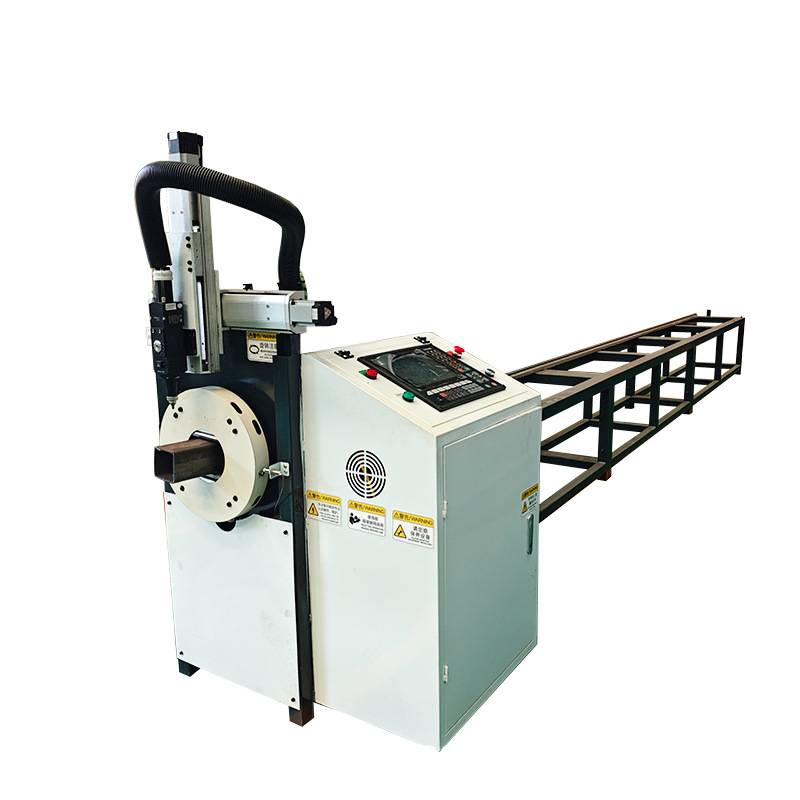
The 3kW power rating is widely considered the “sweet spot” for industrial tube processing. It provides enough energy to penetrate thick-walled brass tubes while remaining energy-efficient compared to higher-wattage systems. These machines are engineered to handle various geometries, including round, square, rectangular, and oval profiles, which are common in Monterrey’s diverse industrial landscape.
Precision Chuck Systems and Material Handling
The mechanical integrity of a tube laser depends heavily on its chuck system. High-end 3kW models typically feature pneumatic or hydraulic self-centering chucks that ensure the tube remains perfectly aligned during high-speed rotation. In a city like Monterrey, where production volume is key, many facilities opt for automated loading systems. These systems allow for continuous laser cutting operations, reducing manual intervention and minimizing the risk of material deformation during the loading phase. The synchronization between the chuck rotation and the laser head movement is controlled by sophisticated CNC software, ensuring that complex geometries and interlocking joints are cut with sub-millimeter accuracy.
Fiber Laser Source and Beam Quality
The heart of the machine is the fiber laser source. Unlike traditional CO2 lasers, fiber lasers utilize an optical fiber doped with rare-earth elements. This results in a beam with a much smaller spot size and higher energy density. For brass, which is a highly reflective material, the 1.06-micron wavelength of the fiber laser is absorbed much more efficiently than the 10.6-micron wavelength of a CO2 laser. This efficiency is what allows a 3kW system to cut through brass with speed and precision that was previously impossible without damaging the machine’s internal optics.
The Physics of Processing Brass: Overcoming Reflectivity
Brass is an alloy of copper and zinc, both of which are highly reflective to infrared light. In the early days of laser cutting, attempting to cut brass often resulted in “back-reflection,” where the laser beam would bounce off the metal surface and return into the laser head, causing catastrophic failure of the optical components. However, modern 3kW fiber lasers are equipped with advanced back-reflection protection systems.
Anti-Reflection Technology and Optical Protection
To safely process brass in high-output environments like those found in Monterrey’s Santa Catarina or Apodaca industrial parks, the laser cutting head must be equipped with sensors that detect reflected light instantly. If a reflection is detected, the system modulates the power or shuts down the beam to protect the fiber source. Furthermore, the use of nitrogen as an assist gas helps to “shroud” the cut, preventing oxidation and helping to absorb some of the initial reflected energy during the piercing phase. This allows for a stable and continuous cutting process even on polished brass surfaces.
Industrial Applications in the Monterrey Region
The strategic importance of Monterrey as a nearshoring destination has led to a surge in specific industries that rely heavily on brass tube components. The 3kW tube laser is the primary tool used to meet the rigorous standards of these sectors.
HVAC and Heat Exchanger Manufacturing
Monterrey is home to some of the world’s largest HVAC manufacturers. Brass tubing is frequently used in heat exchangers, manifolds, and valve bodies due to its thermal properties. The 3kW laser cutting process allows these manufacturers to create intricate hole patterns and complex end-cuts for assembly without the need for secondary deburring or machining. The speed of the fiber laser significantly reduces the lead time for custom manifold production, providing a competitive edge in the North American market.
Electrical Components and Busbars
The electrical industry utilizes brass for its conductivity and mechanical strength. Tube lasers are used to cut specialized conduits and connectors. With the 3kW power level, engineers can achieve clean cuts on heavy-walled brass tubes used in high-voltage applications. The precision of the laser ensures that electrical contact surfaces are flat and free of dross, which is critical for maintaining the integrity of electrical connections and preventing arcing.
Optimizing Laser Cutting Parameters for Brass
Achieving a high-quality finish on brass requires more than just raw power; it requires a deep understanding of the relationship between cutting speed, gas pressure, and focal position. Engineering teams in Monterrey must calibrate these machines to account for the specific brass alloys being used, such as C260 or C360.
Gas Selection: Nitrogen vs. Oxygen
For most brass laser cutting applications, Nitrogen is the preferred assist gas. Nitrogen acts as a cooling agent and prevents the burning of the alloy’s edges, resulting in a bright, clean finish that requires no post-processing. While Oxygen can be used to increase cutting speed in thicker materials, it often leaves an oxide layer that must be removed if the part is to be plated or welded. In the high-precision world of Monterrey’s export manufacturing, the “clean cut” provided by Nitrogen is generally the standard requirement.
Nozzle Geometry and Focal Length
The choice of nozzle is critical when working with 3kW systems. A double-layer nozzle is often used for brass to provide a more stable gas flow, which helps in blowing away the molten metal from the kerf. The focal length must be precisely set—often slightly inside the material—to ensure that the energy density is sufficient to maintain a continuous melt pool. This prevents the “skipping” effect that can occur when the laser loses its coupling with the reflective brass surface.
Maintenance and Operational Longevity in Monterrey’s Climate
The environmental conditions in Monterrey, characterized by high temperatures and occasional high humidity, can impact the performance of precision machinery. For a 3kW tube laser, a robust cooling system is non-negotiable. The chiller must be capable of maintaining a constant temperature for both the laser source and the cutting head to prevent thermal expansion of the optics, which can lead to beam drift.
Dust Extraction and Filtration
Laser cutting brass produces fine metallic dust and zinc oxide fumes. These particles are not only hazardous to health but can also settle on the linear guides and rack-and-pinion systems of the machine, leading to premature wear. Monterrey facilities must implement high-capacity dust extraction systems with HEPA filtration. Regular maintenance schedules should include the cleaning of the protective windows and the lubrication of the motion system to ensure the machine maintains its ±0.03mm positioning accuracy over years of operation.
Economic Impact and ROI for Mexican Manufacturers
Investing in a 3kW tube laser cutter represents a significant capital expenditure, but the Return on Investment (ROI) for shops in Monterrey is often realized within 18 to 24 months. The primary driver of this ROI is the elimination of multiple traditional manufacturing steps. Before the advent of tube laser cutting, a brass component might require sawing, drilling, milling, and deburring. The laser combines these into a single process.
Nearshoring and Global Competitiveness
As companies move their supply chains closer to the United States (nearshoring), Monterrey has seen an influx of contracts that require “Just-In-Time” (JIT) delivery. The flexibility of a 3kW tube laser allows manufacturers to switch between different tube diameters and wall thicknesses with minimal setup time. This agility is crucial for satisfying the demands of US-based clients who require high-quality brass components with short turnaround times. By adopting fiber laser technology, Mexican firms are moving up the value chain, offering sophisticated fabrication services that compete directly with European and Asian counterparts.
Conclusion: The Future of Metal Fabrication in Monterrey
The 3kW tube laser cutter has redefined what is possible in brass fabrication. For the industrial ecosystem of Monterrey, this technology is more than just a tool; it is a catalyst for economic growth and technical innovation. By mastering the complexities of laser cutting highly reflective materials, local engineers are ensuring that Monterrey remains at the forefront of the global manufacturing stage. As fiber laser technology continues to advance, we can expect even greater efficiencies, further solidifying the region’s reputation for engineering excellence and industrial prowess.













