Introduction to 1.5kW Fiber laser cutting Technology
In the evolving landscape of industrial manufacturing, the 1.5kW fiber laser cutting machine has emerged as a cornerstone for precision engineering. Particularly in regions like Leon, where the industrial sector is characterized by a mix of automotive parts production, leather goods machinery, and specialized food processing equipment, the demand for high-quality stainless steel fabrication is paramount. Fiber laser technology utilizes a solid-state laser source where the active gain medium is an optical fiber doped with rare-earth elements, typically ytterbium. This configuration allows for a beam quality that is significantly superior to traditional CO2 lasers, offering a smaller focal point and higher energy density.
The 1.5kW power rating represents a strategic “sweet spot” for many fabrication shops. It provides sufficient power to handle a wide range of material thicknesses while maintaining a lower operational cost compared to high-kilowatt systems. For businesses in Leon looking to upgrade from mechanical punching or plasma cutting, the transition to fiber laser cutting offers a leap in both throughput and edge quality. This guide explores the technical nuances of utilizing a 1.5kW system specifically for stainless steel, a material prized for its corrosion resistance and aesthetic appeal in the local market.

The Mechanics of Fiber Laser Cutting
At its core, the laser cutting process involves the focused application of a high-energy laser beam onto a material surface. In a 1.5kW fiber system, the light is generated in the resonator and delivered via a flexible fiber optic cable directly to the cutting head. This eliminates the need for complex mirrors and bellows, which are common points of failure in older laser technologies. Inside the cutting head, a collimating lens straightens the beam, and a focusing lens concentrates it into a microscopic point.
When this concentrated energy hits the stainless steel, it causes rapid melting or vaporization. Simultaneously, a coaxial assist gas—usually Nitrogen for stainless steel—is blown through the nozzle to eject the molten material from the kerf. The precision of the 1.5kW beam allows for extremely narrow kerf widths, enabling the production of intricate geometries that would be impossible with traditional machining methods. This is particularly advantageous for the precision components required by the automotive and aerospace suppliers operating in the Leon industrial corridor.
Optimizing Stainless Steel Fabrication in Leon
Stainless steel, specifically grades 304 and 316, is a staple in Leon’s manufacturing sector. Whether it is for architectural fixtures in the growing urban landscape or specialized components for the food and beverage industry, the 1.5kW fiber laser cutting machine delivers exceptional results. However, cutting stainless steel requires a different technical approach than mild steel due to its thermal conductivity and reflective properties.
The 1.5kW power level is exceptionally efficient for stainless steel thicknesses ranging from 0.5mm to 6mm. Within this range, the machine can maintain high feed rates while ensuring a burr-free finish. For local manufacturers, this means reduced secondary processing. In the past, parts cut with plasma or older lasers often required extensive grinding or polishing to remove dross. With a properly calibrated 1.5kW fiber laser, the parts are often ready for assembly or welding immediately after cutting.
Nitrogen vs. Oxygen: Selecting the Assist Gas
One of the most critical decisions in laser cutting stainless steel is the choice of assist gas. For a 1.5kW system, Nitrogen is almost always the preferred choice for stainless steel. Nitrogen acts as an inert shield, preventing oxidation of the cut edge. This results in a bright, silver-colored edge that maintains the material’s corrosion resistance. This is vital for Leon’s food-grade equipment manufacturers, where any oxidation on the cut edge could lead to rust and contamination over time.
Oxygen can be used to cut thicker sections of stainless steel by utilizing the exothermic reaction between the oxygen and the metal to add heat to the process. However, this produces a dark, oxidized edge. While faster for very thick materials, it is generally avoided for stainless steel unless the edge quality is secondary to the cutting speed. In a 1.5kW setup, focusing on Nitrogen-assisted cutting ensures that the machine’s precision is matched by the material’s metallurgical integrity.
Technical Specifications and Performance Metrics
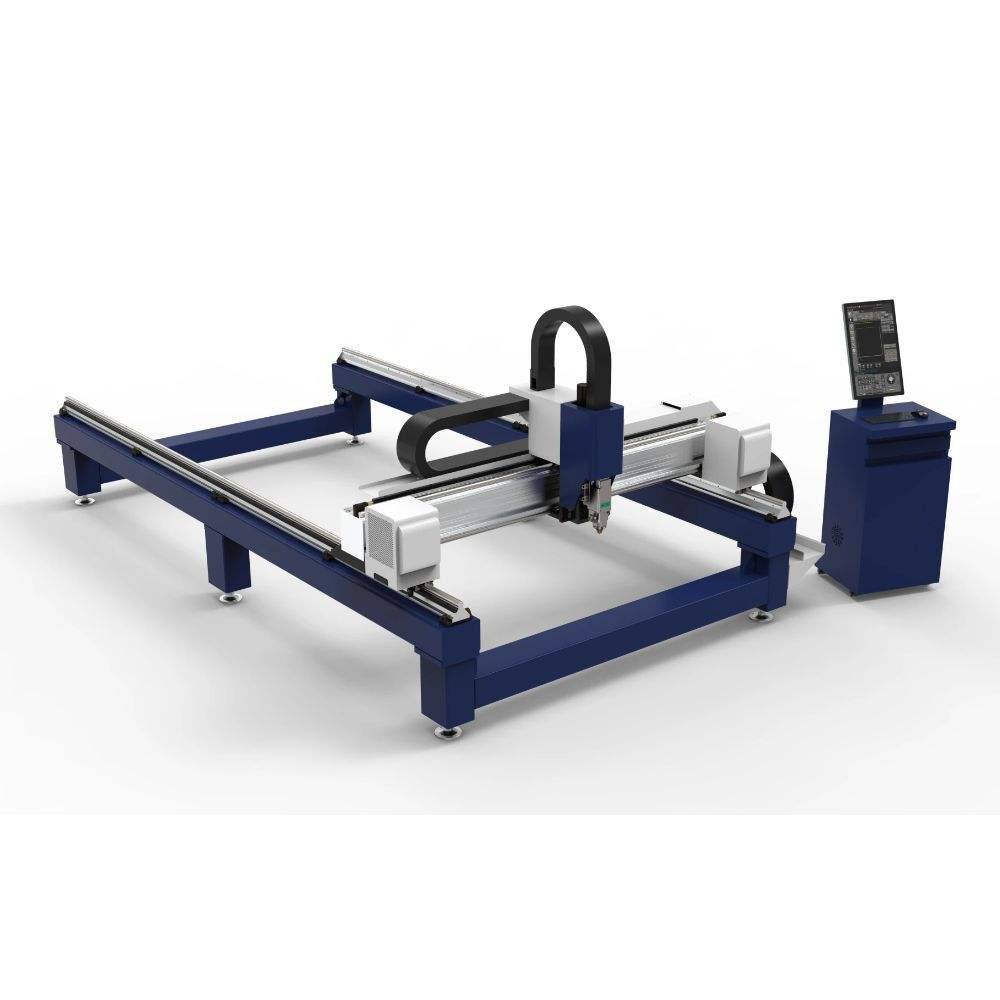
A 1.5kW fiber laser cutting machine is defined by more than just its wattage. Key performance metrics include positioning accuracy, repeatability, and the quality of the CNC controller. Most industrial-grade machines in this class feature a positioning accuracy of ±0.03mm and a repeatability of ±0.02mm. This level of precision is essential for the “just-in-time” manufacturing cycles common in Leon’s industrial parks, where components must fit perfectly into larger assemblies without manual adjustment.
The machine bed is another critical component. For a 1.5kW system, a heavy-duty, stress-relieved gantry frame is necessary to handle the high accelerations required for efficient cutting. Fiber lasers are incredibly fast; on thin gauge stainless steel (1mm), a 1.5kW machine can reach cutting speeds exceeding 20 meters per minute. To handle these speeds, the motion system must be robust, utilizing high-precision rack and pinion drives or linear motors, paired with high-torque servo motors.
Maintenance and Operational Longevity
One of the primary benefits of the fiber laser cutting machine is its low maintenance requirement. Unlike CO2 lasers, which require regular gas refills for the resonator and frequent mirror alignments, the fiber laser source is virtually maintenance-free for up to 100,000 hours of operation. However, “low maintenance” does not mean “no maintenance.”
For operators in Leon, routine care should focus on the cutting head and the cooling system. The protective window (cover glass) in the cutting head must be inspected daily for dust or splatter, as any contamination can cause the lens to overheat and fail. Additionally, the water chiller, which regulates the temperature of both the laser source and the cutting head, must be kept clean and filled with deionized water to prevent internal scaling. In the dusty environments common to some industrial zones, ensuring the machine’s filtration system is functioning correctly is vital for protecting the sensitive electronics and optics.
Why Leon is the Strategic Hub for Laser Adoption
Leon, Guanajuato, has transformed into a high-tech manufacturing hub, moving beyond its historical roots in leather and footwear. The integration of the 1.5kW fiber laser cutting machine into local workshops has been a catalyst for this change. The ability to produce high-precision metal parts locally reduces the reliance on imports from other regions or countries, shortening supply chains and increasing the competitiveness of local firms.
Furthermore, the energy efficiency of fiber technology aligns with modern sustainability goals. A 1.5kW fiber laser consumes significantly less electricity than a CO2 laser of equivalent cutting capacity. This reduction in overhead is a significant advantage for small to medium-sized enterprises (SMEs) in Leon, allowing them to offer competitive pricing on stainless steel fabrication while maintaining healthy profit margins. The “plug-and-play” nature of modern CNC software also means that the learning curve for local operators is shorter, allowing shops to become productive quickly after installation.
Future-Proofing Your Workshop
Investing in a 1.5kW fiber laser cutting machine is not just about meeting today’s production needs; it is about preparing for the future. As the demand for stainless steel components in the medical, aerospace, and renewable energy sectors grows, having the capability to cut these materials with high precision will be a prerequisite for winning contracts. The 1.5kW system provides a foundation that can be expanded with automation, such as automatic loading and unloading systems, further increasing productivity.
In conclusion, the 1.5kW fiber laser cutting machine represents the ideal balance of power, precision, and cost-effectiveness for stainless steel fabrication in Leon. By understanding the technical requirements of the machine—from assist gas selection to routine maintenance—manufacturers can unlock new levels of efficiency. As the region continues to grow as an industrial powerhouse, those who embrace advanced laser cutting technology will be well-positioned to lead the market in quality and innovation.













