Introduction to 3kW Fiber laser cutting in Guadalajara’s Industrial Sector
The industrial landscape of Guadalajara, often referred to as Mexico’s “Silicon Valley,” has seen a significant shift toward advanced manufacturing technologies. Among these, the 3kW fiber laser cutting machine has emerged as a critical asset for metal fabrication shops, particularly those specializing in carbon steel components. As the demand for precision parts in the automotive, aerospace, and construction sectors grows within Jalisco, understanding the technical nuances of 3kW fiber laser technology is essential for maintaining a competitive edge.
Fiber laser cutting utilizes an optical fiber doped with rare-earth elements to amplify light, resulting in a high-intensity beam capable of melting through thick metal with extreme precision. At a 3000W (3kW) power rating, these machines offer a “sweet spot” for many fabricators—providing enough power to handle substantial plate thicknesses while remaining more energy-efficient and cost-effective than higher-wattage alternatives. For the Guadalajara market, where operational costs and material throughput are key performance indicators, the 3kW system represents a balanced investment in productivity.
The Technical Advantages of 3kW Fiber Sources for Carbon Steel
Carbon steel remains the most widely processed material in Guadalajara’s heavy industry due to its versatility and cost-effectiveness. A 3kW fiber laser cutting machine is specifically engineered to handle the thermal properties of carbon steel. Unlike CO2 lasers, fiber lasers operate at a wavelength of approximately 1.07 microns, which is more readily absorbed by metallic surfaces. This leads to faster cutting speeds and a smaller Heat Affected Zone (HAZ), which is crucial for maintaining the structural integrity of the steel.
When processing carbon steel, the 3kW power level allows for efficient piercing and cutting of thicknesses ranging from 0.5mm up to 20mm. While 22mm is often the theoretical maximum for a 3kW source, the “production” thickness—where the machine maintains high speed and a clean finish—typically peaks at 16mm to 18mm. This range covers the vast majority of structural plates, brackets, and automotive frames manufactured in the region.

Precision and Kerf Management
In high-precision engineering, the width of the cut, known as the kerf, must be strictly controlled. A 3kW fiber laser produces a highly concentrated beam, resulting in a narrow kerf that minimizes material waste. For Guadalajara-based manufacturers providing parts to international OEMs, this precision ensures that components meet tight tolerances (often within +/- 0.05mm). This level of accuracy is vital for carbon steel parts that require subsequent welding or assembly into complex machinery.
Optimizing the Cutting Process: Assist Gases and Parameters
The performance of a laser cutting system on carbon steel is heavily dependent on the choice of assist gas. In Guadalajara’s industrial parks, fabricators must choose between oxygen and nitrogen based on the desired finish and the thickness of the material. For 3kW systems, oxygen is the standard choice for thicker carbon steel plates. The exothermic reaction between oxygen and the heated steel adds thermal energy to the process, allowing the laser to cut through 12mm+ plates with ease.
However, oxygen cutting results in an oxide layer on the cut edge. For industries in Jalisco that require high-quality paint or powder coating, this oxide layer must be removed. Alternatively, nitrogen can be used for thinner carbon steel (up to 4mm or 6mm with 3kW) to achieve a “bright cut” that is free of oxidation. This eliminates the need for secondary cleaning processes, thereby reducing labor costs and increasing the throughput of the laser cutting operation.
Nozzle Selection and Focal Position
Engineering excellence in laser cutting requires meticulous attention to the nozzle and focal settings. For carbon steel, a double-layer nozzle is typically used when cutting with oxygen to stabilize the gas flow and prevent turbulence. The focal position is generally set slightly above or at the surface of the material for thin sheets, while for thicker plates, the focus is moved deeper into the material to ensure a consistent melt pool and smooth dross removal. A 3kW machine equipped with an auto-focus cutting head (such as those from Raytools or Precitec) allows for rapid transitions between different plate thicknesses, which is common in job shops across Guadalajara.
Mechanical Stability and Machine Architecture
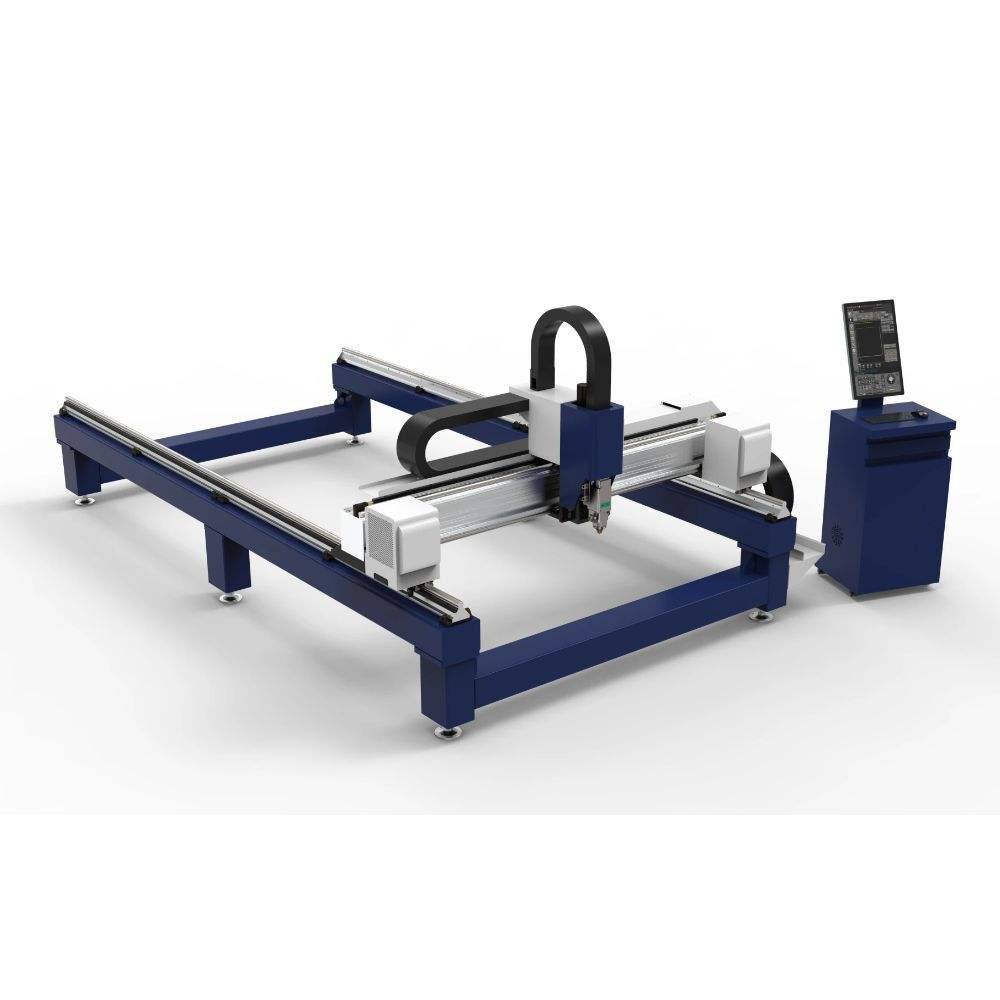
The physical build of the laser cutting machine is just as important as the laser source. A 3kW fiber laser generates significant kinetic energy during high-speed movements. To maintain accuracy, the machine must feature a heavy-duty, stress-relieved bed. Many premium machines used in Mexico’s industrial corridors utilize a hollow-welded or cast-iron frame that has been tempered to prevent deformation over years of operation.
Motion Control and Drive Systems
Speed is a defining factor for 3kW systems. To translate the laser’s power into productivity, the machine requires high-performance servo motors and a precision rack-and-pinion drive system. In Guadalajara’s competitive market, machines often run 16 to 24 hours a day. Utilizing components from reputable brands like Yaskawa or Shimpo ensures that the machine maintains its acceleration (often up to 1.2G or 1.5G) without losing positional accuracy. This mechanical reliability is essential for processing large batches of carbon steel parts consistently.
Maintenance Challenges in the Guadalajara Climate
Guadalajara’s climate, characterized by its moderate temperatures but fluctuating humidity, presents specific maintenance considerations for fiber laser systems. The 3kW laser source and the cutting head are sensitive to dust and moisture. A clean-room environment for the laser source is ideal, but in a standard workshop, high-quality industrial chillers are mandatory. These chillers must maintain a precise temperature to prevent condensation on the optical components, which can lead to “thermal lens” effects or even permanent damage to the laser modules.
Regular maintenance protocols for carbon steel processing include:
- Cleaning the protective windows and lenses to prevent dust buildup from the cutting process.
- Inspecting the rack and pinion for carbon steel dust, which can act as an abrasive if not properly lubricated.
- Monitoring the gas pressure and purity levels to ensure consistent cut quality and prevent nozzle clogging.
By adhering to these engineering standards, Jalisco-based companies can extend the lifespan of their laser cutting equipment beyond the 10-year mark.
Software Integration and CNC Control
The “brain” of the 3kW fiber laser is the CNC controller. Systems like CypCut are widely popular in the Mexican market because they offer a balance of powerful nesting features and user-friendly interfaces. For carbon steel fabrication, features like “Leapfrog” (which optimizes the path between cuts) and “Fly-cutting” (for rapid perforated patterns) significantly reduce cycle times. Furthermore, integrated nesting software allows engineers to maximize material utilization, which is a critical factor in managing the overhead costs of raw carbon steel plates.
Economic Impact and ROI for Local Manufacturers
Investing in a 3kW fiber laser cutting machine is a strategic move for Guadalajara’s metalworking industry. Compared to traditional plasma cutting or older CO2 lasers, the fiber laser offers a significantly lower cost per part. The 3kW power level is particularly efficient because it does not require the massive power draw of 6kW or 12kW units, yet it outperforms 1kW or 2kW units in speed and thickness capacity.
For a typical fabrication shop in El Salto or Zapopan, the Return on Investment (ROI) is often realized within 18 to 24 months through increased production capacity and the ability to take on higher-precision contracts. The ability to process carbon steel with high edge quality also opens doors to the export market, allowing local firms to supply components to the United States and Canada under the USMCA framework.
Conclusion: The Future of Metal Fabrication in Jalisco
The 3kW fiber laser cutting machine stands as a cornerstone of modern manufacturing in Guadalajara. By combining the raw power needed for carbon steel with the precision required for high-tech industries, it empowers local engineers to produce world-class components. As fiber laser technology continues to evolve, the integration of automation, such as automatic loading and unloading systems, will further enhance the capabilities of these machines. For any business in Jalisco looking to modernize its production line, mastering the 3kW fiber laser is not just an option—it is a necessity for long-term industrial success.













