Comprehensive Guide to 6kW Precision Laser Systems for Carbon Steel Fabrication in Puebla
The industrial landscape of Puebla, Mexico, has undergone a radical transformation over the last decade. As a primary hub for the automotive and heavy manufacturing sectors—anchored by global giants like Volkswagen and Audi—the demand for high-precision component manufacturing has never been higher. At the center of this technological evolution is the 6kW precision fiber laser system. This specific power rating has emerged as the “sweet spot” for regional fabricators, offering a perfect balance between high-speed processing of thin gauges and the raw power required to penetrate thick carbon steel plates. This guide explores the technical nuances, operational strategies, and economic advantages of deploying 6kW laser cutting technology within the unique industrial environment of Puebla.
Technical Specifications of the 6kW Precision Fiber Laser
A 6kW fiber laser system represents a significant leap in energy density compared to lower-wattage counterparts. For engineers in Puebla, understanding the physics of the beam is critical. The fiber laser generates a beam at a wavelength of approximately 1.06 microns, which is highly absorbable by carbon steel. This absorption efficiency allows for a smaller heat-affected zone (HAZ), which is vital for maintaining the structural integrity of the material.
Beam Quality and Power Density
The precision of a 6kW system is not merely a function of power, but of beam quality, often measured by the Beam Parameter Product (BPP). A high-quality 6kW source focuses energy into a microscopic spot size, creating immense power density. In the context of laser cutting, this allows for kerf widths that are significantly narrower than traditional plasma or oxy-fuel methods. For Puebla’s automotive suppliers, this translates to the ability to cut complex geometries and tight-tolerance holes that require no secondary machining.
Structural Stability and Motion Control
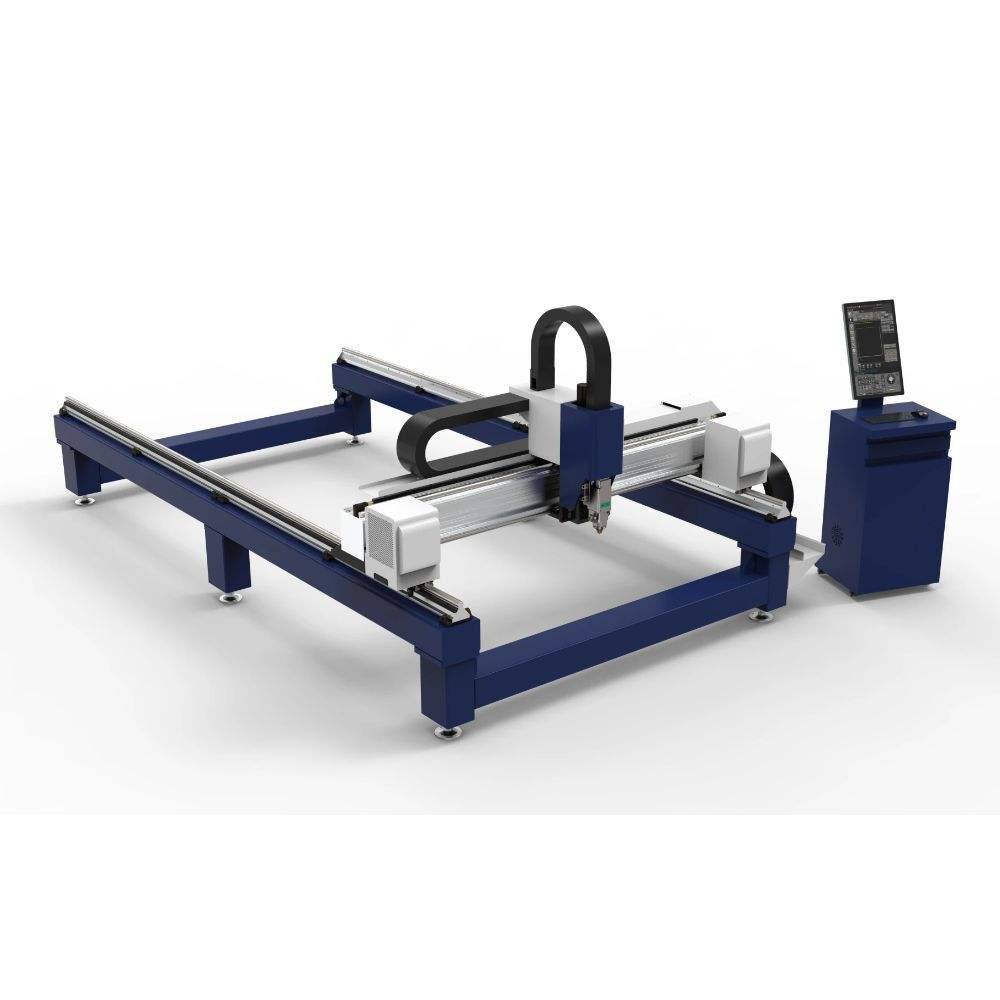
To harness 6kW of power, the machine’s chassis must be exceptionally rigid. Precision systems typically utilize a stress-relieved, gantry-style frame often made of high-grade cast iron or heavy-duty welded steel. In Puebla’s varied climate, thermal stability is essential. High-end systems incorporate sophisticated motion control electronics and linear motors to ensure that the cutting head maintains its trajectory within microns, even at high acceleration rates exceeding 1.2G.
 laser cutting machine“>
Optimized Cutting Parameters for Carbon Steel
Carbon steel is the backbone of the construction and automotive industries in Puebla. However, its reaction to laser cutting varies significantly based on its carbon content, surface finish (hot-rolled vs. cold-rolled), and thickness. A 6kW system provides the versatility to handle these variables through precise parameter adjustment.
Thin Gauge Processing (1mm – 6mm)
In the 1mm to 6mm range, a 6kW laser operates at extremely high speeds. When using nitrogen as an assist gas, the process is essentially a high-speed melt-and-blow operation. This results in an oxide-free edge, which is critical for components that will undergo subsequent powder coating or painting—a common requirement in Puebla’s appliance and automotive trim sectors. The speed of a 6kW system in this range can often exceed 40 meters per minute, drastically reducing the cost per part.
Medium to Thick Plate Processing (8mm – 25mm)
As the thickness of the carbon steel increases, the 6kW system demonstrates its true value. For plates between 12mm and 25mm, oxygen is typically used as the assist gas. The oxygen reacts exothermically with the steel, adding thermal energy to the cut. Precision is maintained through “cool cut” technologies or pulsed piercing methods that prevent the material from overheating, which would otherwise lead to “self-burning” or slag accumulation. A 6kW laser can reliably cut 25mm carbon steel with a surface finish that is remarkably smooth, minimizing the need for edge grinding.
The Role of Assist Gases in the Puebla Region
Puebla’s altitude (approximately 2,135 meters above sea level) affects the density of ambient air, which can impact the performance of air-assist cutting. Therefore, most precision shops in the region rely on high-purity oxygen for thick carbon steel and high-pressure nitrogen for thin-to-medium gauges. The 6kW system’s gas control manifold must be finely tuned to manage these pressures, ensuring that the gas flow remains laminar as it exits the nozzle to avoid turbulence that could degrade the cut quality.
Strategic Advantages for Puebla’s Industrial Sector
The decision to implement a 6kW laser cutting system in Puebla is often driven by the need to integrate into global supply chains. Tier 1 and Tier 2 automotive suppliers require parts that meet stringent international standards (ISO/IATF 16949). The 6kW laser provides the repeatability necessary to meet these standards across thousands of cycles.
Throughput and Economic Efficiency
In a competitive market like Puebla, throughput is the primary driver of profitability. A 6kW system can often replace two or three older 2kW or 3kW machines. This consolidation reduces the footprint required on the factory floor, lowers labor costs, and simplifies the workflow. Furthermore, modern fiber lasers are significantly more energy-efficient than older CO2 lasers, boasting wall-plug efficiencies of over 30%. In an era of rising energy costs in Mexico, this efficiency is a significant competitive advantage.
Material Yield and Nesting
Precision laser cutting software allows for advanced nesting strategies. Because the 6kW beam is so stable and the kerf so narrow, parts can be nested closer together on a sheet of carbon steel. This maximizes material utilization and minimizes scrap. For large-scale operations in Puebla, even a 5% improvement in material yield can result in tens of thousands of dollars in annual savings.
Maintenance and Longevity of High-Power Systems
To maintain precision over the lifespan of a 6kW laser, a rigorous maintenance schedule is required. Puebla’s industrial environment can be dusty, necessitating high-quality filtration systems for both the laser source and the cutting cabinet.
Optical Component Care
The protective windows and focusing lenses are the most critical components of the cutting head. At 6kW, even a microscopic speck of dust on the lens can absorb enough energy to shatter the glass or cause “thermal lensing,” which shifts the focal point and ruins the cut. Operators in Puebla must be trained in clean-room protocols for lens replacement and sensor calibration.
Chiller Performance and Environmental Factors
The 6kW fiber source generates considerable heat that must be dissipated by a dual-circuit water chiller. In Puebla, where daytime temperatures can fluctuate, the chiller must be capable of maintaining the laser source and the cutting head within a very narrow temperature range (usually +/- 1 degree Celsius). Failure to maintain this thermal stability will result in fluctuations in beam power and precision.
Software and CNC Updates
The “precision” in a 6kW system is as much about software as it is about hardware. Regular updates to the CNC cutting database are essential. These databases contain the “recipes” for different grades of carbon steel. As material science evolves and new alloys are introduced to the Puebla manufacturing market, the laser system must be updated to ensure it is using the most efficient power, frequency, and gas pressure settings.
Conclusion: Future-Proofing with 6kW Technology
As the manufacturing requirements in Puebla continue to move toward higher complexity and faster lead times, the 6kW precision laser system stands as a foundational technology. It offers the versatility to handle the diverse needs of the region—from thin automotive brackets to heavy structural plates for the construction industry. By investing in 6kW laser cutting technology, local fabricators are not just purchasing a machine; they are acquiring the capability to compete on a global stage, ensuring that Puebla remains a powerhouse of Mexican industry for decades to come.
The integration of these systems requires a holistic approach that includes technical training, environmental management, and strategic gas sourcing. However, the rewards—unmatched precision, high throughput, and reduced operational costs—make the 6kW laser the definitive choice for carbon steel fabrication in the modern era.













