Introduction to 3kW Tube laser cutting in Monterrey’s Industrial Sector
Monterrey, Nuevo León, stands as the industrial backbone of Mexico, hosting a dense concentration of automotive, aerospace, and heavy manufacturing facilities. In this competitive landscape, the adoption of advanced laser cutting technology is no longer an option but a necessity for maintaining operational efficiency and precision. The 3kW tube fiber laser cutter has emerged as the primary workhorse for small to medium-sized enterprises (SMEs) and large-scale fabricators alike, particularly when processing carbon steel—the most widely used material in the region’s construction and manufacturing sectors.
A 3kW fiber laser provides a strategic balance between capital investment and processing capability. While higher wattage machines exist, the 3kW threshold offers the optimal power density required to pierce and cut through common carbon steel wall thicknesses used in structural frames, automotive chassis, and industrial piping. In Monterrey’s high-velocity supply chain, the ability to transition from raw tubing to finished components with minimal secondary processing is a significant competitive advantage.
 laser cutting machine for Carbon Steel”>
Technical Specifications of the 3kW Fiber Laser System
The core of the 3kW tube laser cutting system is the fiber laser source, which generates a high-intensity beam delivered through a flexible fiber optic cable. Unlike CO2 lasers, fiber lasers require no internal mirrors or bellows, significantly reducing maintenance costs and energy consumption. For carbon steel applications, the 1.06-micron wavelength of the fiber laser is highly absorbed by the material, leading to faster cutting speeds and cleaner edges.
The Chuck and Feeding System
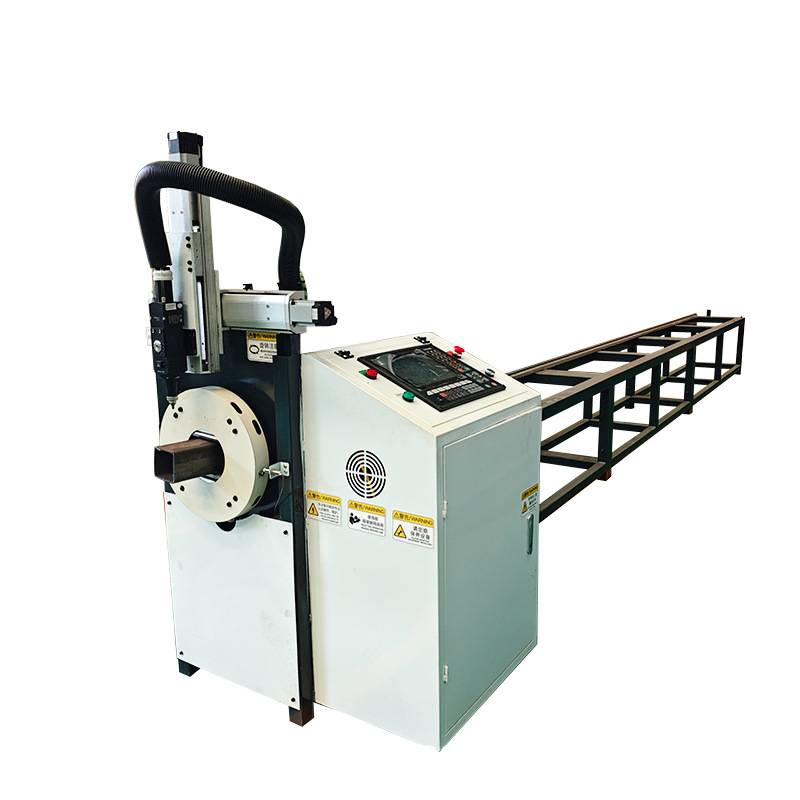
Modern tube laser cutting machines utilize a dual-chuck or triple-chuck pneumatic system. In Monterrey’s fabrication shops, where throughput is critical, these chucks allow for rapid loading and unloading of square, rectangular, and round carbon steel profiles. The 3kW systems typically handle tube diameters ranging from 20mm up to 220mm, with bed lengths reaching 6 meters or more. Precision is maintained through high-torque servo motors that synchronize the rotation of the tube with the longitudinal movement of the cutting head.
CNC Control and Software Integration
The integration of specialized CAD/CAM software, such as CypTube or Lantek, allows engineers in Monterrey to design complex intersections and notches that would be impossible with traditional mechanical sawing. The software automatically calculates the nesting patterns to minimize scrap—a vital feature given the fluctuating prices of carbon steel in the global market. Furthermore, the CNC interface provides real-time monitoring of gas pressure, laser power, and focal position, ensuring consistent quality across large production batches.
Processing Carbon Steel: Material Considerations
Carbon steel, specifically grades like A36, 1018, and various structural alloys, is the primary material processed by tube laser cutting systems in Northern Mexico. The 3kW power level is particularly effective for wall thicknesses ranging from 1mm to 10mm. While it can pierce thicker sections, the 1mm to 8mm range represents the “sweet spot” where cutting speed and edge quality are maximized.
The Role of Assist Gases
In laser cutting carbon steel, the choice of assist gas is paramount. Oxygen (O2) is the most common choice for 3kW systems. The oxygen reacts exothermically with the heated steel, adding thermal energy to the process and allowing for faster speeds on thicker walls. However, this creates a thin oxide layer on the cut surface. For industries in Monterrey that require immediate powder coating or welding without further cleaning, Nitrogen (N2) can be used as a high-pressure assist gas to produce a bright, oxide-free finish, although this requires more power and is typically reserved for thinner gauges when using a 3kW source.
Heat Affected Zone (HAZ) Management
One of the engineering challenges in laser cutting carbon steel is managing the Heat Affected Zone (HAZ). Excessive heat can alter the metallurgical properties of the steel, potentially leading to brittleness near the cut edge. The 3kW fiber laser, with its concentrated beam spot, minimizes the HAZ compared to plasma or flame cutting. This precision ensures that the structural integrity of the tube remains intact, which is critical for Monterrey’s construction and crane manufacturing industries.
Applications in Monterrey’s Key Industries
The versatility of the 3kW tube laser cutting machine allows it to serve multiple sectors within the Monterrey metropolitan area, including Apodaca, Santa Catarina, and Guadalupe.
Automotive and Transportation
Monterrey is a hub for automotive assembly and tier-1 suppliers. 3kW laser cutting is used to produce exhaust systems, chassis components, and seat frames from carbon steel tubing. The high repeatability of the laser ensures that every part fits perfectly into robotic welding cells, reducing downtime and assembly errors.
Construction and Infrastructure
The local construction industry utilizes 3kW lasers for structural hollow sections (SHS) and rectangular hollow sections (RHS). By laser cutting precise “bird-mouth” joints and bolt holes directly into the tubes, fabricators can eliminate the need for manual layout and drilling, significantly accelerating the erection of steel buildings and industrial warehouses.
Industrial Furniture and HVAC
From office furniture to heavy-duty racking systems, the aesthetic quality of the cut is essential. The 3kW fiber laser produces smooth edges that require no grinding, allowing parts to move directly from the laser cutting machine to the paint line. In HVAC applications, the laser’s ability to cut complex apertures in manifolds and heat exchangers is invaluable.
Optimizing 3kW Laser Parameters for Efficiency
To achieve the best results with carbon steel in a 3kW system, engineers must fine-tune several variables. The focal position is perhaps the most critical; for carbon steel, the focus is generally set at or slightly above the material surface when using oxygen. The cutting speed must be balanced against the gas pressure to ensure that the molten slag is efficiently ejected from the kerf, preventing “dross” or burrs on the bottom of the tube.
Piercing Strategies
Piercing carbon steel requires a multi-stage approach to prevent “blowouts,” especially on thicker walls. The 3kW CNC system uses pulse piercing, where the laser fires in short bursts with gradually increasing power and decreasing frequency. This allows the heat to dissipate and creates a clean hole before the continuous laser cutting process begins. In high-volume production environments in Monterrey, optimizing piercing time can save hours of machine time over a weekly schedule.
Maintenance and Local Support in Monterrey
The industrial environment in Monterrey can be harsh, with high ambient temperatures and dust. Maintaining a 3kW laser cutting machine requires a strict regimen. The chilling system, which cools both the laser source and the cutting head, must be checked daily to ensure the coolant is clean and at the correct temperature. Dust extraction systems are also vital, as the laser cutting of carbon steel produces significant amounts of fine iron oxide dust.
Local technical support is a major factor for companies in Nuevo León. Having access to field service engineers who can calibrate the machine’s geometry and replace consumables like nozzles, protective windows, and ceramic rings is essential for minimizing downtime. Most major manufacturers now offer remote diagnostics, allowing technicians to troubleshoot the CNC software via the internet before even arriving at the factory floor.
Economic Impact and ROI for Fabricators
Investing in a 3kW tube laser cutting system represents a significant capital expenditure, but the Return on Investment (ROI) is often realized within 12 to 18 months for busy shops. The primary drivers of this ROI are the reduction in labor costs and the elimination of multiple machine setups. A single laser cutting machine replaces saws, drills, and milling machines, while requiring only one operator.
Furthermore, the precision of laser cutting reduces the amount of welding filler material needed, as the fit-up between parts is nearly perfect. In Monterrey’s competitive bidding environment, the ability to provide lower quotes due to reduced material waste and faster turnaround times allows shops to secure larger contracts with international OEMs.
Safety and Environmental Standards
Operating a 3kW fiber laser requires adherence to Class 4 laser safety standards. The machines are typically fully enclosed with laser-safe glass windows to protect operators from reflected radiation. In Monterrey, industrial safety regulations (NOM standards) dictate that laser cutting facilities must have proper ventilation and eye protection protocols in place.
From an environmental perspective, fiber laser cutting is much cleaner than traditional methods. There are no cutting oils or coolants that contaminate the carbon steel, making the scrap easier to recycle. The energy efficiency of the 3kW fiber source also aligns with the growing trend toward “green manufacturing” in the Mexican industrial sector.
Conclusion: The Future of Tube Fabrication in Monterrey
The 3kW tube laser cutting machine has redefined the possibilities for carbon steel fabrication in Monterrey. By combining power, precision, and software intelligence, it allows local manufacturers to meet the rigorous demands of global markets. As the region continues to grow as a manufacturing powerhouse, the integration of laser cutting technology will remain the cornerstone of industrial innovation, driving quality and productivity to new heights in the heart of Nuevo León.













