Introduction to 1.5kW Fiber laser cutting Technology
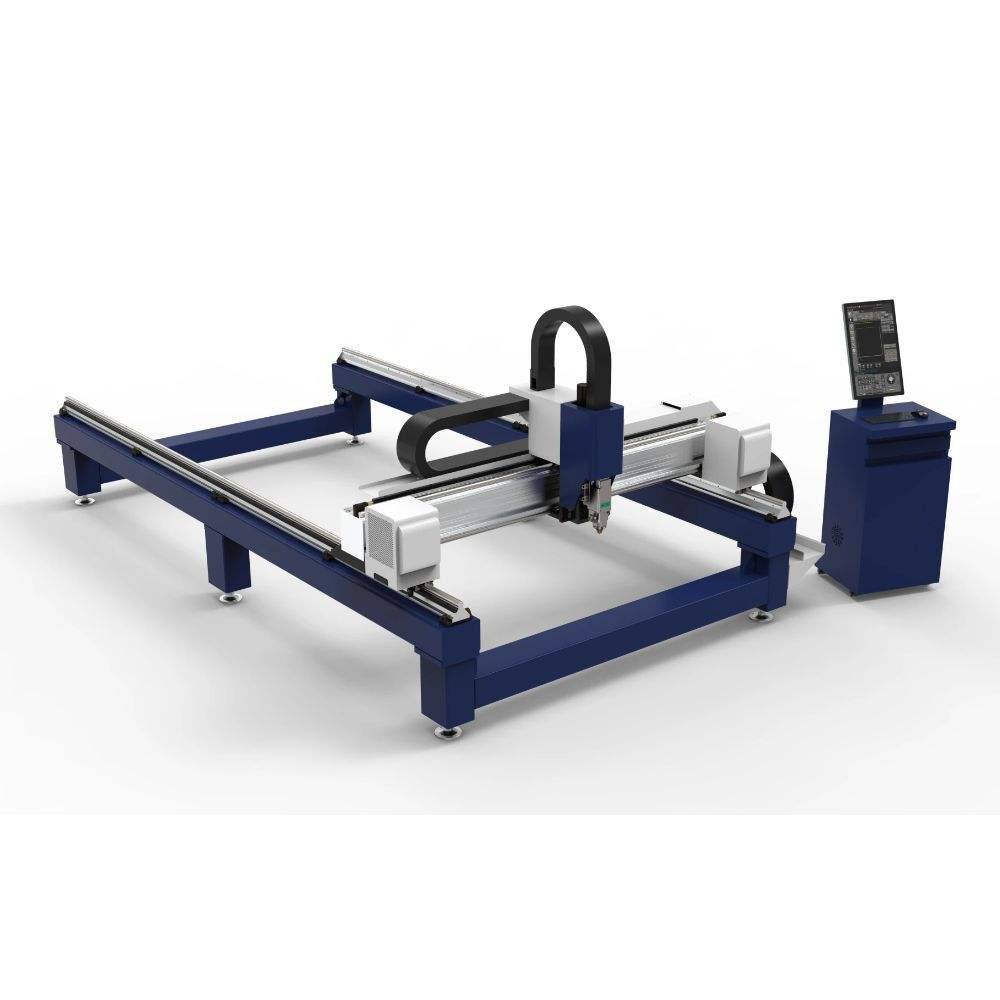
The manufacturing landscape in Toluca, State of Mexico, has undergone a significant transformation with the integration of advanced fiber laser technology. As a primary industrial hub known for automotive manufacturing, aerospace components, and food processing equipment, the demand for precision and efficiency is paramount. The 1.5kW fiber laser cutting machine represents a strategic “sweet spot” in power capacity, offering a balance between capital investment and high-performance output, particularly when processing stainless steel alloys.
Fiber laser technology utilizes an optical fiber doped with rare-earth elements as the active gain medium. Unlike traditional CO2 lasers, which rely on gas mixtures and complex mirror alignments, fiber lasers deliver the beam through a flexible fiber optic cable directly to the cutting head. For a 1.5kW system, this results in a high-intensity beam with a wavelength of approximately 1.064 microns. This specific wavelength is absorbed much more efficiently by metallic surfaces, especially stainless steel, compared to the 10.6 microns of CO2 lasers. The result is faster cutting speeds, reduced heat-affected zones (HAZ), and lower operational costs.
The Strategic Importance of 1.5kW Systems in Toluca
Toluca’s industrial parks, such as Exportec and Parque Industrial Lerma, house hundreds of Tier 2 and Tier 3 suppliers. For these operations, a 1.5kW fiber laser cutting machine offers the versatility required to handle a wide range of gauges. While higher power units (6kW to 12kW) exist for heavy plate, the 1.5kW variant is the workhorse for sheet metal fabrication, typically excelling in thicknesses ranging from 0.5mm to 6mm for stainless steel. This range covers the vast majority of automotive brackets, electrical enclosures, and kitchen equipment produced in the region.
Technical Specifications and Cutting Capabilities
When evaluating a 1.5kW fiber laser cutting machine for stainless steel applications, engineers must look beyond the raw wattage. The beam quality, often measured by the Beam Parameter Product (BPP), determines how tightly the laser can be focused. A 1.5kW source typically provides a high-quality beam that allows for a very small spot size, which is critical for achieving the narrow kerf widths required in precision engineering.
For stainless steel, the 1.5kW power level provides the following estimated performance metrics:
- 1mm Stainless Steel: Cutting speeds can reach up to 18-22 meters per minute using Nitrogen as an assist gas.
- 3mm Stainless Steel: Efficient cutting at approximately 4-6 meters per minute.
- 6mm Stainless Steel: This represents the upper limit for high-quality production, with speeds hovering around 0.8 to 1.2 meters per minute.
The efficiency of the 1.5kW fiber laser is also reflected in its wall-plug efficiency. These machines typically convert about 30-35% of electrical intake into laser power, which is significantly higher than the 10% efficiency of older technologies. In an industrial city like Toluca, where energy costs and sustainability targets are increasingly scrutinized, this efficiency translates directly into a competitive advantage.
Material Science: Processing Stainless Steel Grades
In the Toluca industrial corridor, the two most common grades of stainless steel processed are Grade 304 and Grade 316. Grade 304 is favored for its excellent corrosion resistance and formability, making it standard for automotive trim and food processing. Grade 316, containing molybdenum, is used for more corrosive environments or medical applications. Both materials have high thermal expansion coefficients and lower thermal conductivity compared to carbon steel.
Laser cutting stainless steel requires precise control over the heat input. Because the material does not dissipate heat as quickly as aluminum or mild steel, excessive dwell time can lead to warping or “sugar” (oxidation) on the cut edge. The 1.5kW fiber laser’s high power density allows for rapid vaporization of the metal, minimizing the time the surrounding material is exposed to high temperatures. This ensures that the mechanical properties and corrosion resistance of the stainless steel remain intact along the cut edge.
Operational Excellence: Assist Gas and Nozzle Selection
The choice of assist gas is perhaps the most critical factor in laser cutting stainless steel. To maintain the “stainless” property of the edge, Nitrogen is almost exclusively used. Nitrogen acts as a mechanical force to blow the molten metal out of the kerf while simultaneously shielding the hot metal from oxygen. This prevents oxidation, resulting in a bright, silver finish that requires no secondary cleaning or pickling before welding or painting.
For a 1.5kW system, gas pressure management is vital. High-pressure Nitrogen (typically between 12 and 18 bar) is required for thicker stainless sheets. The machine must be equipped with high-quality piping and a robust CNC-controlled gas regulator to maintain consistent flow. In Toluca, where atmospheric pressure is lower due to the high altitude (approx. 2,600 meters above sea level), pneumatic systems and gas flow dynamics may require slight calibration adjustments compared to sea-level operations to ensure the molten material is evacuated efficiently.

Nozzle Geometry and Focal Position
The nozzle serves two purposes: it directs the assist gas and acts as a sensor for height control. For 1.5kW cutting of stainless steel, double-layer nozzles are often avoided in favor of single-layer nozzles which provide a more laminar flow of Nitrogen. The diameter of the nozzle (typically 1.2mm to 2.5mm) must be matched to the material thickness. A smaller nozzle increases gas velocity for thin sheets, while a larger nozzle provides the volume needed for thicker plates.
Focal position is another critical variable. When laser cutting stainless steel, the focus is generally set “negative”—meaning the focal point is positioned inside or near the bottom of the material. This creates a wider kerf at the bottom, allowing the high-pressure Nitrogen to eject the melt more effectively, reducing the likelihood of dross (burrs) adhering to the underside of the part.
Maintenance Protocols for Toluca’s Industrial Environment
Toluca’s climate is characterized by significant temperature fluctuations between day and night and a relatively dusty industrial atmosphere. For a 1.5kW fiber laser cutting machine, maintaining a pristine environment for the optical path is essential. While the fiber itself is sealed, the cutting head contains protective windows (cover slips) and lenses that must be inspected daily.
Maintenance should focus on the following areas:
1. Cooling System (Chiller) Management
The laser source and the cutting head require precise temperature regulation. In Toluca, the chiller must be filled with high-quality deionized water and the appropriate ratio of glycol to prevent freezing during cold winter nights. The heat exchanger fins should be cleaned weekly to ensure efficient heat dissipation, as any overheating will cause the laser source to de-rate its power output for safety.
2. Optical Path Integrity
Even though fiber lasers are robust, the protective window is a consumable. Dust particles in a Toluca workshop can settle on the window; if the laser fires with dust present, the heat will burn the particle into the glass, causing beam distortion or “thermal lensing.” Operators must be trained in clean-room techniques for swapping these windows to prevent contamination of the internal collimating lenses.
Economic Impact and ROI for Local Manufacturers
Investing in a 1.5kW fiber laser cutting machine provides a rapid Return on Investment (ROI) for Toluca-based shops currently outsourcing their cutting needs or using older plasma or CO2 systems. The primary drivers of this ROI are speed and the elimination of secondary processes. Because the fiber laser produces a finished edge on stainless steel, the labor costs associated with grinding and deburring are virtually eliminated.
Furthermore, the nesting software integrated with modern CNC systems allows for maximum material utilization. Given the high cost of stainless steel alloys, reducing scrap by even 5% can save thousands of dollars annually. For a typical job shop in the State of Mexico, a 1.5kW machine operating on two shifts can often pay for itself within 18 to 24 months, depending on the complexity of the parts and the volume of production.
Conclusion: The Future of Fabrication in Toluca
The 1.5kW fiber laser cutting machine is more than just a tool; it is a catalyst for industrial growth in Toluca. By providing the ability to cut stainless steel with extreme precision, high speed, and low operational overhead, it enables local manufacturers to compete on a global scale. As the automotive and aerospace industries continue to demand tighter tolerances and faster turnaround times, the adoption of fiber laser technology is no longer optional—it is a fundamental requirement for success.
For engineers and business owners in Toluca, selecting a 1.5kW system involves understanding the synergy between the laser source, the assist gas, and the specific metallurgical properties of stainless steel. With proper calibration for the local environment and a rigorous maintenance schedule, these machines provide a reliable, high-output solution that will define the next generation of Mexican manufacturing excellence. Whether producing intricate components for the pharmaceutical industry or robust structural parts for transport, the fiber laser remains the pinnacle of modern thermal cutting technology.













