Introduction to 4kW Precision Laser Systems in Modern Manufacturing
The industrial landscape of Guadalajara, often referred to as the Silicon Valley of Mexico, has undergone a significant transformation over the last decade. While electronics and software have long dominated the region, the metal-mechanic and automotive sectors have seen a parallel surge in sophistication. At the heart of this manufacturing evolution is the 4kW precision laser system. This power level represents the “sweet spot” for industrial applications, offering a perfect balance between high-speed processing of thin materials and the high-torque penetration required for thick plate fabrication.
A 4kW fiber laser system is engineered to deliver a concentrated beam of light with a wavelength typically around 1.06 microns. This specific wavelength is highly absorbed by ferrous metals, particularly carbon steel, making it the most efficient tool for laser cutting in heavy-duty industrial environments. For manufacturers in Jalisco, adopting this technology is no longer a luxury but a necessity to remain competitive in a global supply chain that demands tighter tolerances and faster turnaround times.
The Industrial Landscape of Guadalajara and Jalisco
Guadalajara serves as a strategic hub for the Bajío region’s industrial corridor. With a growing ecosystem of Tier 1 and Tier 2 automotive suppliers, the demand for precision-cut carbon steel components—ranging from chassis reinforcements to intricate bracketry—is at an all-time high. The 4kW system provides the versatility needed to switch between these varied production requirements without the downtime associated with traditional mechanical shearing or plasma cutting.
Technical Specifications of the 4kW Fiber Source
The core of the precision system is the 4000-watt fiber laser source. Unlike older CO2 technologies, fiber lasers utilize solid-state diodes to pump the laser medium, which is then delivered through a flexible fiber optic cable. This architecture eliminates the need for complex internal mirrors and bellows, significantly reducing maintenance requirements and energy consumption. For a 4kW system, the wall-plug efficiency is approximately 30-40%, which translates to substantial utility savings for Guadalajara-based plants operating on high-capacity shifts.
Precision is governed by the Beam Parameter Product (BPP). A high-quality 4kW source maintains a low BPP, allowing the beam to be focused into a incredibly small spot size. This high power density enables the laser cutting process to vaporize carbon steel almost instantaneously, resulting in a narrow kerf width and a minimal Heat Affected Zone (HAZ). This is critical for parts that require secondary processes like welding or powder coating, as it ensures the structural integrity of the metal remains uncompromised.
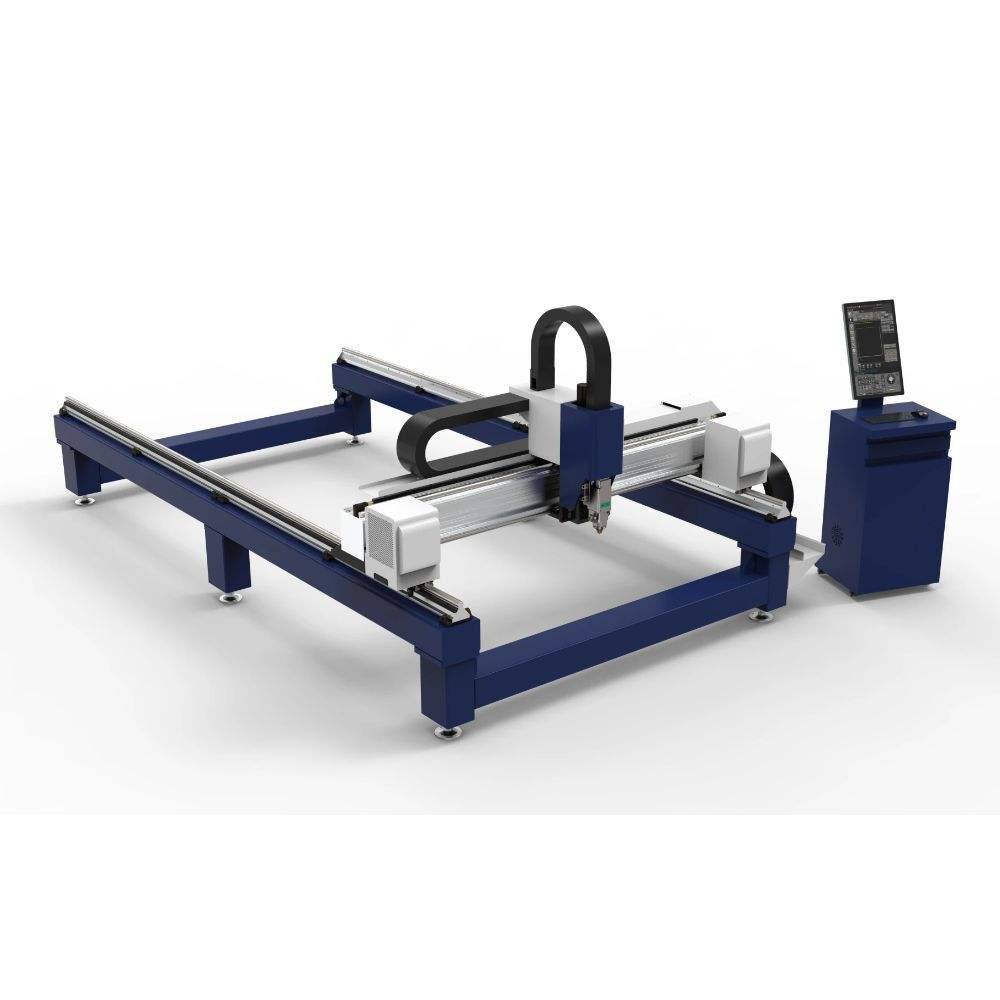 laser cutting machine” style=”width: 100%; max-width: 800px; height: auto; margin: 20px 0;”>
Optimizing Beam Quality for Carbon Steel
Carbon steel, specifically grades like A36, S235, and S355, is the workhorse of the Guadalajara construction and machinery sectors. However, its carbon content and surface impurities can affect laser absorption. A precision 4kW system utilizes advanced beam shaping technology to adjust the distribution of energy within the laser spot. For thinner sheets, a “Gaussian” profile (high intensity in the center) allows for rapid piercing and high-speed travel. For thicker plates, a “Top-Hat” or “Donut” profile can be employed to widen the kerf, facilitating easier dross removal and smoother edge quality.
Processing Carbon Steel: Thickness and Quality Parameters
When discussing 4kW systems, the conversation inevitably turns to maximum cut thickness. In a production environment, a 4kW laser can comfortably handle carbon steel up to 20mm or even 22mm. While higher power sources (12kW+) can cut thicker, the 4kW remains the most cost-effective solution for the 3mm to 16mm range, which constitutes the bulk of industrial demand in Mexico.
The quality of the cut is measured by its perpendicularity and surface roughness. Precision systems utilize auto-focus cutting heads that adjust the focal point in real-time based on the material thickness. This ensures that the narrowest part of the “waist” of the laser beam is positioned correctly—either on the surface, inside the material, or near the bottom—to optimize the melt-ejection process.
Oxygen vs. Nitrogen Assist Gases
The choice of assist gas is a critical engineering decision in laser cutting. For carbon steel, Oxygen (O2) is the traditional choice. The oxygen reacts exothermically with the iron, adding thermal energy to the process and allowing for the cutting of thick plates with relatively low laser power. However, this creates a thin oxide layer on the cut edge, which must be removed if the part is to be painted.
In Guadalajara’s high-tech sectors, many engineers are moving toward “High-Pressure Air” or Nitrogen cutting for carbon steel up to 6mm. By using a 4kW laser, the system has enough power to melt the metal through pure thermal energy without the exothermic reaction of oxygen. This results in a “clean” edge that is free of oxidation, ready for immediate welding or coating, thereby reducing labor costs in the finishing department.
Mechanical Stability and Precision Motion Systems
A high-power laser is only as good as the machine tool carrying it. To achieve precision at 4kW, the machine frame must be exceptionally rigid. Most high-end systems utilize a gantry design made from aviation-grade aluminum or heavy-duty welded steel that has been stress-relieved through heat treatment. This prevents vibration during high-speed directional changes, which is essential for maintaining circularity in small holes and accuracy in complex geometries.

Linear Motors and Rack-and-Pinion Systems
The motion system translates the CNC commands into physical movement. For the 4kW precision class, high-precision helical rack-and-pinion systems are standard, often paired with Japanese or European servo motors. These systems allow for accelerations of up to 1.2G or 1.5G. In a region like Guadalajara, where industrial space can be expensive, the ability to produce more parts per square meter through higher acceleration and faster laser cutting speeds is a significant economic advantage.
Environmental Considerations in Jalisco
Operating a precision laser in Guadalajara requires consideration of the local environment. The city sits at an elevation of approximately 1,500 meters, and its climate can range from very dry to high humidity during the rainy season. These factors affect the cooling requirements of the laser source and the optics.
Cooling and Dust Extraction
A dual-circuit industrial chiller is mandatory for any 4kW system. One circuit cools the fiber laser source, while the other maintains the temperature of the cutting head and optics. Fluctuations in temperature can cause “thermal lensing,” where the optics expand slightly and shift the focal point, leading to inconsistent cut quality. Furthermore, carbon steel laser cutting produces significant amounts of fine particulate matter and iron oxide dust. A high-volume dust extraction system with HEPA filtration is necessary to protect both the machine’s precision components and the health of the operators in the facility.
Operational Efficiency and ROI
The return on investment (ROI) for a 4kW precision laser system in Guadalajara is typically realized within 18 to 24 months, depending on shift patterns. The efficiency gains come from three primary areas:
- Material Utilization: Advanced nesting software allows parts to be placed within millimeters of each other, significantly reducing scrap compared to traditional punching or sawing.
- Secondary Process Elimination: The precision of the 4kW cut often eliminates the need for deburring, grinding, or drilling, allowing parts to move directly to assembly.
- Reliability: Fiber laser sources have a diode life expectancy of over 100,000 hours, ensuring that the machine remains a reliable asset for decades.
Maintenance Protocols for Longevity
To maintain precision, a strict maintenance schedule must be followed. This includes daily cleaning of the protective windows in the cutting head, weekly lubrication of the linear guides, and monthly inspections of the gas delivery lines. In Guadalajara, where technical support is readily available, many firms opt for preventative maintenance contracts to ensure that their laser cutting operations never face unexpected downtime. Proper calibration of the capacitive height sensor is also vital, as it maintains the exact distance between the nozzle and the carbon steel plate, preventing collisions and ensuring a consistent cut.
Conclusion: The Future of Metal Fabrication in Guadalajara
The 4kW precision laser system is more than just a piece of machinery; it is a catalyst for industrial growth. For companies in Guadalajara working with carbon steel, it provides the bridge between traditional fabrication and the requirements of Industry 4.0. By offering unmatched speed, precision, and versatility, these systems allow local manufacturers to compete on a global stage, delivering high-quality components to the automotive, aerospace, and energy sectors with unprecedented efficiency. As the technology continues to mature, the integration of 4kW lasers will remain the cornerstone of Jalisco’s manufacturing excellence.













