Introduction to 2kW Fiber Laser Technology in Puebla’s Industrial Sector
The industrial landscape of Puebla, Mexico, has undergone a significant transformation over the last decade. As a primary hub for automotive manufacturing, aerospace components, and food processing equipment, the demand for high-precision metal fabrication has never been higher. At the center of this technological evolution is the 2kW fiber laser cutting machine. This specific power rating—2,000 watts—represents a critical “sweet spot” for small to medium enterprises (SMEs) and large-scale Tier 1 suppliers alike, offering an ideal balance between capital investment and operational throughput.
In the context of Puebla’s manufacturing corridor, which includes the strategic presence of global giants like Volkswagen and Audi, the ability to process stainless steel with extreme accuracy is a non-negotiable requirement. Fiber laser technology, utilizing a solid-state laser source, provides a wavelength of approximately 1.06 microns. This wavelength is absorbed much more efficiently by metallic surfaces compared to traditional CO2 lasers, leading to faster processing speeds and superior edge quality on reflective materials like stainless steel.
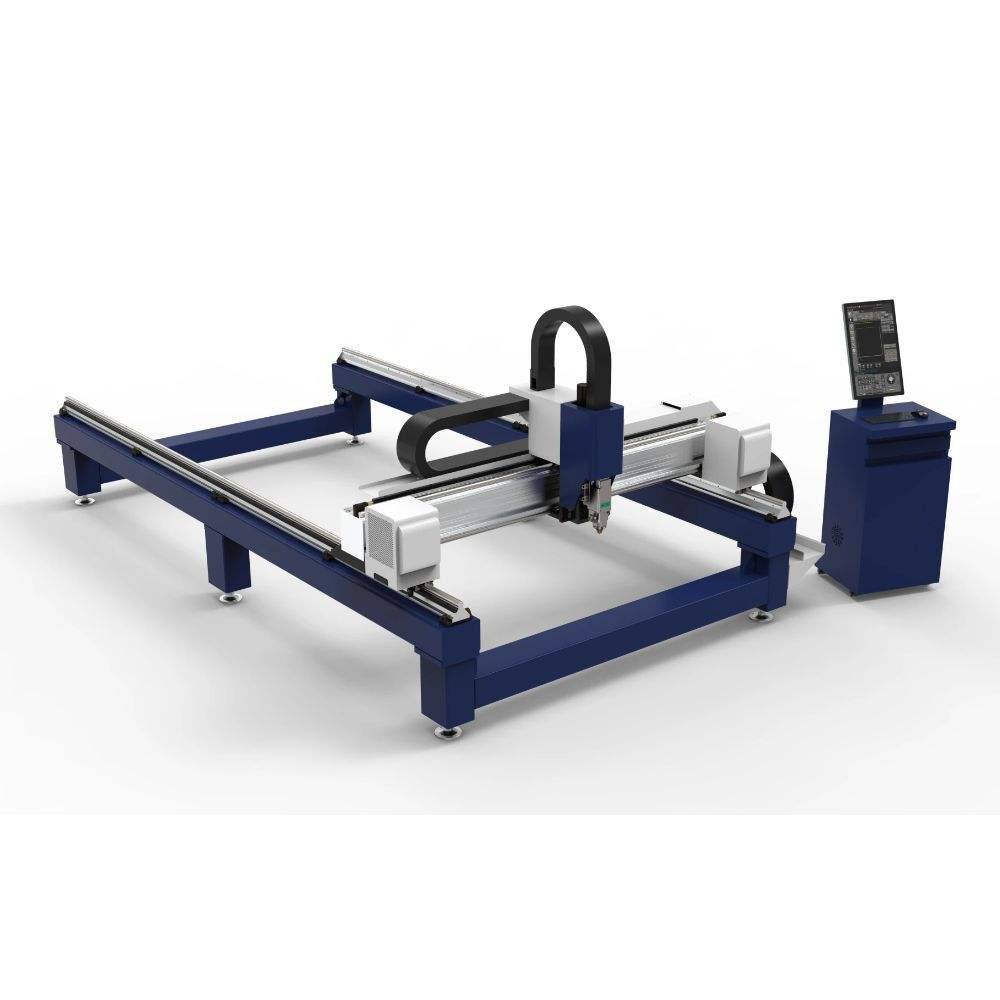 laser cutting machine Gantry” style=”width: 100%; max-width: 800px; height: auto; margin: 20px 0;”>
Technical Capabilities of the 2kW Fiber Laser Cutting Machine
Understanding the engineering specifications of a 2kW system is essential for optimizing production workflows. A 2kW fiber laser is engineered to deliver high photon density to a very small focal point. This concentration of energy allows for a narrow kerf width, which minimizes material waste and enables the creation of complex geometries that would be impossible with mechanical shearing or plasma cutting.
Power Density and Wavelength Advantages
The fiber laser’s 1.06-micron wavelength is nearly ten times shorter than that of a CO2 laser. This characteristic allows the beam to be focused into a spot size that is significantly smaller, increasing the power density at the point of contact. For stainless steel, this means the material reaches its melting point almost instantaneously, allowing the assist gas to blow away the molten metal with minimal heat transfer to the surrounding area. In Puebla’s competitive market, this translates to parts that require zero secondary finishing, reducing the overall cost per part.
Thickness Capacity for Stainless Steel
While a 2kW machine can cut a variety of materials, its performance on stainless steel is particularly noteworthy. Typically, a 2kW system can comfortably process stainless steel up to 6mm or 8mm in thickness for high-volume production, with the capability to reach 10mm for specialized applications. Within the 1mm to 4mm range—the most common gauges for automotive brackets and food-grade cabinetry—the 2kW fiber laser operates at peak efficiency, maintaining high feed rates while ensuring a burr-free finish.
Precision Cutting of Stainless Steel Alloys
Stainless steel is prized for its corrosion resistance and aesthetic appeal, but it presents unique challenges during the laser cutting process. Its high chromium content and relatively low thermal conductivity (compared to carbon steel) require precise control over the laser parameters to prevent warping and discoloration.
Grade 304 and 316 Applications
In Puebla, the food and beverage industry relies heavily on Grade 304 and Grade 316 stainless steel for tanks, conveyors, and processing machinery. A 2kW fiber laser cutting machine provides the precision necessary to fabricate these components to strict hygienic standards. The laser’s ability to produce smooth, non-porous edges is vital for preventing bacterial growth in food-processing environments. Furthermore, the 2kW power level is sufficient to maintain high speeds on these alloys, ensuring that the local fabricators can meet tight delivery schedules for the region’s agricultural and bottling plants.
Heat Affected Zone (HAZ) Minimization
One of the primary engineering advantages of using a fiber laser on stainless steel is the reduction of the Heat Affected Zone (HAZ). Excessive heat can lead to “carbide precipitation” in stainless steel, which compromises its corrosion resistance. The high speed of the 2kW laser cutting process ensures that the heat is localized to the cut line. This preservation of the material’s metallurgical properties is critical for components destined for the automotive exhaust systems or chemical processing units found in the Puebla-Tlaxcala industrial zone.

Optimizing Laser Cutting for the Puebla Market
Operating a laser cutting facility in Puebla requires an understanding of local industrial demands and environmental factors. The region’s altitude and climate can affect the performance of auxiliary systems like chillers and gas delivery, making it essential to calibrate the 2kW system for local conditions.
Integration with Automotive Supply Chains
Puebla is the heart of Mexico’s automotive industry. Tier 2 and Tier 3 suppliers often utilize 2kW fiber lasers to produce intricate shims, brackets, and interior structural components. The precision of laser cutting allows these shops to meet the “Just-in-Time” (JIT) requirements of the major OEMs. With a 2kW system, a shop can quickly switch between different gauges of stainless steel, providing the flexibility needed to handle diverse part catalogs without lengthy setup times.
Food Grade Equipment Fabrication
Beyond automotive, Puebla has a robust sector dedicated to industrial kitchen equipment and medical devices. These industries require high-precision cuts on thin-gauge stainless steel. The 2kW fiber laser is ideal here because it offers the speed of a higher-powered machine but with a finer focus, which is necessary for the intricate vents, handles, and mounting plates used in professional catering equipment.
Operational Parameters and Gas Consumption
The efficiency of a laser cutting operation is determined not just by the laser source, but by the management of assist gases. For stainless steel, the choice of gas is a critical decision that impacts both quality and cost.
The Role of Nitrogen in Oxide-Free Cuts
When cutting stainless steel, Nitrogen (N2) is the preferred assist gas. Unlike Oxygen, which facilitates a thermal reaction (burning) to cut the metal, Nitrogen acts as a mechanical force to eject molten material. This prevents oxidation of the cut edge, leaving a clean, silver finish that is ready for welding or immediate assembly. In Puebla, where many fabricators serve the high-end architectural and medical markets, the ability to produce oxide-free edges with a 2kW laser cutting machine is a significant competitive advantage.
High-Pressure Cutting Techniques
To achieve the best results on stainless steel, 2kW systems utilize high-pressure gas delivery. This requires a robust infrastructure of tanks and regulators. Engineers must balance the gas pressure with the cutting speed; too little pressure results in dross (slag) adhering to the bottom of the cut, while too much pressure can cause turbulence that affects the beam’s stability. Modern CNC controllers on 2kW machines allow for the automation of these parameters, ensuring consistent quality across long production runs.
Economic Advantages for Local Workshops
For a fabrication shop in Puebla, the transition to a 2kW fiber laser is an economic strategic move. Compared to older CO2 technology or lower-powered fiber systems, the 2kW unit offers a unique ROI profile.
Energy Efficiency and Operational Costs
Fiber lasers are remarkably efficient, converting approximately 30-35% of electrical input into laser light, whereas CO2 lasers hover around 10%. This lower energy consumption is a major benefit in Mexico, where industrial electricity rates can fluctuate. Additionally, fiber lasers have no moving parts in the resonator and no mirrors to align, which drastically reduces the maintenance costs and downtime typically associated with laser cutting operations.
Return on Investment (ROI) Analysis
The 2kW power level is often the most cost-effective entry point for shops looking to upgrade their capabilities. It provides enough power to handle 90% of common stainless steel fabrication tasks while remaining more affordable than 4kW or 6kW systems. By increasing throughput and reducing secondary grinding and finishing tasks, most Puebla-based shops find that the machine pays for itself within 18 to 24 months of consistent operation.
Maintenance and Longevity in Industrial Environments
To ensure the longevity of a 2kW fiber laser cutting machine in an environment like Puebla, a proactive maintenance schedule is required. The high dust levels associated with industrial zones mean that filtration and cooling systems must be kept in peak condition.
Cooling Systems and Environmental Control
The fiber laser source and the cutting head generate significant heat during operation. A dual-circuit water chiller is standard for 2kW systems, cooling both the laser source and the optics. In Puebla’s temperate but sometimes dusty climate, ensuring that the chiller’s heat exchangers are clean is vital for preventing thermal drift, which can cause the laser beam to lose focus and degrade cut quality.
Software and CNC Integration
Modern 2kW machines are equipped with sophisticated CNC software that allows for nesting and path optimization. By using “common line cutting” and intelligent lead-ins, fabricators can maximize material utilization of expensive stainless steel sheets. In the Puebla market, where material costs are a significant portion of the quote, the ability to save even 5% in scrap can be the difference between winning and losing a contract.
Conclusion
The 2kW fiber laser cutting machine has become an indispensable tool for the stainless steel fabrication industry in Puebla. Its ability to deliver high-speed, high-precision results across a variety of material thicknesses makes it the ideal choice for the region’s diverse industrial base. Whether supporting the automotive supply chain or building the next generation of food processing equipment, the 2kW fiber laser provides the reliability and efficiency required to compete in a globalized economy. As technology continues to advance, the integration of these systems will remain a cornerstone of manufacturing excellence in the heart of Mexico.













