Introduction to 20kW Precision Laser Systems in Puebla
The industrial landscape of Puebla, Mexico, has long been a cornerstone of the nation’s manufacturing prowess. Known primarily for its massive automotive clusters and aerospace contributions, the region is now witnessing a technological shift toward ultra-high-power fabrication. The introduction of the 20kW precision laser system represents a significant leap in laser cutting capabilities, particularly for non-ferrous metals like brass. As manufacturers in Puebla strive for higher throughput and tighter tolerances, understanding the integration of 20kW fiber laser technology becomes essential for maintaining a competitive edge in the global supply chain.
A 20kW fiber laser is not merely a tool for cutting thicker plates; it is a precision instrument designed to optimize the interaction between high-density photon streams and complex alloys. In the context of Puebla’s diverse industrial base—ranging from Volkswagen’s extensive supplier network to decorative architectural firms—the ability to process brass with speed and accuracy is a transformative advantage. This guide explores the technical nuances, operational strategies, and economic benefits of employing 20kW laser cutting systems specifically for brass fabrication in the Puebla region.
The Evolution of Fiber Laser Technology
Fiber laser technology has evolved rapidly over the last decade. Moving from the standard 2kW and 4kW systems to the 20kW powerhouse involves more than just increasing the wattage. It requires a fundamental redesign of the beam delivery system, the cutting head optics, and the motion control software. At 20kW, the energy density is sufficient to vaporize metal almost instantly, reducing the Heat-Affected Zone (HAZ) and allowing for intricate geometries that were previously impossible to achieve with mechanical or plasma-based methods. For engineers in Puebla, this means the ability to produce components that require zero post-processing, significantly shortening the production cycle.
Understanding the Brass Challenge
Brass, an alloy of copper and zinc, presents unique challenges for laser cutting. Its high thermal conductivity and high reflectivity make it a “difficult” material for traditional CO2 lasers. Even with early-generation fiber lasers, back-reflection posed a serious risk to the laser source itself. However, modern 20kW systems are equipped with advanced back-reflection isolation technologies and beam oscillation (wobble) capabilities that allow them to pierce and cut brass with unprecedented stability.
In Puebla’s manufacturing sector, brass is frequently used for electrical connectors, heat exchangers, and decorative elements. The 20kW system overcomes the material’s natural tendency to reflect light by delivering a concentrated burst of energy that exceeds the material’s absorption threshold instantly. This ensures that the beam penetrates the surface rather than bouncing back into the optics, protecting the machine and ensuring a clean, dross-free cut.
Overcoming Reflectivity with High-Power Density
The key to successful brass laser cutting at 20kW lies in power density. By focusing 20,000 watts into a spot size of a few hundred microns, the system creates a localized environment where the brass cannot dissipate the heat fast enough to prevent melting. This localized heating is critical. In lower-power systems, the heat spreads throughout the part, leading to warping and poor edge quality. The 20kW system moves so fast that the heat is confined to the kerf, resulting in a “cold” cut that preserves the structural integrity and aesthetic finish of the brass component.
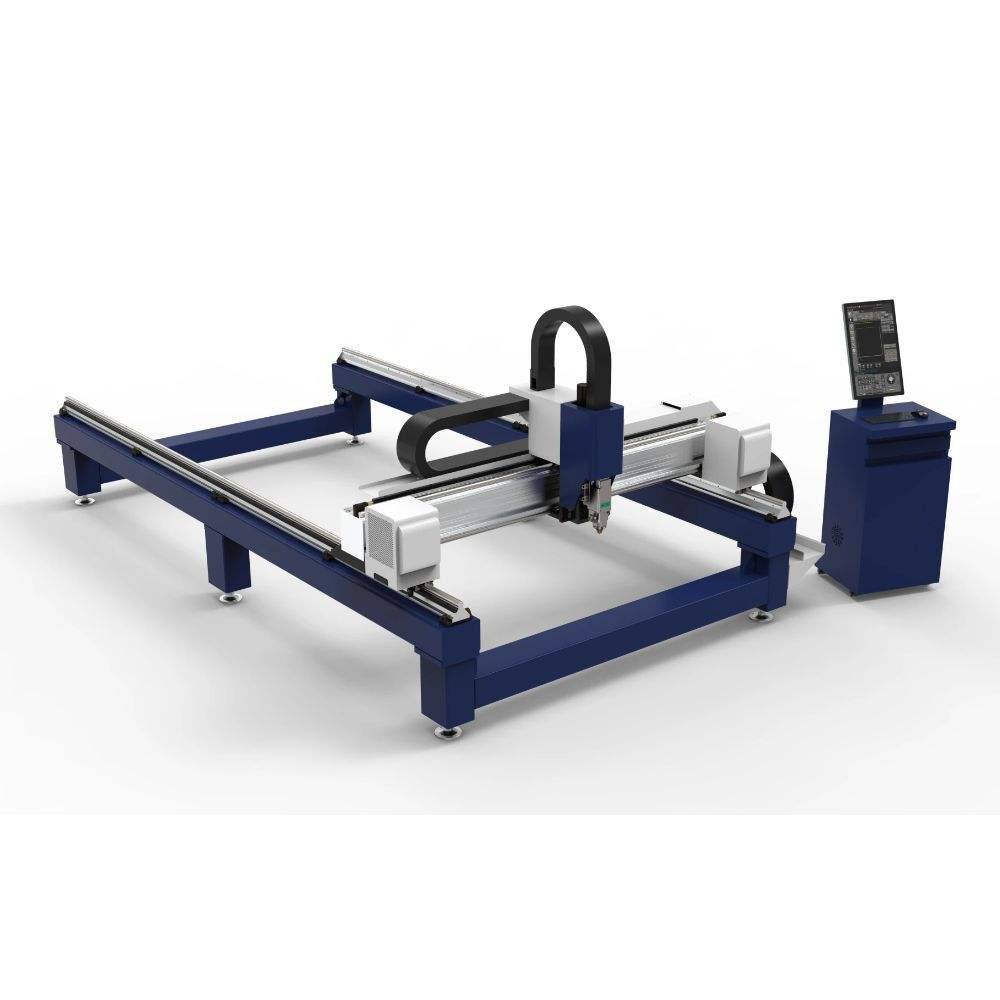
 laser cutting machine“>
Industrial Applications in Puebla’s Manufacturing Sector
Puebla’s strategic location and established infrastructure make it an ideal hub for high-tech manufacturing. The application of 20kW laser cutting in this region is diverse. In the automotive sector, brass components used in sensors and electrical housings require the high precision that only a stabilized fiber laser can provide. Furthermore, the aerospace suppliers located in the surrounding industrial parks utilize these systems to fabricate specialized bushings and shims where material certification and precision are non-negotiable.
Beyond heavy industry, Puebla has a rich tradition of architectural metalwork. High-power laser cutting allows local artisans and industrial designers to create complex brass screens, signage, and furniture components with a level of detail that matches traditional craftsmanship but at a fraction of the time and cost. The 20kW system’s ability to handle thick brass plate—up to 20mm or more—opens new doors for structural architectural applications that were previously restricted to steel or aluminum.
Automotive and Electrical Component Fabrication
The automotive industry in Puebla demands high-volume production with zero-defect rates. Brass is often chosen for its corrosion resistance and electrical conductivity. When using a 20kW laser, the cutting speed for thin brass (1mm to 3mm) is exceptionally high, often exceeding 50 meters per minute. This high-speed processing is vital for meeting the Just-In-Time (JIT) delivery requirements of major OEMs. The precision of the 20kW beam ensures that small holes and intricate tabs are cut with a tolerance of +/- 0.05mm, satisfying the most stringent engineering standards.
Technical Specifications for 20kW Brass Cutting
Operating a 20kW laser cutting system requires a deep understanding of the interplay between power, speed, and assist gas. For brass, the choice of assist gas is critical. While oxygen can be used for thicker sections to add exothermic energy, nitrogen is the preferred choice for most precision applications. Nitrogen acts as a shielding gas, preventing oxidation of the cut edge and leaving a bright, clean finish that is essential for brass components that will be visible or require soldering.
Assist Gas Selection and Pressure Optimization
In the 20kW range, the volume of assist gas required is substantial. High-pressure nitrogen (up to 25 bar) is used to blow the molten brass out of the kerf. Because brass has a lower melting point than steel but a higher viscosity when molten, the gas dynamics within the cut are complex. Engineers in Puebla must calibrate the nozzle diameter and the stand-off distance to ensure a laminar flow of gas. This prevents “beading” on the underside of the plate and ensures that the laser cutting process remains consistent throughout long production runs.
Feed Rates and Kerf Management
Managing the kerf—the width of the cut—is another technical hurdle. At 20kW, the kerf can become wider if the feed rate is not optimized. Modern systems utilize CNC controllers that automatically adjust the laser power based on the velocity of the cutting head. As the machine slows down to navigate a tight corner, the power is scaled back to prevent over-burning. This “power ramping” is essential for maintaining dimensional accuracy in complex brass parts, ensuring that every piece in a batch is identical.
Maintaining a 20kW Laser System in an Industrial Environment
The environment in Puebla, characterized by its altitude and specific humidity levels, can affect the performance of high-power laser systems. Maintenance of a 20kW laser cutting machine is a specialized task. The optical path must be kept in a pristine, climate-controlled state to prevent “thermal lensing.” Thermal lensing occurs when contaminants on the lens absorb laser energy, causing the lens to heat up and slightly deform, which shifts the focal point and ruins the cut quality.
Cooling Systems and Thermal Management
A 20kW laser generates a significant amount of waste heat. The chiller system is perhaps the most critical peripheral component. It must maintain the laser source and the cutting head at a constant temperature with a variance of less than 1 degree Celsius. In the industrial zones of Puebla, where ambient temperatures can fluctuate, an oversized, high-efficiency chiller is recommended. Regular coolant analysis and filter changes are mandatory to prevent micro-clogging in the internal cooling channels of the fiber laser modules.
Economic Impact and ROI for Puebla-Based Enterprises
The capital investment for a 20kW laser cutting system is substantial, but the Return on Investment (ROI) is driven by throughput and material versatility. For a job shop in Puebla, the ability to cut brass at speeds five times faster than a 4kW system means they can take on more contracts without increasing their footprint. Furthermore, the 20kW system reduces the cost per part by minimizing gas consumption per meter and reducing the need for secondary finishing operations.
Throughput vs. Operational Cost
When analyzing the economics, one must consider the “cost of light.” While the 20kW machine consumes more electricity, its ability to finish jobs rapidly means the total energy consumed per part is often lower than that of a less powerful machine. In the competitive landscape of Puebla’s manufacturing sector, the ability to offer faster turnaround times for thick brass plate laser cutting allows companies to capture high-margin work that lower-power shops cannot handle. This technological barrier to entry provides a significant market advantage.
Conclusion
The deployment of 20kW precision laser systems for brass in Puebla marks a new era of industrial capability. By mastering the technical challenges of reflectivity and thermal management, manufacturers can leverage laser cutting to produce high-quality components for the automotive, aerospace, and architectural sectors. As the technology continues to mature, the integration of these high-power systems will remain a defining factor in the success of Puebla’s industrial evolution, ensuring that the region remains a global leader in precision manufacturing and metal fabrication.













