Introduction to 2kW Tube laser cutting in Leon’s Industrial Sector
The industrial landscape of Leon, Guanajuato, has undergone a massive transformation over the last decade. Known traditionally as the leather and footwear capital of the world, Leon has rapidly diversified into automotive manufacturing, aerospace components, and advanced construction engineering. At the heart of this transition is the adoption of high-precision CNC technology, specifically the 2kW tube laser cutting machine. This specific power rating—2,000 watts—represents a critical equilibrium for medium-scale fabricators who require a balance between high-speed production and operational cost-efficiency.
Laser cutting has revolutionized how tubular profiles are processed. Unlike traditional sawing, drilling, or milling, a fiber laser provides a non-contact, highly localized thermal process that can execute complex geometries, interlocking tabs, and precision miters in a single pass. For the workshops in Leon that supply the automotive corridors of the Bajío region, the ability to process galvanized steel with high repeatability is not just an advantage; it is a necessity for maintaining competitive margins and meeting international quality standards.
The Mechanics of 2kW Fiber Laser Technology
A 2kW fiber laser operates by generating a high-intensity beam through a series of laser diodes, which is then amplified in a fiber optic cable doped with rare-earth elements like ytterbium. This beam is delivered through a flexible transport fiber to the cutting head, where it is focused into a microscopic spot. The energy density at this focal point is sufficient to melt or vaporize steel instantly.
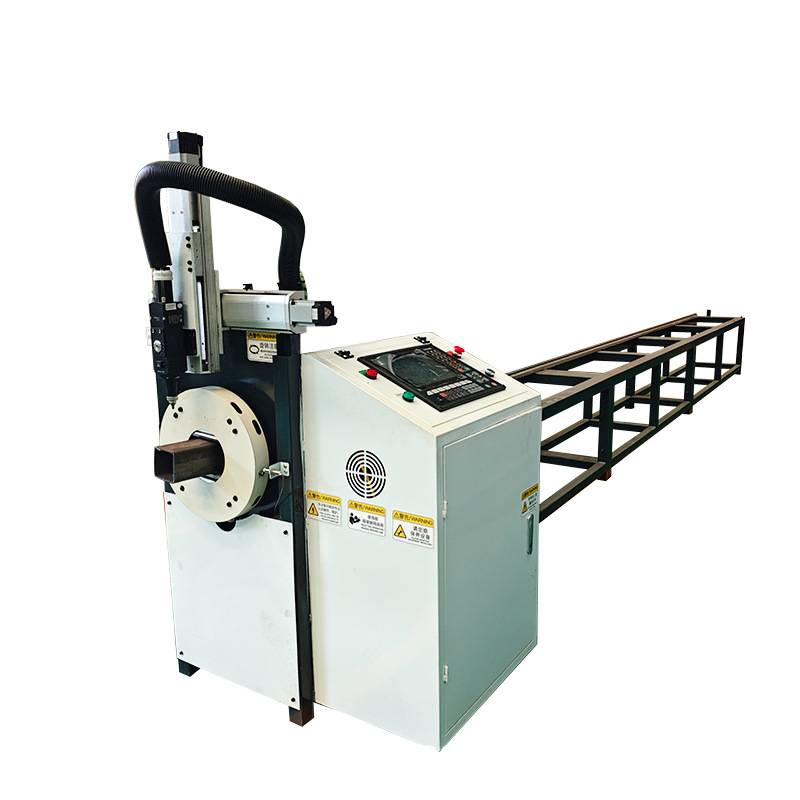
In tube laser cutting, the machine utilizes a rotary chuck system (often a four-jaw or pneumatic self-centering system) to rotate the workpiece while the cutting head moves along the X, Y, and Z axes. This multi-axis synchronization allows for the creation of holes, slots, and complex end-cuts on round, square, rectangular, and even oval profiles. The 2kW power level is particularly effective for wall thicknesses ranging from 0.5mm to 6mm in carbon steel and up to 4mm in galvanized materials, which covers the vast majority of structural and decorative applications in the Leon market.

Processing Galvanized Steel: The Zinc Challenge
Galvanized steel is widely used in Leon’s construction and outdoor furniture industries due to its superior corrosion resistance. However, laser cutting galvanized material presents unique engineering challenges compared to standard cold-rolled steel. The primary issue is the zinc coating, which has a significantly lower melting point (approx. 419°C) than the underlying steel (approx. 1500°C).
When the laser beam hits the surface, the zinc vaporizes before the steel melts. This vapor can create several problems: it can interfere with the laser beam’s stability, contaminate the protective lens of the cutting head, and create “micro-explosions” that result in excessive dross (slag) on the underside of the cut. To overcome this, 2kW systems must be finely tuned with specific focal positions and high-pressure assist gases to ensure the zinc vapor is blown away from the kerf immediately.
Optimizing Parameters for Galvanized Tubes
To achieve a “burr-free” finish on galvanized steel in a 2kW system, engineers in Leon must focus on three primary variables: nozzle selection, focal depth, and gas pressure. For galvanized materials, a double-layer nozzle is often preferred to stabilize the gas flow. The focal point is typically set slightly below the surface of the material to ensure that the energy is concentrated enough to penetrate the coating and the steel simultaneously.
Speed is also a critical factor. If the laser cutting speed is too slow, the heat-affected zone (HAZ) expands, causing the zinc to peel back from the edge, leaving the steel vulnerable to rust. Conversely, if the speed is too high, the laser may fail to penetrate the material fully, leading to incomplete cuts. A 2kW machine provides the necessary power to maintain high feed rates (often exceeding 15-20 meters per minute on thin-walled tubes), which minimizes the HAZ and preserves the integrity of the galvanization near the cut edge.
The Role of Assist Gases: Nitrogen vs. Oxygen
In the context of laser cutting galvanized steel, the choice of assist gas is paramount. Oxygen is often used for thicker carbon steel because it creates an exothermic reaction that adds energy to the cut, increasing speed. However, oxygen causes oxidation on the cut edge, which can lead to paint adhesion issues later. For galvanized tubes, Nitrogen is the industry standard in Leon.
Nitrogen acts as a shielding gas. It uses purely mechanical force to eject the molten metal from the kerf. Because it does not react with the metal, the resulting edge is clean, bright, and ready for welding or powder coating without secondary cleaning. Furthermore, high-pressure Nitrogen helps to suppress the erratic burning of the zinc layer, resulting in a much smoother surface finish.
Industrial Applications in Leon, Guanajuato
The versatility of the 2kW tube laser has made it a staple in several key sectors within Leon. In the automotive supply chain, these machines are used to produce chassis components, exhaust pipes, and seat frames. The precision of laser cutting ensures that every part fits perfectly into robotic welding cells, reducing the need for manual adjustments and jigging.
In the construction sector, Leon’s architects and engineers utilize laser-cut galvanized tubes for structural trusses, handrails, and decorative facades. The ability to cut intricate patterns into square tubing allows for aesthetic designs that were previously cost-prohibitive. Additionally, the agricultural machinery sector in the surrounding Guanajuato area relies on these machines to fabricate heavy-duty frames for implements that must withstand harsh outdoor environments, making galvanized steel the material of choice.
Efficiency and Software Integration
Modern 2kW tube lasers are equipped with advanced nesting software. This software allows operators in Leon to maximize material utilization by strategically placing different parts on a single length of tube. For galvanized steel, which is more expensive than raw carbon steel, reducing scrap rates by even 5-10% can result in significant annual savings. Features like “common line cutting”—where two parts share a single cut path—further increase throughput and reduce gas consumption.
Maintenance and Safety Protocols
Operating a fiber laser in an industrial environment like Leon requires strict adherence to maintenance and safety. Fiber lasers are Class 4 laser products, meaning the beam is invisible and can cause permanent eye damage or fire. High-quality machines are fully enclosed with laser-rated glass to protect the operators.
When laser cutting galvanized steel, the extraction of fumes is a critical safety concern. The vaporization of zinc produces zinc oxide fumes, which can cause “metal fume fever” if inhaled. A robust dust collection and filtration system is mandatory. Furthermore, the optical path must be kept pristine. In Leon’s dusty industrial zones, pressurized cabinets for the electronics and high-efficiency filters for the cooling system are essential to prevent premature component failure. Daily cleaning of the nozzle and checking the protective window for “splatter” from the galvanized coating will ensure the 2kW source maintains its rated output for years.
The Future of Tube Fabrication in the Bajío Region
As Leon continues to grow as a manufacturing powerhouse, the demand for higher precision and faster turnaround times will only increase. The 2kW tube laser cutting machine represents the current “sweet spot” for most local enterprises, providing the power to handle galvanized steel with ease while remaining affordable enough for small to medium enterprises (SMEs).
Looking forward, we expect to see more integration of Artificial Intelligence in these machines, where sensors can detect the quality of the cut in real-time and adjust the laser cutting parameters automatically to compensate for variations in the zinc coating thickness. For now, the combination of a 2kW fiber source, high-pressure Nitrogen, and skilled local operators remains the gold standard for tube fabrication in Guanajuato.
Conclusion
The 2kW tube laser cutting machine is more than just a tool; it is a catalyst for industrial growth in Leon. By mastering the complexities of processing galvanized steel, local manufacturers can deliver high-durability, high-precision products to the global market. Whether it is for the automotive lines of Silao or the growing infrastructure of Leon itself, laser cutting technology provides the speed, accuracy, and versatility required to thrive in the modern engineering landscape. Investing in the right technology, gas delivery systems, and safety protocols ensures that Leon remains at the forefront of Mexico’s industrial revolution.













