Comprehensive Guide to 4kW Fiber laser cutting of Aluminum Alloys in Monterrey’s Industrial Sector
The industrial landscape of Monterrey, Nuevo León, has long been the heartbeat of Mexican manufacturing. As the city evolves into a global hub for automotive, aerospace, and home appliance production, the demand for precision fabrication has skyrocketed. Central to this evolution is the 4kW fiber laser cutting machine. This specific power rating has emerged as the “gold standard” for processing aluminum alloys, balancing speed, edge quality, and operational cost. For engineers and facility managers in Monterrey’s industrial parks—from Santa Catarina to Apodaca—understanding the technical nuances of 4kW fiber technology is essential for maintaining a competitive edge in a “nearshoring” economy.
The Technical Superiority of 4kW Fiber Laser Technology
Laser cutting technology has undergone a paradigm shift from CO2 to fiber optics. In the context of aluminum, which is a highly reflective and thermally conductive material, the 1.06-micron wavelength of a fiber laser is absorbed much more efficiently than the 10.6-micron wavelength of traditional CO2 lasers. A 4kW power source provides the necessary energy density to overcome the initial reflectivity of aluminum alloys without damaging the resonator through back-reflection.
The 4kW threshold is particularly significant because it allows for high-speed processing of thin gauges (1mm to 3mm) while maintaining the capability to cut thicker plates up to 12mm or even 15mm with acceptable edge quality. This versatility is vital for Monterrey-based suppliers who may switch between lightweight automotive components and heavy-duty structural parts within the same shift.

Challenges and Solutions in Aluminum Alloy Fabrication
Aluminum presents unique challenges during the laser cutting process. Its high thermal conductivity means heat dissipates rapidly from the cut zone, which can lead to inconsistent melting if the laser power is insufficient. Furthermore, the molten aluminum has a relatively high viscosity, which can result in “dross” or burrs on the bottom edge of the workpiece.
To mitigate these issues, a 4kW system utilizes sophisticated beam modulation and high-pressure assist gases. In Monterrey’s high-output environments, Nitrogen is the preferred assist gas for aluminum. Nitrogen acts as a mechanical force to eject molten material from the kerf before it can solidify, and because it is an inert gas, it prevents oxidation of the cut edge. This results in a clean, weld-ready surface that requires zero post-processing—a critical factor for meeting the “Just-In-Time” (JIT) requirements of the local automotive assembly plants.
Optimizing Parameters for Monterrey’s Environmental Conditions
Monterrey’s climate, characterized by extreme summer heat and fluctuating humidity, can impact the performance of high-power laser systems. A 4kW fiber laser generates significant heat within the power source and the cutting head. Therefore, a robust dual-circuit chilling system is non-negotiable. One circuit cools the fiber source, while the other cools the optical components of the cutting head to prevent thermal drift.
Engineers must also calibrate the laser cutting parameters to account for the specific alloy being processed. For instance, the 5000-series aluminum (magnesium alloyed) often used in marine and structural applications cuts differently than the 6000-series (silicon and magnesium alloyed) prevalent in automotive extrusions. A 4kW machine provides the “headroom” to adjust frequency, duty cycle, and nozzle height to achieve a stable “keyhole” effect even in these varying conditions.
Integration with Monterrey’s Automotive and Aerospace Supply Chains
With the arrival of major electric vehicle (EV) manufacturers and the expansion of existing aerospace clusters in Northern Mexico, the 4kW fiber laser cutting machine has become a prerequisite for Tier 1 and Tier 2 suppliers. Aluminum is the material of choice for EV battery enclosures, heat sinks, and chassis components due to its weight-to-strength ratio.
The precision afforded by a 4kW fiber laser ensures that tolerances within ±0.05mm are consistently met. Furthermore, the integration of CNC software allows for advanced nesting strategies, reducing material waste—a significant cost-saving measure given the fluctuating price of aluminum ingot. In the competitive landscape of Apodaca’s industrial corridors, the ability to deliver high-precision aluminum parts with minimal lead time is what separates market leaders from their competitors.
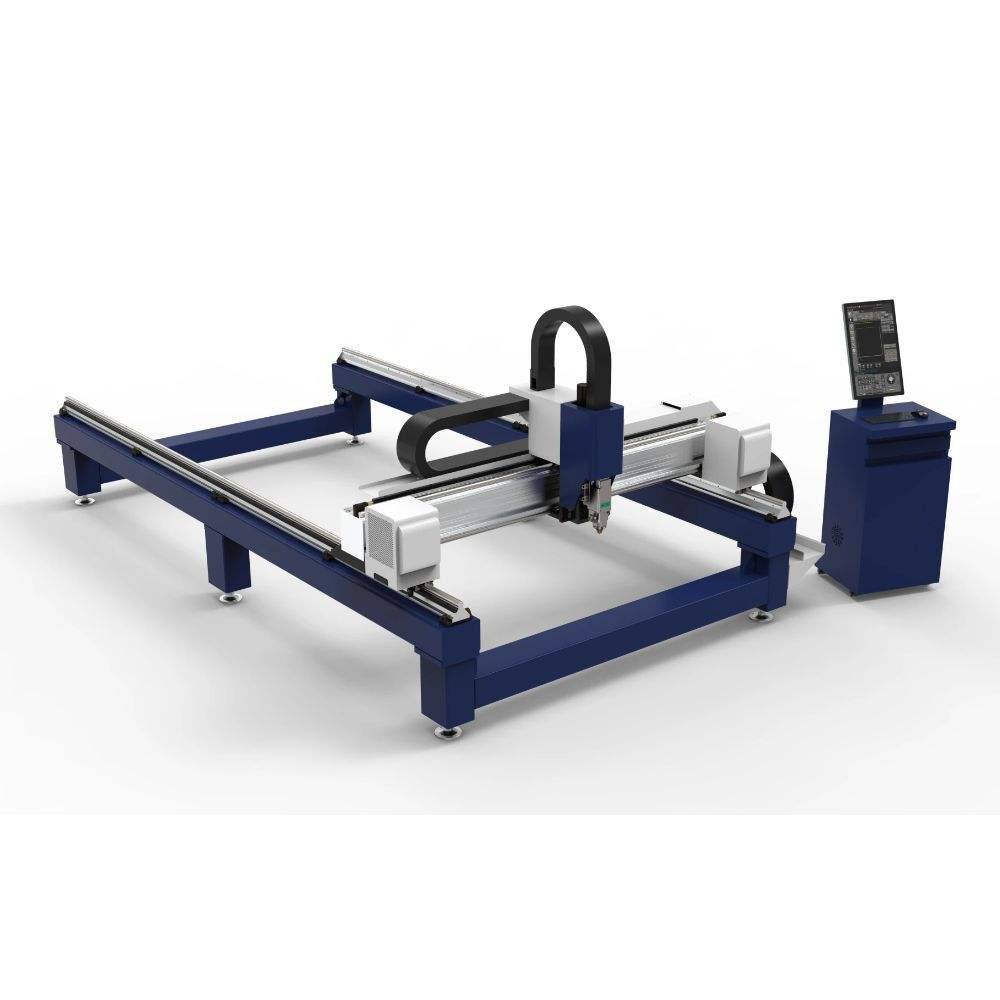
Operational Efficiency and Assist Gas Management
While the 4kW laser provides the raw power, the efficiency of the laser cutting process is heavily dependent on gas management. For aluminum, the consumption of Nitrogen can be high. Many large-scale fabrication shops in Monterrey are moving toward Nitrogen generation systems or bulk liquid tanks to manage costs. Using compressed air as an assist gas is an alternative for non-critical parts, as 4kW of power is sufficient to cut through the aluminum oxide layer formed during the process, though the edge will be slightly more porous.
Proper nozzle selection is another pillar of operational excellence. For aluminum, double-layer nozzles are often utilized to provide a more stable gas flow, which helps in maintaining a consistent focal point. In a 4kW system, the focal position is typically set slightly below the surface of the material to ensure that the widest part of the beam energy is concentrated where the melt pool is most dense.
Maintenance Protocols for High-Power Fiber Lasers
To ensure the longevity of a 4kW fiber laser cutting machine in an industrial setting like Monterrey, a rigorous maintenance schedule is required. Aluminum dust is highly conductive and potentially explosive if not managed correctly. Dust extraction systems must be high-capacity and regularly cleaned to prevent accumulation within the machine’s bellows or electronic cabinets.
The optical path, though sealed in fiber systems, still requires attention at the final delivery point: the protective window (cover glass). In aluminum laser cutting, back-spatter is a common occurrence. Operators must inspect the cover glass daily for “burn spots.” Even a tiny speck of dust on the lens can absorb the 4kW of energy, leading to thermal cracking and expensive downtime. Training local technicians in Monterrey to perform these inspections and maintain clean-room standards during lens changes is vital for maximizing ROI.
Economic Impact: Why 4kW is the Right Investment
From a financial perspective, the 4kW fiber laser offers the best return on investment for the majority of Monterrey’s fabrication shops. While 2kW machines are cheaper, they struggle with aluminum thicker than 6mm and are significantly slower. Conversely, 10kW+ machines offer incredible speed but come with much higher utility costs and a steeper initial price tag that may not be justified unless the shop is running three shifts of heavy-plate cutting exclusively.
The 4kW machine strikes a balance. It is fast enough to handle high-volume thin-sheet orders for the appliance industry (Mabe, Whirlpool, etc.) while having the “muscle” to handle thicker structural aluminum for the construction and transport sectors. In the context of Monterrey’s economy, where energy costs are a significant factor, the energy efficiency of the fiber resonator compared to older CO2 technology provides a direct boost to the bottom line.
Future Trends: Automation and Industry 4.0
The future of laser cutting in Monterrey lies in automation. 4kW machines are increasingly being paired with automatic loading and unloading systems. Given the speed at which a 4kW laser can process a sheet of 2mm aluminum, manual loading often becomes the bottleneck. By integrating the laser cutting machine into a networked “Smart Factory” environment, managers can monitor gas levels, power consumption, and cutting speeds in real-time from their mobile devices.
Artificial Intelligence is also beginning to play a role. Modern 4kW systems feature “Auto-Focus” cutting heads and sensors that can detect a “lost cut” or an impending collision, automatically pausing the machine to prevent damage. For the highly skilled workforce in Monterrey, these tools are not replacements but enhancements that allow one operator to manage multiple machines simultaneously.
Conclusion
The 4kW fiber laser cutting machine represents the pinnacle of versatility for aluminum alloy fabrication in Monterrey. Its ability to navigate the challenges of material reflectivity and thermal conductivity makes it an indispensable tool for the modern machine shop. As Monterrey continues to solidify its position as a global manufacturing powerhouse, the adoption of high-precision, high-efficiency laser cutting technology will remain the cornerstone of industrial growth. By focusing on technical optimization, environmental adaptation, and rigorous maintenance, local manufacturers can ensure that their 4kW systems provide a reliable, high-quality output for decades to come.













