Introduction to 6kW Tube laser cutting Technology
In the rapidly evolving industrial landscape of Tijuana, Baja California, the demand for precision metal fabrication has reached unprecedented levels. As a primary hub for the aerospace, medical device, and automotive industries, Tijuana-based manufacturers are increasingly turning to high-power fiber laser systems to maintain a competitive edge. Among these technologies, the 6kW tube laser cutter stands out as a versatile powerhouse, specifically engineered to handle the rigorous demands of processing non-ferrous metals such as brass.
The transition from traditional mechanical sawing and manual drilling to automated laser cutting has redefined throughput expectations. A 6kW fiber source provides the necessary energy density to penetrate thick-walled tubes while maintaining the intricate detail required for complex assemblies. This guide explores the technical nuances of operating a 6kW system, with a specific focus on the challenges and advantages of processing brass within the unique economic framework of the Tijuana manufacturing sector.
The Power of 6kW: Why It Matters for Tube Processing
The “6kW” designation refers to the output power of the fiber laser resonator. In the context of tube laser cutting, power is directly proportional to both speed and maximum material thickness. While 2kW or 3kW systems are sufficient for thin-walled mild steel, they often struggle with highly reflective materials. The 6kW threshold is considered the “sweet spot” for industrial job shops in Tijuana that require the flexibility to switch between thin-gauge decorative brass and heavy-duty structural components.
At 6,000 watts, the laser beam achieves a power density that can instantaneously vaporize metal, creating a narrow kerf and a minimal heat-affected zone (HAZ). This is critical for tube processing, where the structural integrity of the cylinder or profile must be maintained to ensure proper fitment during subsequent welding or assembly stages.
Processing Brass: Overcoming Reflectivity and Thermal Conductivity
Brass is an alloy of copper and zinc, prized for its corrosion resistance, electrical conductivity, and aesthetic appeal. However, from a laser cutting perspective, brass is notoriously difficult to process. It is a “highly reflective” metal, meaning that in its solid state, it reflects a significant portion of the infrared light emitted by the fiber laser back toward the cutting head.
The Challenge of Back-Reflection
In older CO2 laser systems, attempting to cut brass was often a recipe for disaster, as the reflected beam could travel back into the resonator and cause catastrophic hardware failure. Modern 6kW fiber lasers are equipped with advanced back-reflection protection. These systems use optical isolators and sensors that can detect reflected light and shut down the beam in milliseconds if necessary. However, the high power of a 6kW source allows the beam to “couple” with the material more efficiently, quickly transitioning the brass from a reflective solid to an absorptive molten state, thereby reducing the window of risk.
Thermal Conductivity and Edge Quality
Brass also possesses high thermal conductivity, meaning it dissipates heat rapidly away from the cut zone. To achieve a clean, dross-free edge, the 6kW laser must deliver energy faster than the material can conduct it away. This requires precise synchronization between the laser pulse frequency, the gas pressure, and the feed rate. In Tijuana’s high-precision medical manufacturing sector, where brass components are often used in specialized instrumentation, the ability of a 6kW system to produce a burr-free finish is a significant operational advantage.

Tijuana’s Industrial Ecosystem and Laser Cutting
Tijuana has matured from a low-cost assembly center into a sophisticated manufacturing powerhouse. The city’s proximity to San Diego and the wider California market makes it an ideal location for “nearshoring.” For companies operating under the IMMEX (Maquiladora) program, investing in a 6kW tube laser cutter is a strategic move to internalize supply chains.
Aerospace and Defense Applications
The aerospace cluster in Baja California utilizes brass for various bushings, connectors, and fluid handling systems. These parts often require complex geometries—such as fish-mouth joints or intricate slotting—on circular or rectangular tubing. Traditional machining of these features is time-consuming and prone to human error. A 6kW tube laser cutting system can execute these geometries in a single pass, ensuring repeatability that meets stringent AS9100 standards.
Medical Device Manufacturing
Tijuana is home to one of the largest medical device manufacturing clusters in North America. Brass is frequently used in the production of valves, manifolds, and housings for diagnostic equipment. The precision afforded by a 6kW fiber laser allows for tolerances as tight as +/- 0.1mm, which is essential when the components must interface with sensitive electronics or high-pressure gas systems.
Technical Specifications for 6kW Brass Cutting
When configuring a 6kW tube laser for brass, several technical parameters must be optimized to ensure efficiency and safety. Engineers in Tijuana must balance speed against the physical properties of the specific brass alloy (e.g., C260 or C360).
Assist Gas Selection: Nitrogen vs. Oxygen
For brass, Nitrogen is the preferred assist gas. Nitrogen acts as a shielding agent, blowing the molten metal out of the kerf without causing oxidation. This results in a bright, clean cut edge that requires no secondary finishing. While Oxygen can be used to increase cutting speeds in thicker sections of mild steel, it can cause heavy dross and discoloration on brass. High-pressure Nitrogen (typically 15-20 bar) is essential for maintaining the quality of the cut in a 6kW environment.
Piercing Strategies
The initial “pierce”—the moment the laser breaks through the tube wall—is the most critical part of the process for brass. A 6kW system allows for “multi-stage piercing,” where the laser starts at a lower power with a specific frequency to create a small hole, then ramps up to full power for the cut. This prevents the “splatter” of molten brass from damaging the protective window of the laser head.
Wall Thickness and Diameter Limits
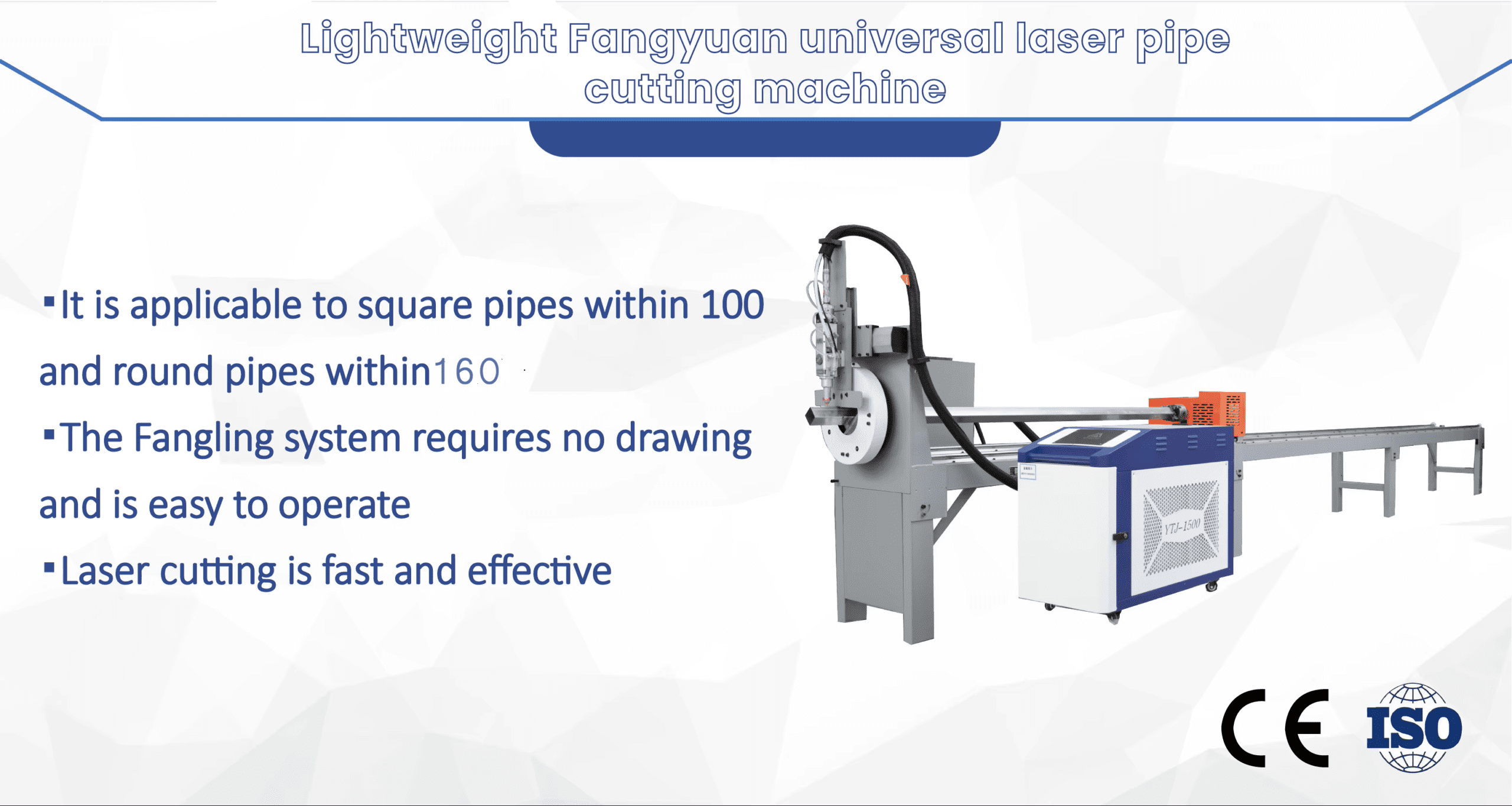
A 6kW tube laser can typically process brass tubing with wall thicknesses up to 8mm or 10mm, depending on the specific machine configuration and the purity of the assist gas. In terms of diameter, modern chuck systems can handle everything from small 15mm needles to 160mm structural pipes. This range is vital for Tijuana shops that serve a diverse client base ranging from architecture to heavy machinery.
Operational Excellence: Maintenance and Safety
Operating a high-power laser cutting system in a coastal environment like Tijuana requires specific maintenance protocols. The humidity and salt air can affect both the mechanical components and the gas delivery systems.
Optics and Nozzle Care
The cutting head is the most sensitive part of the 6kW system. Because brass produces a fine metallic dust during the laser cutting process, the nozzle and the protective cover glass must be inspected and cleaned frequently. Any accumulation of brass dust on the lens can lead to “thermal lensing,” where the focal point of the laser shifts, resulting in poor cut quality or damage to the internal optics.
Fume Extraction and Filtration
Cutting brass releases zinc oxide fumes, which can be hazardous to operators if not properly managed. A robust fume extraction system with HEPA filtration is mandatory. In Tijuana, compliance with STPS (Secretaría del Trabajo y Previsión Social) regulations requires that manufacturing facilities maintain high air quality standards. A well-integrated 6kW tube laser will include a synchronized extraction unit that follows the cutting head to capture particulates at the source.
The Economic Impact of 6kW Technology in Tijuana
The return on investment (ROI) for a 6kW tube laser cutter in the Tijuana market is driven by labor savings and material efficiency. Traditional methods of tube fabrication involve multiple steps: cutting to length, deburring, marking, and drilling. A tube laser combines these into a single automated process.
Reducing Material Waste
With advanced nesting software, a 6kW system can optimize the layout of parts on a single length of brass tubing, reducing “remnant” waste. Given the high cost of brass as a raw material, even a 5% improvement in material utilization can result in thousands of dollars in monthly savings for a high-volume Maquiladora.
Shortening Lead Times
In the “just-in-time” manufacturing environment of the US-Mexico border, speed is a commodity. A 6kW laser can cut brass at speeds five to ten times faster than a lower-powered system. This allows Tijuana shops to offer 24-hour or 48-hour turnarounds on complex tube assemblies, making them more attractive to San Diego-based engineering firms who would otherwise have to source parts from overseas.
Conclusion: The Future of Metal Fabrication in Baja
The 6kW tube laser cutter represents the pinnacle of modern fabrication technology for non-ferrous metals. For manufacturers in Tijuana, it is more than just a tool; it is a gateway to high-value contracts in the aerospace and medical sectors. By mastering the complexities of laser cutting brass—overcoming its reflectivity and managing its thermal properties—local shops are positioning themselves as world-class providers of precision components.
As the industrial base in Baja California continues to sophisticated, the integration of high-power fiber lasers will be the defining factor in operational success. Whether it is for decorative architectural accents or critical aerospace fluid lines, the 6kW tube laser provides the speed, precision, and reliability necessary to thrive in the competitive global market.













