Introduction to 2kW Precision Laser Systems in Toluca’s Industrial Sector
The industrial landscape of Toluca, State of Mexico, has undergone a significant transformation over the last decade. As one of Mexico’s primary manufacturing hubs, the region demands high-efficiency solutions for metal fabrication. Among these technologies, the 2kW precision laser system has emerged as a cornerstone for processing non-ferrous metals. Specifically, the application of laser cutting for brass components has become a critical requirement for the automotive, electrical, and decorative industries that populate the Toluca-Lerma industrial corridor.
A 2kW fiber laser offers a unique balance of power and precision. While higher wattage machines exist, the 2kW threshold is often considered the “sweet spot” for medium-thickness brass, providing enough energy to overcome the material’s inherent reflectivity while maintaining a narrow kerf and minimal heat-affected zone (HAZ). This guide explores the technical nuances of deploying these systems in the specific environmental and economic context of Toluca.
The Technical Challenge of Brass in Laser Cutting
Brass is an alloy of copper and zinc, known for its high thermal conductivity and high reflectivity. In the context of laser cutting, these properties present significant challenges. Early CO2 laser systems struggled with brass because the material would reflect the laser beam back into the optics, causing catastrophic damage to the machine. However, modern 2kW fiber lasers operate at a wavelength of approximately 1.06 microns, which is much more readily absorbed by yellow metals like brass.
Even with improved absorption, the 2kW system must be equipped with “back-reflection protection.” This hardware-level safety feature ensures that any light reflected during the initial piercing stage is diverted away from the fiber delivery system. For engineers in Toluca, selecting a system with robust back-reflection isolation is non-negotiable when the primary output involves brass alloys such as C260 or C360.
 laser cutting machine“>
Optimizing 2kW Laser Parameters for Brass Fabrication
Achieving a burr-free finish on brass requires precise control over several variables. In a 2kW system, the power density at the focal point must be high enough to instantaneously vaporize the metal. This is achieved through high-quality beam delivery and a small spot size. For Toluca-based manufacturers, environmental factors such as altitude (approximately 2,660 meters above sea level) can influence the behavior of assist gases, which must be accounted for during the setup phase.
Assist Gas Selection: Nitrogen vs. Oxygen
The choice of assist gas is pivotal in laser cutting brass. Most precision applications utilize high-pressure Nitrogen. Nitrogen acts as a shielding gas, blowing the molten material out of the kerf without allowing it to oxidize. This results in a bright, clean edge that often requires no secondary finishing. For a 2kW system, Nitrogen pressure typically ranges between 12 and 18 bar, depending on the thickness of the brass sheet.
Oxygen can be used for thicker brass plates to introduce an exothermic reaction, which adds thermal energy to the cut. However, this often leads to an oxidized edge that is darker and may require mechanical cleaning if the part is to be soldered or plated later. In the precision-heavy electronics industry of Toluca, Nitrogen remains the gold standard for maintaining material purity.
Focal Position and Nozzle Geometry
For brass, the focal position is usually set slightly below the surface of the material or “negative.” This ensures that the widest part of the beam energy is concentrated within the cut, facilitating the removal of the viscous molten brass. 2kW systems typically utilize double-layered nozzles to stabilize the gas flow, reducing turbulence that could cause “dross” or slag buildup on the underside of the workpiece.
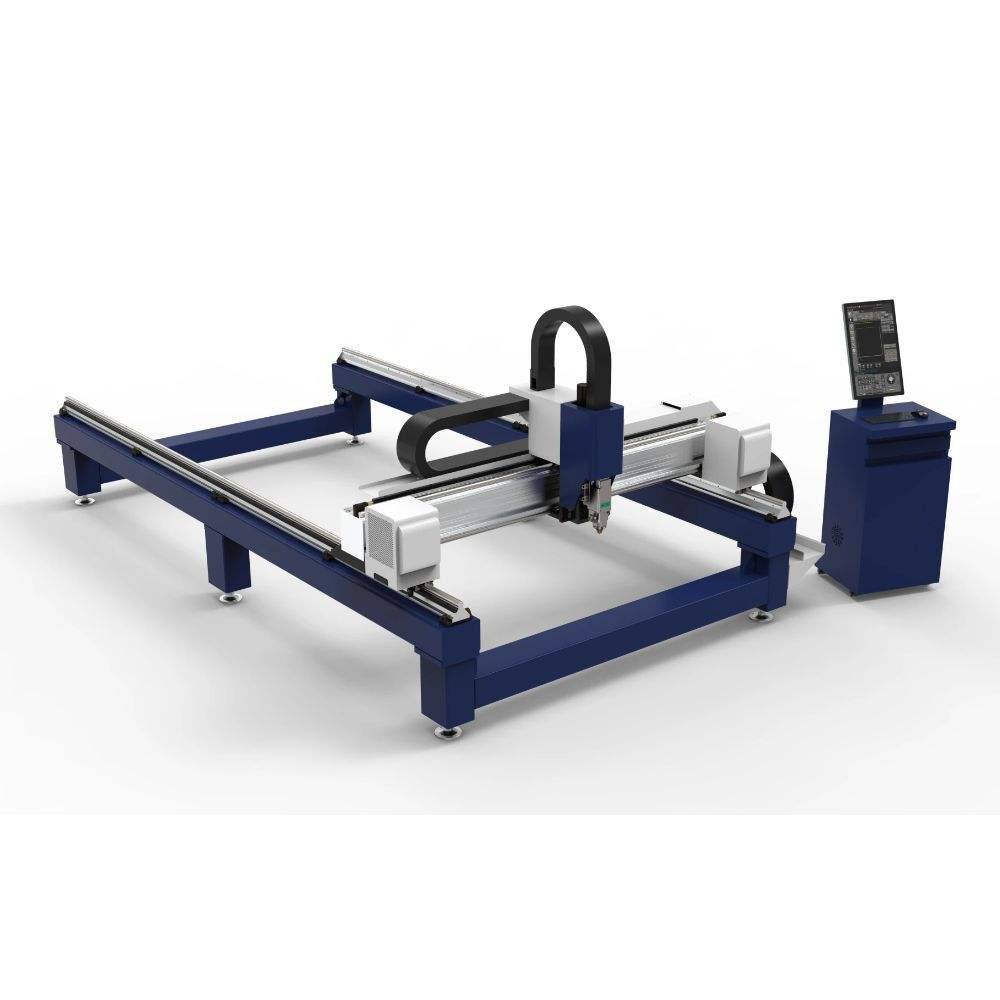
The Impact of Toluca’s Geography on Laser Performance
Operating high-precision machinery in Toluca requires an understanding of the local atmospheric conditions. The high altitude means lower air density, which can affect the cooling efficiency of the laser’s chiller units. A 2kW fiber laser generates significant heat within the laser source and the cutting head; therefore, the cooling system must be rated for the specific ambient temperature and pressure of the State of Mexico.
Thermal Management and Chiller Stability
In Toluca’s industrial parks, diurnal temperature swings can be significant. A precision laser cutting system relies on a dual-circuit chiller to maintain the temperature of the fiber source and the optical head within a narrow window (usually +/- 1 degree Celsius). Any fluctuation can lead to beam instability or “thermal lensing,” where the focus shifts during a long production run, resulting in inconsistent cut quality on brass parts.
Dust and Particle Control
The manufacturing environment in Toluca can be dusty. For a 2kW laser, the integrity of the protective windows is paramount. Brass cutting produces a fine metallic dust that, if allowed to settle on the optics, will absorb laser energy and shatter the lens. Implementing a positive-pressure filtration system within the laser cabinet is a standard best practice for local facilities to ensure long-term reliability.
Applications of Precision Brass Cutting in Local Industry
The versatility of the 2kW laser allows Toluca’s factories to serve multiple sectors with a single machine. The precision afforded by fiber technology enables the production of complex geometries that were previously only possible through chemical etching or expensive stamping dies.
Automotive Electrical Components
Toluca is a hub for automotive assembly and Tier 1 suppliers. Brass is widely used for terminals, connectors, and busbars due to its conductivity. Laser cutting these parts from thin sheets (0.5mm to 3mm) using a 2kW system allows for rapid prototyping and high-volume production without the lead times associated with hard tooling. The ability to quickly iterate designs is a competitive advantage for suppliers working with major OEMs in the region.
Architectural and Decorative Hardware
There is a growing market in Central Mexico for high-end architectural brass work. From custom signage to intricate furniture inlays, the 2kW laser provides the fine detail required for aesthetic applications. The narrow kerf width of the fiber laser allows for tight nesting of parts, reducing material waste—a critical factor given the high cost of brass alloys compared to carbon steel.
Maintenance and Operational Excellence
To maintain the “precision” aspect of a 2kW laser system, a rigorous maintenance schedule is required. For businesses in Toluca, local technical support and a ready supply of consumables (nozzles, ceramics, and protective windows) are essential to minimize downtime.
Optical Path Integrity
Regular inspection of the fiber optic cable and the cutting head’s internal seals prevents contamination. In laser cutting brass, the high-pressure gas used can sometimes blow debris back toward the head if the piercing parameters are not optimized. Operators should be trained to inspect the protective window every shift to catch any “pitting” before it affects the primary lens.
Software and Nesting Optimization
Modern 2kW systems are paired with advanced CAD/CAM software. For brass fabrication, nesting software can optimize the “lead-in” and “lead-out” paths to prevent heat accumulation in small features. In Toluca’s competitive market, maximizing sheet utilization through intelligent nesting directly impacts the bottom line, especially when dealing with expensive non-ferrous materials.
Conclusion: The Future of Metal Fabrication in Toluca
The adoption of 2kW precision laser systems represents a significant step forward for the manufacturing capabilities of Toluca. By mastering the complexities of laser cutting brass, local shops can move up the value chain, offering high-precision components to the global automotive and electronics markets. As fiber laser technology continues to evolve, the integration of automation and real-time monitoring will further enhance the efficiency of these systems, ensuring that Toluca remains at the forefront of Mexico’s industrial evolution.
Investing in a 2kW system is not merely about purchasing a machine; it is about adopting a process that demands technical expertise, environmental awareness, and a commitment to precision. For the engineers and business owners in Toluca, this technology provides the tools necessary to meet the rigorous standards of modern industry while maintaining the flexibility to pivot between diverse material requirements.













