Introduction to 1.5kW Fiber laser cutting of Brass in Monterrey
Monterrey, often referred to as the industrial capital of Mexico, has seen a significant shift in its manufacturing paradigms over the last decade. As the “Sultan of the North” continues to expand its automotive, aerospace, and electronics sectors, the demand for high-precision metal fabrication has skyrocketed. Among the various technologies driving this evolution, the 1.5kW fiber laser cutting machine stands out as a pivotal tool, particularly for processing non-ferrous metals like brass. Brass, an alloy of copper and zinc, is prized for its conductivity, corrosion resistance, and aesthetic appeal, but it presents unique challenges during the laser cutting process due to its high thermal conductivity and reflectivity.
The implementation of a 1.5kW fiber laser system offers a balanced solution for medium-scale fabrication shops in Monterrey. This power level is specifically optimized for precision work on thinner gauges of brass, typically ranging from 0.5mm to 5mm. Unlike traditional CO2 lasers, which struggle with the reflective properties of yellow metals, fiber laser technology utilizes a shorter wavelength (approximately 1.06 microns) that is more readily absorbed by brass. This technical advantage ensures cleaner cuts, faster processing speeds, and reduced risk of damage to the machine’s optical components.
The Technical Superiority of Fiber Optics in Brass Fabrication
In the context of Monterrey’s competitive industrial environment, efficiency is paramount. The 1.5kW fiber laser cutting machine utilizes an active optical fiber to generate the laser beam, which is then delivered to the cutting head via a flexible transport fiber. This solid-state design eliminates the need for complex mirror alignments required by older technologies. For brass, this means a more stable and concentrated energy delivery. When laser cutting brass, the beam must overcome the material’s initial reflectance. The high power density of a 1.5kW source allows for a rapid “pierce,” transitioning the material from a solid to a molten state before the reflected energy can bounce back into the laser source.

Challenges of Laser Cutting Brass: The Reflectivity Issue
Brass is categorized as a “highly reflective” metal. In engineering terms, this means that at certain temperatures and wavelengths, the material acts as a mirror, reflecting a significant portion of the laser energy. For a 1.5kW system, managing this back-reflection is critical to prevent damage to the laser modules. Modern fiber lasers used in Monterrey’s fabrication centers are equipped with “back-reflection isolation” or “absorptive protection” systems. These sensors detect if too much light is returning to the fiber and automatically shut down the process to protect the resonator.
Furthermore, the thermal conductivity of brass means that heat dissipates quickly away from the cut zone. To maintain a clean kerf (the width of the cut), the 1.5kW laser must move at a precise speed. If the movement is too slow, heat builds up, leading to “dross” or slag on the underside of the material. If it is too fast, the laser will fail to penetrate the material entirely. Engineers in Monterrey must calibrate their CNC parameters—specifically the focal position and gas pressure—to find the “sweet spot” for various brass alloys like C260 (cartridge brass) or C360 (free-machining brass).
Optimizing Gas Selection for Brass in Monterrey
The choice of assist gas is a defining factor in the quality of laser cutting. When working with a 1.5kW fiber laser in an industrial setting like Santa Catarina or Apodaca, operators generally choose between Nitrogen and Oxygen. For brass, Nitrogen is the preferred choice for high-quality finishes. Nitrogen acts as a shielding gas, blowing away the molten metal without allowing it to oxidize. This results in a bright, clean edge that often requires no secondary finishing—a significant cost-saver for Monterrey-based manufacturers producing decorative architectural elements or electrical connectors.
Oxygen can be used to increase the cutting speed on thicker brass sections, as the exothermic reaction between the oxygen and the metal adds heat to the process. However, this often leaves an oxidized, darkened edge. In the high-end furniture and interior design markets of San Pedro Garza García, where brass is frequently used, the Nitrogen-assisted fiber laser cutting process is the gold standard for maintaining the material’s natural luster.
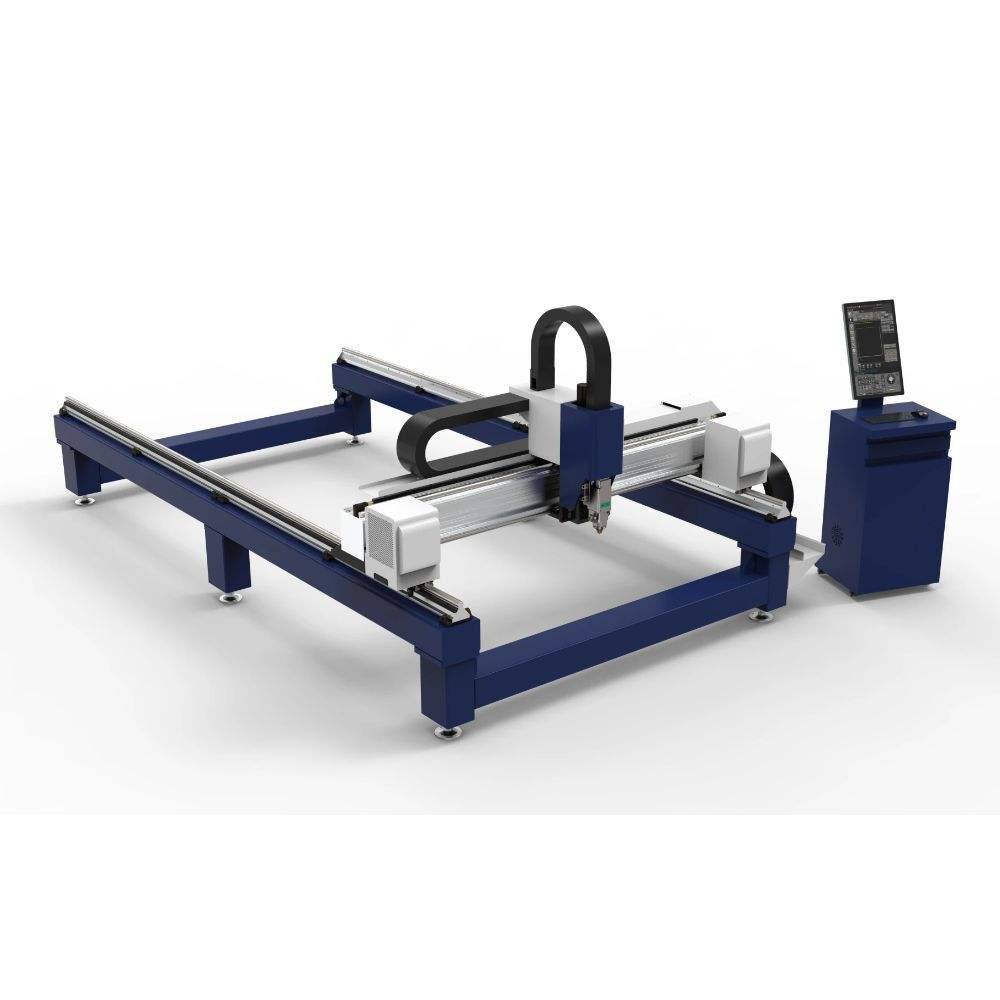
Performance Parameters for 1.5kW Fiber Lasers
For a 1.5kW fiber laser cutting machine, the performance envelope for brass is quite specific. Understanding these parameters is essential for local machine shops looking to maximize their ROI. On average, a 1.5kW system can process 1mm brass at speeds exceeding 15 meters per minute. As the thickness increases to 3mm, the speed drops to approximately 2-3 meters per minute. While 5mm is often the maximum recommended thickness for a “clean” cut at this power level, the precision remains exceptional, with tolerances often within +/- 0.05mm.
Nozzle Selection and Focal Height
The mechanics of the cutting head play a vital role. For brass, a “double” nozzle is often used when cutting with Oxygen, while a “single” nozzle is standard for Nitrogen. The diameter of the nozzle (typically 1.0mm to 2.5mm) must be matched to the material thickness. In Monterrey’s humid summers, ensuring the assist gas is dry and filtered is also crucial, as moisture can interfere with the laser beam’s stability and the capacitance of the height sensor. The focal height—the distance between the nozzle and the workpiece—must be monitored via a capacitive sensing system to ensure the beam remains perfectly focused even if the brass sheet has slight undulations.
Applications in Monterrey’s Industrial Sectors
The versatility of the 1.5kW fiber laser cutting machine has made it a staple in several Monterrey industries. In the automotive sector, brass components are used in sensors, radiators, and specialized bushings. The ability to rapidly prototype these parts using laser cutting allows local Tier 1 and Tier 2 suppliers to meet the fast-paced demands of the global supply chain. Additionally, the electronics industry in the region utilizes fiber lasers to cut intricate busbars and conductive plates where precision is non-negotiable.
Beyond heavy industry, Monterrey is a hub for high-end construction and architectural metalwork. Brass is a favorite for signage, custom lighting fixtures, and decorative screen panels. The 1.5kW fiber laser allows designers to execute complex geometric patterns that would be impossible or prohibitively expensive with traditional stamping or waterjet cutting. The narrow kerf of the laser cutting process minimizes material waste, which is particularly important given the high cost of brass compared to carbon steel or aluminum.
Economic Impact and ROI for Local Workshops
Investing in a 1.5kW fiber laser cutting machine represents a strategic move for Monterrey’s “Talleres” (workshops). While the initial capital expenditure is significant, the operational costs are remarkably low. Fiber lasers boast an electrical efficiency of around 30-35%, compared to the 10% efficiency of CO2 lasers. Furthermore, the lack of consumable parts (like mirrors and turbos) and the long lifespan of the laser diodes (up to 100,000 hours) ensure that the cost per part remains competitive.
In a market like Monterrey, where labor costs are rising and the demand for “nearshoring” manufacturing is increasing, the automation capabilities of these machines are invaluable. Most 1.5kW systems come equipped with advanced CNC software that allows for “nesting”—the process of arranging parts on a sheet to minimize scrap. For an expensive material like brass, increasing material utilization by even 5% can result in thousands of dollars in annual savings.
Maintenance Protocols for Longevity
To maintain peak performance in Monterrey’s industrial climate, a rigorous maintenance schedule is required. The primary concern when laser cutting brass is the accumulation of fine metallic dust and the integrity of the protective windows. Because brass cutting produces a fine “smoke,” the extraction system must be high-powered and well-maintained to prevent particles from settling on the optics. The protective lens, which shields the expensive focusing lens from splashes, should be inspected daily and cleaned in a “clean-room” environment to avoid scratches.
Water cooling is another critical aspect. The 1.5kW resonator and the cutting head require a dual-circuit chiller. In Monterrey, where ambient temperatures can exceed 40°C, the chiller must be robust enough to maintain a constant temperature of around 22-25°C. Any fluctuation in temperature can cause the laser wavelength to shift slightly or lead to thermal expansion in the cutting head, both of which negatively impact the precision of the laser cutting process.
Conclusion: The Future of Metalworking in Monterrey
The integration of 1.5kW fiber laser cutting technology marks a new chapter for Monterrey’s metalworking industry. By mastering the nuances of brass fabrication—from managing reflectivity to optimizing Nitrogen flow—local manufacturers are positioning themselves as leaders in the North American market. The combination of high precision, low operating costs, and the ability to handle complex materials makes the 1.5kW fiber laser an indispensable asset for any facility aiming to thrive in the modern industrial landscape. As Monterrey continues to grow as a global manufacturing powerhouse, the reliance on such advanced laser cutting solutions will only deepen, driving innovation and quality to new heights.













