Introduction to 20kW Tube laser cutting Technology
The industrial landscape of Puebla, Mexico, has long been a cornerstone of North American manufacturing. From the massive automotive complexes to the burgeoning aerospace and food processing sectors, the demand for high-precision metal fabrication is at an all-time high. Within this competitive environment, the 20kW tube laser cutting machine has emerged as a transformative force. This high-power fiber laser system represents the pinnacle of efficiency, offering capabilities that were previously unattainable with lower-wattage systems or traditional mechanical sawing and drilling methods.
For engineers and plant managers in Puebla, transitioning to a 20kW system is not merely an upgrade in power; it is a fundamental shift in production capacity. The 20kW fiber source provides the energy density required to process stainless steel with unprecedented speed and edge quality. As the region continues to attract international investment, the ability to deliver complex, burr-free tube components with tight tolerances is a critical differentiator for local fabricators.
The Mechanics of 20kW Fiber Laser Power
At the heart of the 20kW system is a fiber laser source that generates a high-intensity beam through a series of pump diodes and active optical fibers. Unlike CO2 lasers, fiber lasers operate at a wavelength of approximately 1.06 microns, which is much more readily absorbed by metals, particularly stainless steel. At 20,000 watts, the power density at the focal point is immense. This allows for “vaporization cutting,” where the material is heated to its boiling point almost instantaneously, resulting in a narrow kerf and minimal heat-affected zones (HAZ).

Processing Stainless Steel: Material Considerations
Stainless steel is the preferred material for many of Puebla’s key industries due to its corrosion resistance and mechanical strength. However, it presents unique challenges for laser cutting. The material’s high chromium content and reflectivity can be problematic for lower-power lasers. A 20kW system overcomes these hurdles with ease, providing enough “brute force” to maintain a stable cutting process even on highly reflective 300-series stainless steel.
Grade-Specific Optimizations
In the Puebla market, Grade 304 and Grade 316 are the most common alloys processed. Grade 304 is widely used in automotive exhaust systems and structural components, while Grade 316—with its added molybdenum—is the standard for the region’s extensive food and beverage processing equipment. The 20kW laser allows for high-speed processing of these alloys without the risk of carbon precipitation, ensuring that the corrosion-resistant properties of the stainless steel remain intact after the laser cutting process is complete.
Wall Thickness and Piercing Dynamics
One of the primary advantages of a 20kW tube laser is its ability to handle thick-walled tubing. While a 4kW or 6kW machine might struggle with 12mm or 15mm stainless steel walls, the 20kW system maintains high feed rates. Furthermore, the piercing time is significantly reduced. In tube fabrication, where a single workpiece may require hundreds of holes or slots, reducing the pierce time from seconds to milliseconds per hole results in massive cumulative time savings over a production shift.
Precision Tube Fabrication in the Puebla Industrial Hub
The geography of Puebla, situated at a high altitude with specific climatic conditions, requires robust machinery that can operate consistently. Modern 20kW tube lasers are equipped with advanced sensors and compensation software that handle the intricacies of tube geometry—whether it be round, square, rectangular, or complex open profiles like C-channels and angles.
Advanced Chucking and Material Support
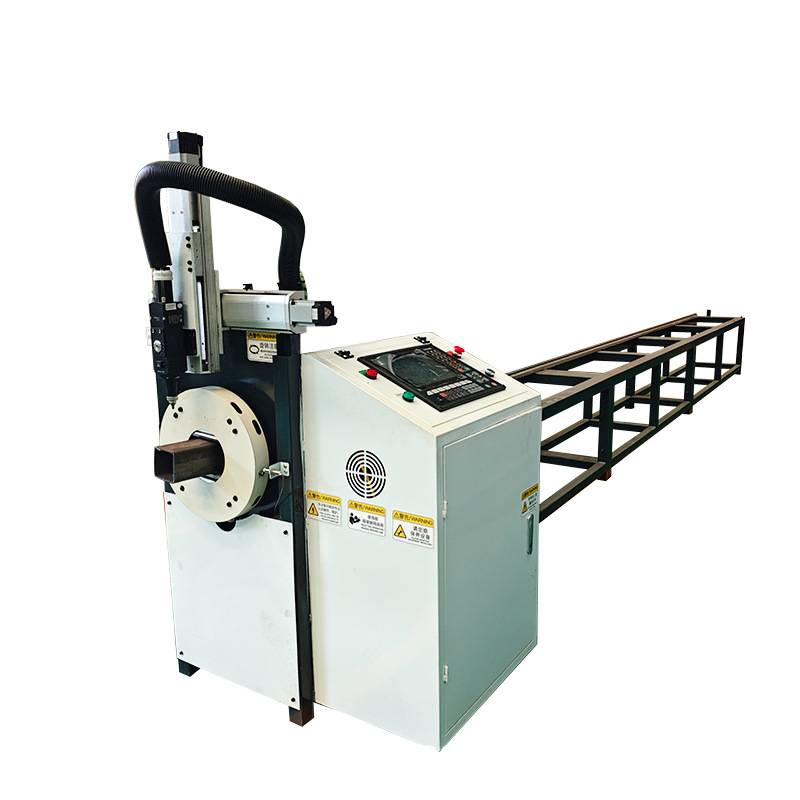
To maintain precision over long tube lengths (often up to 12 meters), the 20kW machines utilize sophisticated pneumatic or hydraulic chucking systems. These systems provide the necessary clamping force to rotate heavy stainless steel tubes at high RPMs without deforming the material. In Puebla’s automotive supply chain, where tolerances are often measured in microns, the synchronization between the rotary chucks and the laser head is paramount. The 20kW systems often feature “active support” mechanisms that prevent tube sagging, ensuring that the laser focus remains constant across the entire length of the workpiece.
3D Cutting and Beveling Capabilities
Many 20kW tube laser cutting systems are equipped with a 5-axis cutting head. This allows for beveling and 3D geometries, which are essential for weld preparation. Instead of cutting a tube and then sending it to a secondary station for manual grinding or beveling, the laser can cut the required angle in a single pass. This is particularly valuable for structural stainless steel applications in Puebla’s construction sector, where precise fit-up is required for high-strength T-joints and K-joints.
The Role of Assist Gases in 20kW Cutting
The choice of assist gas is a critical factor in the quality of the laser cutting outcome. When processing stainless steel, the goal is typically a “clean cut” or “oxide-free” edge. This requires the use of high-purity Nitrogen.
Nitrogen vs. Oxygen Cutting
Nitrogen acts as a shielding gas, blowing away the molten metal before it can react with oxygen in the air. This prevents the formation of a dark oxide layer on the cut edge, which is vital for components that will be welded or that require a high-aesthetic finish. With 20kW of power, the machine can use Nitrogen to cut through much thicker sections of stainless steel than lower-power machines, which would be forced to switch to Oxygen (resulting in a scaled edge) to achieve the same depth. In Puebla’s food-grade equipment manufacturing, Nitrogen cutting is non-negotiable to prevent bacterial growth in oxidized crevices.
Gas Pressure and Flow Management
Operating a 20kW laser requires a sophisticated gas delivery system. The high speeds achieved by the 20kW beam demand high-pressure Nitrogen flow to clear the kerf effectively. Local manufacturers in Puebla often invest in high-pressure bulk liquid nitrogen tanks or nitrogen generators to ensure a consistent supply. The machine’s CNC controls the gas pressure dynamically, adjusting it based on the material thickness and the complexity of the cut path to optimize gas consumption while maintaining edge quality.
Economic Impact and ROI for Puebla Manufacturers
While the initial investment in a 20kW tube laser cutting machine is significant, the Return on Investment (ROI) is driven by throughput and the elimination of secondary processes. In a region like Puebla, where labor costs are rising and the demand for high-tech output is increasing, automation is the key to remaining competitive.
Throughput and Efficiency
A 20kW laser can cut 3mm stainless steel tubing at speeds exceeding 50 meters per minute. When compared to a 6kW system, the 20kW machine can often double or triple the daily output. This allows shops to take on larger contracts from major OEMs (Original Equipment Manufacturers) in the region without expanding their physical footprint. The ability to nest multiple parts on a single tube and utilize “common line cutting” further reduces material waste, which is a major cost factor in stainless steel fabrication.
Integration with Industry 4.0
Modern 20kW systems are designed for the smart factories of the future. In Puebla’s industrial parks, integration with ERP (Enterprise Resource Planning) systems is becoming standard. These machines provide real-time data on cutting time, gas usage, and power consumption. This level of transparency allows managers to quote jobs more accurately and identify bottlenecks in the production line. Furthermore, remote diagnostics allow manufacturers to receive technical support from experts worldwide, minimizing downtime in the event of a technical issue.
Maintenance and Operational Best Practices
To maintain the high performance of a 20kW laser cutting system, a rigorous maintenance schedule is required. The high power levels put significant stress on the optical components and the cooling system.
Chiller Calibration
A 20kW fiber laser generates a substantial amount of heat within the laser source and the cutting head. The chiller unit must be perfectly calibrated to maintain a stable temperature. In the temperate but sometimes dusty environment of Puebla, ensuring that the chiller’s heat exchangers are clean and the coolant is free of contaminants is essential. Fluctuations in temperature can cause the laser beam to “drift,” leading to inconsistent cut quality.
Optical Health and Protection
The cutting head of a 20kW system contains sensitive lenses and protective windows. At such high power, even a microscopic speck of dust on the lens can absorb enough energy to shatter the glass. Operators must be trained in “clean room” protocols when changing protective windows. Using high-quality consumables and ensuring the assist gas is filtered and dry will significantly extend the life of the optics.
Conclusion: The Future of Metal Fabrication in Puebla
The adoption of 20kW tube laser cutting technology is a clear indicator of Puebla’s status as a world-class manufacturing hub. By mastering the nuances of high-power laser interaction with stainless steel, local fabricators are moving up the value chain, transitioning from simple component suppliers to high-tech engineering partners. The speed, precision, and versatility of these machines provide a foundation for innovation in automotive design, architectural structures, and industrial machinery. As the technology continues to evolve, the 20kW system will remain the gold standard for those seeking to push the boundaries of what is possible in tube fabrication.













