Introduction to 2kW Precision Laser Systems in Tijuana’s Manufacturing Sector
The industrial landscape of Tijuana, Baja California, has undergone a significant transformation over the last decade. As one of the most critical manufacturing hubs in North America, the city serves as a gateway for aerospace, medical device, and automotive industries. Central to this evolution is the adoption of high-precision fiber laser technology. Specifically, the 2kW precision laser system has emerged as the industry standard for processing aluminum alloys, offering a balance of power, efficiency, and edge quality that traditional CO2 lasers or mechanical milling cannot match.
In the context of laser cutting, a 2kW fiber laser provides the necessary energy density to overcome the high reflectivity and thermal conductivity of aluminum. This guide explores the technical intricacies of deploying these systems within the Tijuana maquiladora environment, focusing on material science, operational parameters, and regional industrial requirements.
The Technical Superiority of 2kW Fiber Lasers
A 2kW fiber laser system utilizes an optical fiber doped with rare-earth elements to amplify light. Unlike traditional gas lasers, the fiber laser delivers the beam through a flexible transport fiber directly to the cutting head. This results in a beam quality with a much smaller spot size and higher power density. For precision engineering, this translates to a narrower kerf width and the ability to execute complex geometries with tolerances as tight as +/- 0.05mm.
Wavelength and Absorption in Aluminum
Aluminum is notoriously difficult to process due to its high reflectivity at the 10.6-micron wavelength of CO2 lasers. However, fiber lasers operate at a wavelength of approximately 1.07 microns. At this shorter wavelength, aluminum alloys exhibit significantly higher absorption rates. This allows a 2kW system to initiate the melt pool faster and maintain a stable laser cutting process, even on polished or aerospace-grade surfaces.
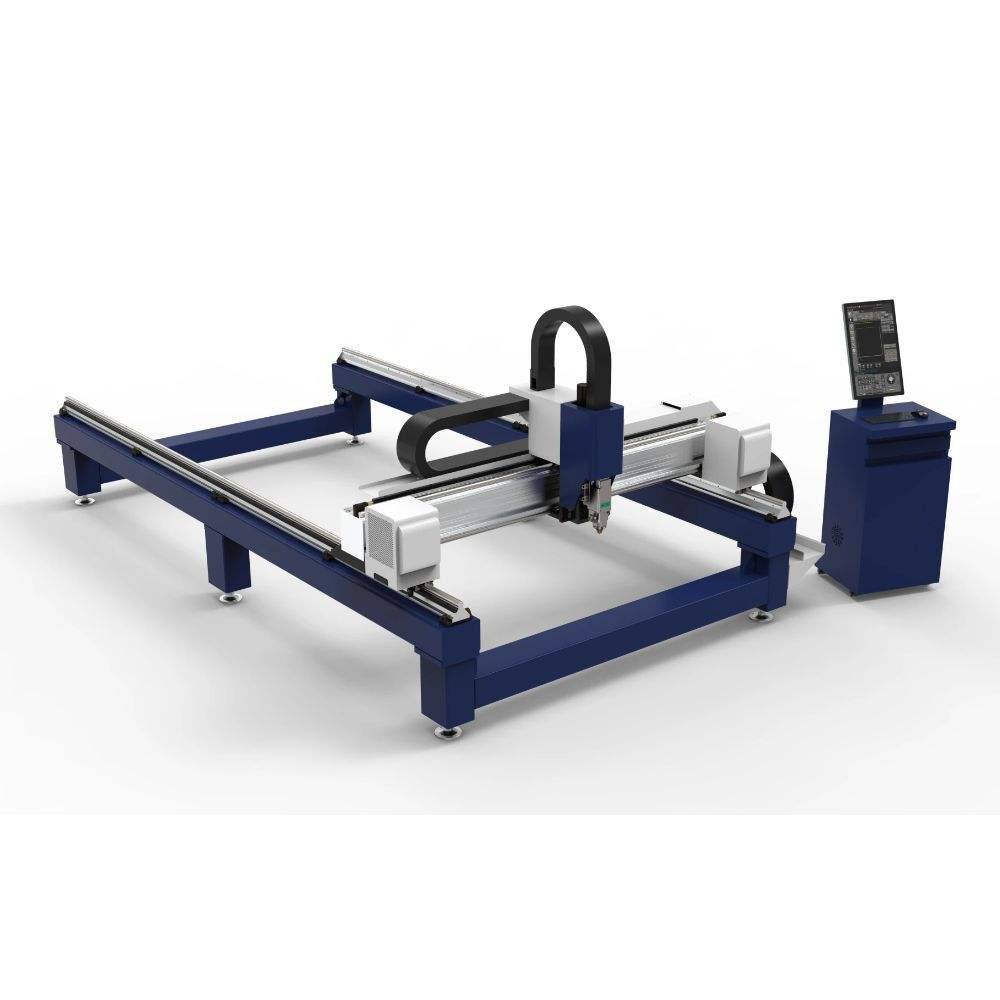 laser cutting machine” style=”max-width: 100%; height: auto; margin: 20px 0;”>
Aluminum Alloy Specialization: 5052, 6061, and 7075
In Tijuana’s diverse manufacturing ecosystem, three primary aluminum alloys dominate the production lines. Each requires specific parameter adjustments within the 2kW system to ensure optimal results.
5052 Aluminum (Marine and General Purpose)
5052 is highly valued for its corrosion resistance. When laser cutting 5052 with a 2kW system, the focus should be on maximizing speed to prevent heat buildup, which can lead to “dross” or burr formation on the underside of the part. Because 5052 is non-heat treatable, maintaining the material’s structural integrity through a minimized Heat Affected Zone (HAZ) is critical.
6061-T6 Aluminum (Structural and Automotive)
6061 is the workhorse of the Tijuana automotive sector. It contains silicon and magnesium, which can affect the fluidity of the melt pool. A 2kW system is ideal for 6061 up to 6mm in thickness. Engineers must balance the assist gas pressure—typically high-pressure nitrogen—to flush the molten material effectively, ensuring a clean, weld-ready edge.
7075 Aluminum (Aerospace Applications)
Commonly used in the aerospace corridor of Baja California, 7075 is a high-strength zinc alloy. It is more prone to micro-cracking if the thermal gradient is too steep. Precision 2kW systems allow for fine-tuned pulse modulation, which helps manage the cooling rate of the cut edge, preserving the mechanical properties required for flight-critical components.
Operational Parameters for Precision Laser Cutting
Success in laser cutting aluminum depends on the synergy between the laser source, the CNC controller, and the assist gas delivery system. For a 2kW system, the following variables are paramount:
Assist Gas Selection: Nitrogen vs. Oxygen
While oxygen can be used for thicker sections of carbon steel, aluminum is almost exclusively cut with high-pressure nitrogen (N2). Nitrogen acts as a shielding gas, preventing oxidation and ensuring that the cut edge remains bright and free of oxides. This is particularly important for parts that will later undergo anodizing or specialized coating in Tijuana’s finishing facilities.
Focal Point Management
Because aluminum is highly conductive, the heat dissipates rapidly away from the cut. To counteract this, the focal point of the 2kW laser is typically set slightly below the surface of the material. This ensures that the energy is concentrated within the thickness of the plate, maintaining a consistent melt through the entire cross-section.

The Tijuana Context: Why Precision Matters
Tijuana’s proximity to the United States and its integration into the USMCA (United States-Mexico-Canada Agreement) framework places high demands on quality control. Factories in the region often operate as Tier 1 or Tier 2 suppliers. In these environments, the 2kW laser cutting system is not just a tool for separation; it is a tool for lean manufacturing.
Integration with Medical Device Manufacturing
Tijuana is one of the world’s leading clusters for medical device manufacturing. Components for surgical instruments or diagnostic equipment often require aluminum housings or internal frames. A 2kW precision system provides the burr-free finish and cleanliness required for medical-grade environments, reducing the need for secondary deburring or chemical cleaning processes.
Aerospace Supply Chain Requirements
The aerospace industry in Baja California demands rigorous traceability and repeatability. Modern 2kW laser systems are equipped with advanced sensors that monitor beam stability and nozzle condition in real-time. This data logging ensures that every aluminum part produced meets the AS9100 quality standards prevalent in the region.
Maintenance and Calibration in a High-Volume Environment
For a 2kW system to maintain its precision in a 24/7 Tijuana maquiladora, a strict maintenance protocol is required. Fiber lasers are generally low-maintenance compared to CO2 systems because they lack internal mirrors and bellows. However, the external optics—specifically the protective window (cover glass)—must be inspected daily.
Thermal Management of the Resonator
Tijuana’s climate can vary, and humidity levels can fluctuate near the coast. High-quality 2kW systems utilize dual-circuit chillers to maintain the laser source and the cutting head at a constant temperature. Preventing condensation on the optics is vital; even a single dust particle or a drop of moisture can lead to “thermal lensing,” where the beam deforms and loses its focus, ruining the aluminum workpiece.
Nozzle Alignment and Calibration
Precise laser cutting requires the beam to be perfectly centered within the nozzle. Even a slight misalignment can cause the assist gas to flow unevenly, leading to an asymmetrical kerf or excessive dross on one side of the cut. Automated nozzle cleaning and calibration stations are essential features for systems operating in high-production environments.
Economic Advantages and ROI for Baja Manufacturers
Investing in a 2kW precision laser system offers a rapid Return on Investment (ROI) for Tijuana-based shops. The primary drivers of this economic benefit are power efficiency and processing speed.
Energy Consumption
Fiber lasers are roughly 3 to 4 times more energy-efficient than CO2 lasers. In a region where energy costs are a significant factor in overhead, the reduced power draw of a 2kW fiber system significantly lowers the cost-per-part. Furthermore, the absence of laser gas (He, CO2, N2 for the resonator) eliminates a recurring expense and simplifies the supply chain.
Reduced Secondary Processing
The high edge quality achieved by a 2kW laser on aluminum alloys often eliminates the need for milling or grinding. By moving parts directly from the laser cutting bed to the assembly or welding station, manufacturers can reduce lead times and labor costs, making them more competitive in the global market.
Future Outlook: Automation and Industry 4.0
As Tijuana moves toward “Industry 4.0,” 2kW laser systems are being integrated with automated loading and unloading systems. These systems can run “lights-out” shifts, maximizing the utilization of the laser source. With the integration of AI-driven software, the systems can now optimize nesting patterns for aluminum sheets, reducing material waste—a critical factor given the fluctuating price of raw aluminum.
Conclusion
The 2kW precision laser system represents a cornerstone of modern fabrication for aluminum alloys in Tijuana. By understanding the interaction between the 1.07-micron wavelength and the specific properties of aluminum, and by leveraging the logistical advantages of the Baja region, manufacturers can achieve unprecedented levels of precision and efficiency. Whether for aerospace, medical, or automotive applications, the mastery of laser cutting technology is essential for any facility looking to thrive in the competitive landscape of North American manufacturing.













