Engineering Optimization: The Role of 4kW Fiber Laser Technology in Puebla’s Kitchenware Industry
The industrial landscape of Puebla, Mexico, has undergone a significant transformation, evolving from a traditional manufacturing hub into a high-tech center for automotive and domestic appliance production. For kitchenware factory owners and engineers in the region, the demand for high-precision components—ranging from industrial oven casings to commercial-grade ventilation systems—has never been higher. At the heart of this production shift is the 4kW fiber laser cutting machine, a tool specifically engineered to handle the complexities of galvanized steel, which is the backbone of the modern kitchenware industry.
This guide provides a comprehensive technical analysis of the 4kW fiber laser system, focusing on the structural advantages of the tube-welded standard bed and the specific engineering parameters required to achieve high-precision results on galvanized surfaces.
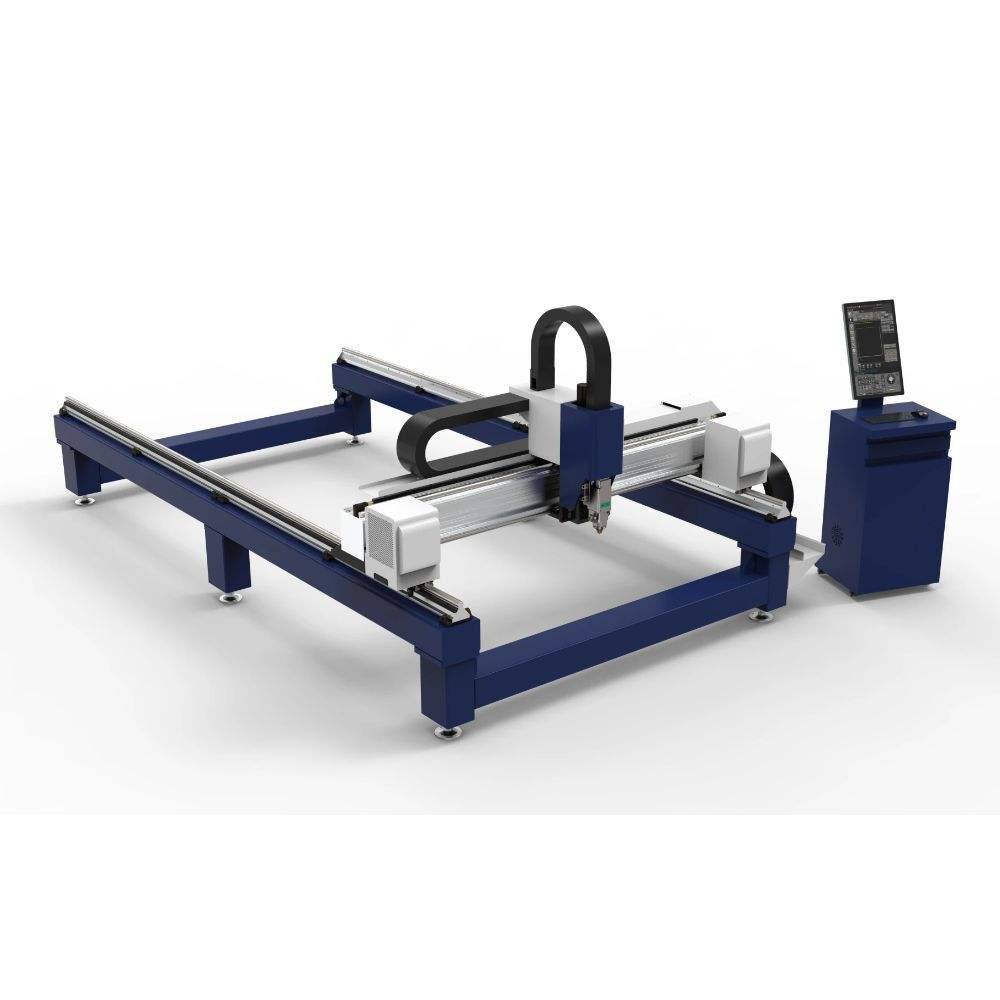
The Structural Foundation: Technical Advantages of the Tube-welded Standard Bed
In laser engineering, the stability of the machine bed is the primary determinant of long-term accuracy. For a 4kW system, which operates at high acceleration speeds (often up to 1.2G), the bed must counteract significant inertial forces. The tube-welded standard bed is the preferred choice for the 4kW power class due to its unique balance of rigidity, vibration damping, and thermal stability.
The construction of a tube-welded bed involves high-strength industrial steel tubes, often arranged in a honeycomb or reinforced rectangular structure. From an engineering perspective, the advantages are three-fold:
1. Stress Relief and Annealing: High-quality tube-welded beds undergo a rigorous heat-treatment process. The frame is placed in a high-temperature furnace (typically 600°C to 800°C) for several hours to eliminate internal stresses generated during welding. This ensures that the bed will not deform over 10 to 15 years of continuous operation in a high-output Puebla factory.
2. Vibration Damping: Unlike solid cast iron beds which can be brittle, the hollow-core structure of the welded tube bed, when properly engineered with internal cross-bracing, provides superior damping for high-frequency vibrations. This is critical when cutting intricate kitchenware patterns where small-circle accuracy is paramount.
3. Optimized Weight-to-Rigidity Ratio: For a 4kW machine, a tube-welded bed offers the necessary mass to prevent “walking” during high-speed movements while remaining light enough to allow for rapid acceleration of the gantry. This leads to higher throughput without sacrificing the integrity of the linear guides and rack-and-pinion systems.
Processing Galvanized Steel: Overcoming the Zinc Barrier
Galvanized steel is ubiquitous in kitchenware due to its corrosion resistance and cost-effectiveness. However, it presents a unique challenge for laser cutting: the zinc coating. Zinc has a significantly lower melting point (approximately 419°C) than the underlying steel (approximately 1500°C). During the laser process, the zinc vaporizes before the steel melts, which can lead to “spatter” and unstable cutting conditions if not managed correctly.
A 4kW fiber laser provides the power density necessary to overcome these thermal discrepancies. At this power level, the energy is concentrated enough to penetrate the zinc layer and the steel substrate almost simultaneously, minimizing the Heat Affected Zone (HAZ).
Key Engineering Parameters for Galvanized Steel:
– Gas Selection: For kitchenware, where aesthetic finish is vital, Nitrogen is the preferred auxiliary gas. Nitrogen acts as a cooling agent and prevents the oxidation of the cut edge, leaving a bright, silver finish that requires no post-processing.
– Nozzle Geometry: A double-layer nozzle is typically employed to provide a stable gas flow that “blows away” the vaporized zinc, preventing it from adhering to the bottom of the workpiece (dross).
– Frequency Modulation: Engineers must adjust the pulse frequency of the 4kW source. A higher frequency combined with a specific duty cycle ensures that the laser “drills” through the zinc without causing excessive boiling of the coating.
Precision Requirements for Modern Kitchenware Production
The kitchenware industry in Puebla demands tolerances within ±0.03mm. Whether producing industrial stovetops, refrigerator panels, or heavy-duty sinks, the 4kW fiber laser delivers a level of precision that traditional punching or plasma cutting cannot match.
One of the most significant advantages for engineers is the ability to perform “common line cutting.” This technique allows two adjacent parts to share a single cut line, reducing material waste and cutting time. In a high-volume factory, reducing scrap by even 5% can lead to tens of thousands of dollars in annual savings.
Furthermore, the 4kW laser’s ability to handle varying thicknesses (from 0.5mm decorative trim to 6mm structural frames) makes it a versatile asset. In the production of industrial range hoods, for example, the machine can cut the thin exterior galvanized sheets and the thicker mounting brackets in the same production run, ensuring perfect alignment during assembly.

The Economic Impact: ROI for Puebla’s Manufacturing Sector
For a factory owner in Puebla, the transition to a 4kW fiber laser is an investment in scalability. The local market is increasingly competitive, with international brands setting high standards for finish and durability.
Data-Driven Performance Metrics:
– Cutting Speed: On 2mm galvanized steel, a 4kW fiber laser can achieve speeds of up to 35-40 meters per minute. This is nearly double the speed of a 2kW machine, effectively doubling the factory’s output capacity for that specific gauge.
– Energy Efficiency: Modern fiber lasers have a wall-plug efficiency of over 30%, which is significantly higher than older CO2 lasers. In a region where energy costs are a major factor in overhead, this efficiency directly improves the bottom line.
– Maintenance: The tube-welded standard bed, combined with a fiber delivery system (no mirrors to align), results in a machine with very low maintenance requirements. For an engineer, this means fewer hours spent on calibration and more hours spent on production.
Technical Integration: Software and Control Systems
The hardware of a 4kW machine is only as effective as the software controlling it. Most high-end machines in this category utilize the CypCut CNC system or similar professional-grade controllers. These systems allow engineers to import CAD/CAM files directly and apply “lead-ins” and “lead-outs” that are specifically optimized for galvanized steel.
Advanced features such as “Frog-Hop” (which lifts the laser head in a parabolic arc between cuts) significantly reduce the non-cutting time. For kitchenware parts with hundreds of small perforations, such as steamer baskets or filter screens, this feature alone can increase productivity by 20%.
Maintenance and Longevity in the Puebla Environment
Puebla’s climate and industrial environment require specific maintenance protocols to ensure the longevity of a 4kW fiber laser. Dust from surrounding manufacturing processes can interfere with optical components.
1. Chiller Management: The 4kW source generates significant heat. A high-precision dual-temperature water chiller is mandatory. Engineers must ensure the coolant is replaced regularly and that the ambient temperature of the laser room is controlled to prevent condensation on the laser head.
2. Lubrication of the Bed: The tube-welded bed relies on high-precision linear guides. Automatic lubrication systems should be monitored to ensure that the X and Y axes move with zero friction, maintaining the ±0.03mm precision over years of service.
3. Optical Protection: The protective window in the laser head is the most frequently replaced consumable. When cutting galvanized steel, the risk of “back-reflection” and zinc spatter is higher. Using high-quality protective lenses and ensuring the air filtration system is clean will protect the expensive internal optics.
Conclusion: The Future of Metal Fabrication in Puebla
The integration of a 4kW fiber laser cutting machine with a tube-welded standard bed represents the current “gold standard” for galvanized steel fabrication in the kitchenware industry. For the engineers and factory owners of Puebla, this technology offers a path toward higher precision, faster lead times, and reduced operational costs.
As the market continues to demand more complex designs and higher material integrity, the ability to master the nuances of laser-zinc interaction and structural stability will define the leaders in the region’s manufacturing sector. Investing in a 4kW system is not merely an equipment upgrade; it is a strategic move to align a production facility with global engineering standards.













