Engineering Analysis: The 3kW Precision Laser System for Monterrey’s Kitchenware Sector
The industrial landscape of Monterrey, Nuevo León, has evolved into a global hub for advanced manufacturing. Within this ecosystem, the kitchenware industry—ranging from industrial-grade cookware to high-end residential cabinetry—demands a level of precision that traditional mechanical stamping or plasma cutting can no longer provide. The introduction of the 3kW Fiber Laser System, specifically optimized for aluminum alloy processing, represents a critical technological shift for local factory owners and engineers. This guide analyzes the structural engineering of the tube-welded standard bed and the technical parameters required for high-precision aluminum fabrication.
Structural Integrity: The Engineering of the Tube-welded Standard Bed
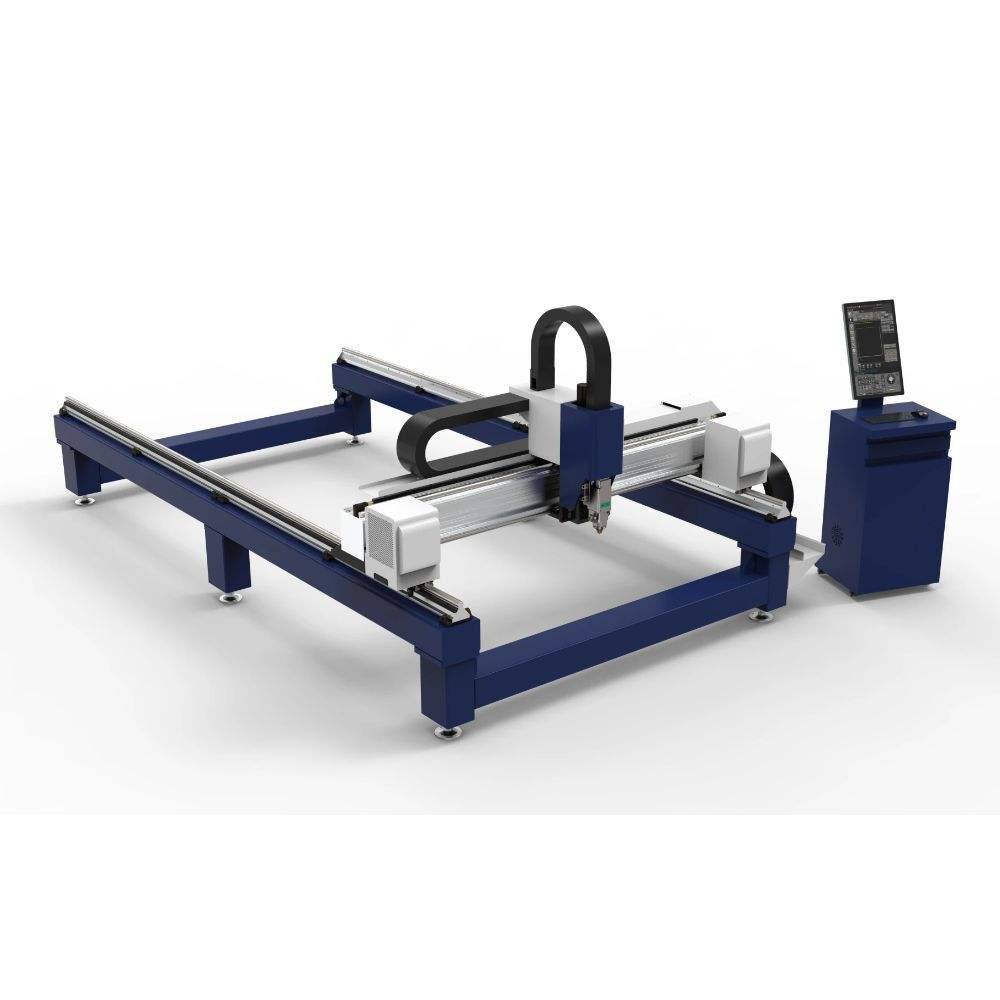
In laser cutting, the bed is not merely a support frame; it is the foundation of the machine’s dynamic accuracy. For a 3kW system operating at high feed rates, vibration damping is paramount. The tube-welded standard bed is engineered using high-quality structural steel tubes, which are welded into a reinforced lattice.
Unlike cast iron beds which can be brittle, or simple plate-welded frames that may lack internal rigidity, the tube-welded structure offers a superior strength-to-weight ratio. The engineering process involves several critical stages:
1. Stress Relief Annealing: After welding, the bed undergoes a high-temperature annealing process. This removes internal stresses generated during welding, ensuring that the frame will not deform over 10 to 15 years of continuous operation in Monterrey’s variable climate.
2. Precision Machining: The mounting surfaces for the guide rails and racks are machined using a large-scale gantry milling machine in a single setup. This ensures parallelism and perpendicularity within tolerances of ±0.02mm.
3. Internal Reinforcement: The use of rectangular tubes allows for internal bracing that resists the centrifugal forces generated by the gantry during high-speed direction changes. This is particularly vital when cutting intricate kitchenware patterns where the laser head must move rapidly between small geometries.
For the Monterrey engineer, this translates to a machine that maintains its calibration even under the heavy duty cycles typical of the region’s “Sultan of the North” industrial pace.

Technical Dynamics of 3kW Fiber Lasers on Aluminum Alloy
Aluminum alloys (such as the 3000, 5000, and 6000 series commonly used in kitchenware) present unique challenges due to their high thermal conductivity and high reflectivity. A 3kW fiber laser source is the “sweet spot” for kitchenware manufacturing for several data-driven reasons.
Reflectivity Management: Aluminum reflects back a significant portion of the laser beam during the initial piercing phase. Modern 3kW systems utilize back-reflection protection technology and “bright surface” cutting modules. These systems detect reflected light and adjust the phase or frequency to prevent damage to the fiber source, a common failure point in older or lower-power systems.
Power-to-Thickness Ratio: In the kitchenware industry, typical material thicknesses range from 1.0mm to 8.0mm. A 3kW laser provides the following performance metrics:
– 1.0mm Aluminum: Cutting speeds exceeding 40m/min with high-pressure Nitrogen.
– 3.0mm Aluminum: Stable production at 12-15m/min.
– 6.0mm Aluminum: Precision cutting at 3-5m/min.
At 3kW, the energy density is sufficient to create a narrow kerf (cut width), which minimizes the Heat Affected Zone (HAZ). This is critical for kitchenware, as excessive heat can alter the temper of the aluminum alloy, leading to warping or reduced corrosion resistance in the finished product.
Precision Cutting Parameters and Gas Dynamics
Achieving a “burr-free” finish is the primary goal for engineers in the kitchenware sector. Since pots, pans, and shelving are handled by end consumers, the edges must be smooth directly from the machine.
Gas Selection: For aluminum, Nitrogen (N2) is the standard choice. It acts as a mechanical force to blow the molten metal out of the kerf before it can oxidize. To achieve a high-precision finish on a 3kW system, the gas pressure must be maintained between 14 and 18 bar. Engineers must ensure the pneumatic system can handle these flow rates without fluctuation.
Focal Position: Aluminum requires a “negative focus” strategy. By positioning the focal point inside the material rather than on the surface, the laser creates a wider bottom to the kerf, allowing the high-pressure gas to evacuate the dross more efficiently. This results in a mirror-like finish on the cut edge, eliminating the need for secondary grinding—a significant cost saving for Monterrey factories.
Optimizing Production for the Monterrey Market
Monterrey’s manufacturing sector is characterized by high labor costs compared to southern Mexico and a strong integration with North American supply chains. Efficiency is the only way to maintain a competitive edge.
Integration with CAD/CAM: For kitchenware factory owners, the ability to rapidly prototype new designs is essential. The 3kW systems utilized in this market typically feature nesting software that optimizes sheet utilization. Given that aluminum is a high-value raw material, increasing sheet utilization from 75% to 92% through precision nesting can result in thousands of dollars in monthly savings.
Operational Stability in Industrial Environments: Monterrey’s industrial zones can experience high ambient temperatures and dust. The 3kW precision systems are equipped with dual-circuit water chillers—one circuit for the laser source and one for the cutting head. This independent cooling ensures that the optical components remain at a constant 22°C, preventing thermal drifting of the laser beam.
Maintenance Engineering: Protecting the Optical Path
For the factory engineer, the longevity of the 3kW system depends on the management of aluminum dust. Aluminum oxide dust is abrasive and conductive. A professional-grade system for the Monterrey market must feature:
– Fully Enclosed Bellows: To protect the high-precision rack and pinion from dust ingress.
– Automatic Lubrication: A programmed system that delivers oil to the guide rails at specific intervals based on “travel distance” rather than “time.”
– Dust Extraction: High-volume centrifugal fans with partitioned extraction zones. When the laser is cutting in the upper-left quadrant of the bed, the extraction force is concentrated in that specific zone, maximizing the removal of fine aluminum particles.
ROI Analysis for Kitchenware Factory Owners
Investing in a 3kW system with a tube-welded standard bed involves a higher initial capital expenditure than entry-level machines, but the Return on Investment (ROI) is driven by three factors:
1. Reduction in Secondary Operations: If a factory produces 5,000 aluminum components per month, and the laser eliminates the need for manual deburring (taking 2 minutes per part), the factory saves 166 man-hours per month.
2. Consistency: The tube-welded bed ensures that the first part of the day and the last part of the day are identical. This reduces the “Scrap Rate,” which is often as high as 5% in manual or low-end CNC environments, down to less than 0.5%.
3. Market Expansion: The precision of a 3kW system allows kitchenware manufacturers to take on high-tolerance contracts for the medical or aerospace sectors during slow seasons, diversifying their revenue streams.
Conclusion
For Monterrey’s kitchenware industry, the transition to a 3kW precision laser system is an engineering necessity. The combination of a stable, tube-welded standard bed and the specific power dynamics required for aluminum alloy allows for a level of production efficiency that meets international standards. By focusing on structural rigidity, gas dynamics, and specialized maintenance, factory owners can ensure their operations remain at the forefront of the Mexican industrial landscape, delivering high-quality products with surgical precision.













