The Strategic Shift to 2kW Fiber Laser Systems in Mexico’s Automotive Sector
The automotive manufacturing landscape in Mexico City and the surrounding State of Mexico (Estado de México) is undergoing a significant transformation. As global OEMs (Original Equipment Manufacturers) demand lighter, more fuel-efficient vehicles, the reliance on aluminum alloys has reached an all-time high. For Tier 1 and Tier 2 suppliers in the Valle de México, the transition from traditional CO2 lasers or plasma cutting to high-precision 2kW fiber laser systems is no longer optional—it is a technical necessity for maintaining competitiveness under USMCA (T-MEC) regulations.
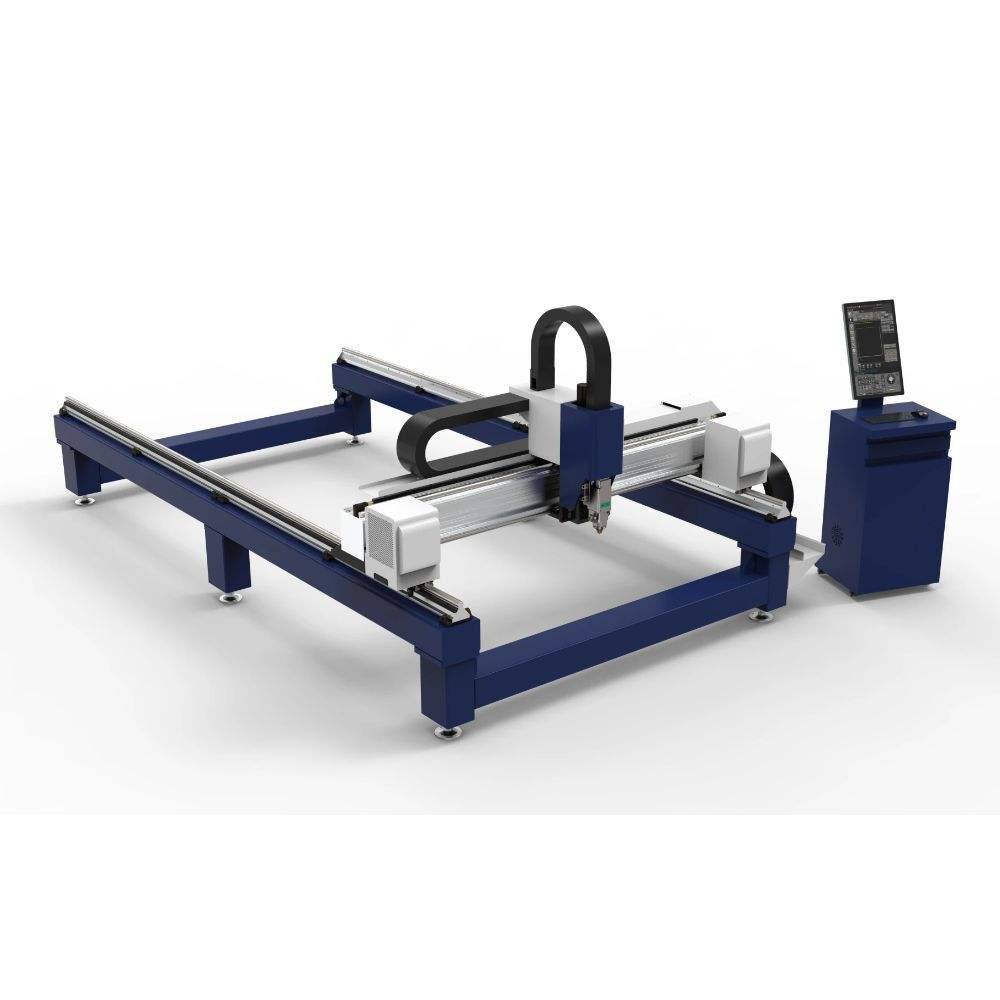
This engineering guide examines the technical architecture of the 2kW Precision Laser System, focusing specifically on the structural advantages of the tube-welded standard bed and the specialized parameters required for high-precision aluminum alloy processing.
Structural Integrity: The Engineering of the Tube-welded Standard Bed
The foundation of any precision laser system is its bed. In the Mexico City market, where industrial space can be premium and seismic stability is a factor, the tube-welded standard bed offers a superior balance of rigidity, weight, and vibration damping.
Unlike cast iron beds which are prone to internal porosity, or simple plate-welded frames that may warp over time, the tube-welded standard bed is constructed using high-quality industrial rectangular steel tubes. The engineering process involves several critical stages:
1. Stress-Relief Annealing: After welding, the entire bed undergoes a high-temperature tempering process (typically reaching 600°C) followed by natural cooling. This removes internal stresses within the metal, ensuring that the machine frame does not deform over 20+ years of operation.
2. Precision Milling: The mounting surfaces for the guide rails and the rack-and-pinion system are processed by large-scale five-axis CNC machining centers. This ensures a parallelism and flatness tolerance within ±0.02mm.
3. Triangular Stability Design: The internal structure of the bed utilizes reinforced cross-bracing, which maximizes the Moment of Inertia. This allows the machine to handle the high acceleration and deceleration forces (up to 1.2G) generated by the 2kW laser head without oscillating.
For automotive engineers, this translates to consistent “Part A to Part B” accuracy, even during 24/7 production cycles common in the Cuautitlán or Toluca industrial corridors.
Optimizing 2kW Power for Aluminum Alloy Processing
Aluminum alloys (specifically the 5000 and 6000 series used in automotive chassis and heat shields) present unique challenges for laser cutting due to their high reflectivity and high thermal conductivity. A 2kW fiber laser source, operating at a wavelength of approximately 1.06μm, is the “sweet spot” for precision components up to 6mm in thickness.
Reflectivity Management: Aluminum reflects a significant portion of laser energy in its solid state. The 2kW system utilizes specialized optical isolators and “back-reflection” protection technology. This prevents the reflected beam from traveling back through the fiber and damaging the laser source, a common failure point in older or lower-quality machines.
Thermal Conductivity Control: Because aluminum dissipates heat rapidly, the laser must deliver high energy density to maintain a stable “keyhole” during the cut. The 2kW output, combined with a high-quality beam (M² < 1.1), ensures a narrow Heat Affected Zone (HAZ). This preserves the mechanical properties of the alloy, preventing brittleness at the cut edge—a critical requirement for safety-standardized automotive parts.
Technical Specifications and Performance Metrics
For the data-driven engineer, the performance of the 2kW system on aluminum can be quantified through the following benchmarks:
– Material Thickness (Optimal): 1mm to 6mm for Aluminum Alloy.
– Cutting Speed (3mm Aluminum): 6.0 – 8.0 m/min (depending on gas pressure).
– Positioning Accuracy: ±0.03mm.
– Repositioning Accuracy: ±0.02mm.
– Minimum Kerf Width: 0.1mm.
These metrics ensure that components such as battery housings for electric vehicles (EVs) or intricate interior trim brackets meet the rigorous tolerances required by companies like BMW, Ford, and VW operating within the Mexican cluster.

Gas Dynamics and Edge Quality in Precision Cutting
The choice of assist gas is a critical engineering decision when processing aluminum in Mexico City’s high-altitude environment (approx. 2,240m above sea level). The lower atmospheric pressure affects gas flow dynamics, requiring precise adjustment of the nozzle pressure.
Nitrogen (N2) Cutting: For automotive applications requiring a “clean” edge ready for welding or painting, Nitrogen is the standard. It acts as a shielding gas, preventing oxidation of the aluminum. The 2kW system’s gas control valve must be capable of maintaining 15-20 bar pressures to effectively blow out the molten aluminum dross, resulting in a burr-free finish.
Air Cutting: For non-aesthetic internal components, high-pressure compressed air (filtered and dried) can be used. This significantly reduces the cost per part, although it may introduce slight oxidation. Modern 2kW systems are equipped with integrated air filtration units to ensure the optics remain uncontaminated.
Operational Efficiency: Maintenance and Local Adaptability
Operating a precision laser in the Mexico City metropolitan area requires consideration of local infrastructure. The 2kW system is engineered with several “Mexico-ready” features:
1. Voltage Stabilization: The local power grid can experience fluctuations. Our systems include industrial-grade voltage stabilizers to protect the sensitive fiber laser source and the CNC controller.
2. Dual-Circuit Cooling: Aluminum cutting generates significant heat. The dual-circuit water chiller independently cools the laser source and the cutting head, maintaining a constant temperature of 22°C ±1°C, even in the warmer climates of the Bajío region.
3. Dust Extraction: The tube-welded bed includes a partitioned dust extraction system. As the laser moves, only the chambers directly beneath the cutting head open their suction valves. This is essential for managing the fine aluminum dust (Al2O3) which is both an inhalation hazard and potentially explosive if not properly managed.
Economic Impact for Mexico’s Automotive Suppliers
The ROI (Return on Investment) for a 2kW precision system with a tube-welded bed is driven by three factors: speed, material utilization, and reduced secondary processing.
The high cutting speeds of the 2kW fiber source reduce the “cycle time per part” by up to 40% compared to 1kW systems or older CO2 technology. Furthermore, the precision of the CNC nesting software allows for tight part-to-part spacing, maximizing the yield from expensive aluminum sheets. Because the edge quality is superior, the need for manual deburring or grinding is eliminated, significantly reducing labor costs—a vital advantage as labor laws and wages evolve in the Mexican market.
Conclusion: Future-Proofing Production Lines
For factory owners and engineers in Mexico City, the 2kW Precision Laser System represents a strategic asset. The combination of a robust, stress-relieved tube-welded bed and a high-efficiency fiber source provides the stability and accuracy required for the next generation of automotive manufacturing.
By focusing on the technical nuances of aluminum alloy processing—from reflectivity management to high-pressure gas dynamics—manufacturers can ensure they meet the stringent quality standards of the global automotive industry while optimizing their operational costs in the local Mexican market. As the industry moves toward electrification and lightweighting, this technology serves as the cornerstone of a modern, high-precision fabrication facility.













