Engineering Guide: Optimizing Stainless Steel Fabrication with 4kW Fiber Laser Technology
The industrial landscape of Leon, Guanajuato, has undergone a significant transformation. As a central hub for Mexico’s Bajío region, the demand for high-quality stainless steel components—ranging from industrial kitchenware to automotive assemblies—has reached an all-time high. For factory owners and engineers in the kitchenware sector, the transition from traditional mechanical shearing or plasma cutting to high-power fiber laser technology is no longer an option but a competitive necessity. This guide analyzes the technical specifications and structural advantages of the 4kW Fiber Laser Cutting Machine, specifically focusing on its performance with stainless steel and the engineering superiority of the plate-welded heavy-duty bed.
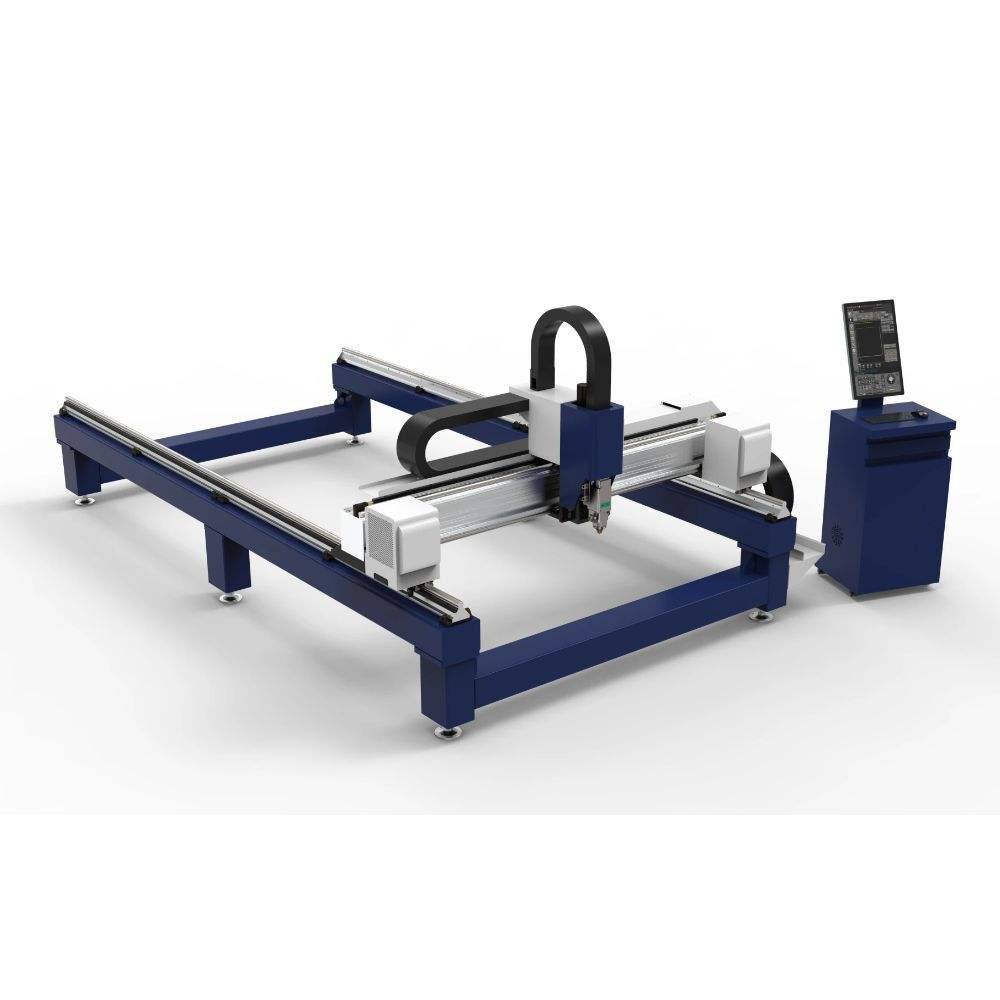
I. The Structural Foundation: Plate-welded Heavy Duty Bed
In high-precision laser cutting, the machine bed is the most critical component for long-term accuracy. A 4kW laser operates at high speeds, generating significant inertial forces during rapid acceleration and deceleration of the gantry.
The plate-welded heavy-duty bed is engineered to counteract these forces. Unlike lighter tube-welded frames, the heavy-duty plate structure is fabricated from high-tensile carbon steel plates, often reaching thicknesses of 16mm to 20mm. The assembly process involves multi-segment welding, followed by a rigorous thermal stress-relief process.
1. Thermal Annealing and Stress Relief: After welding, the bed undergoes a 600°C annealing process in a high-temperature furnace. This stabilizes the molecular structure of the steel, ensuring that the bed will not deform over 20+ years of continuous operation. For manufacturers in Leon’s demanding industrial environment, this prevents the “accuracy drift” commonly seen in lower-quality machines.
2. Vibration Damping: The sheer mass of the plate-welded bed provides superior vibration absorption. When cutting complex geometric patterns in stainless steel kitchenware—such as intricate drainage grates or custom sink cutouts—vibration is the enemy of a clean finish. The heavy-duty bed ensures that the mechanical resonance does not transfer to the cutting head, resulting in a smoother kerf.
3. Precision Machining: Once annealed, the bed is machined using a large-scale five-axis CNC milling center. This ensures that the guide rail and rack mounting surfaces are flat within a tolerance of ±0.02mm.
II. 4kW Power Dynamics: The Sweet Spot for Stainless Steel
For kitchenware production, which primarily utilizes stainless steel grades 304 and 316 in thicknesses ranging from 0.8mm to 10mm, the 4kW power rating represents the optimal balance between capital investment and operational efficiency.
1. Cutting Thickness and Speed:
– 1.0mm Stainless Steel: Cutting speeds can exceed 40-50 m/min using Nitrogen as an auxiliary gas.
– 3.0mm Stainless Steel: Maintains a stable production speed of 12-15 m/min.
– 10mm Stainless Steel: Achieves high-quality “bright surface” cutting at approximately 1.2-1.5 m/min.
2. Edge Quality and Finish: In the kitchenware industry, hygiene and aesthetics are paramount. A 4kW fiber laser, paired with Nitrogen (N2) high-pressure cutting, prevents oxidation of the cut edge. This eliminates the need for secondary grinding or polishing, as the edge remains silver and “food-grade” immediately after the cut.
3. Kerf Width and Precision: The fiber laser beam diameter is significantly smaller than CO2 or plasma alternatives. With a 4kW source, the kerf width (the material removed during the cut) is typically between 0.1mm and 0.3mm. This allows for extremely tight nesting of parts, reducing material waste—a critical factor given the rising cost of stainless steel in the Mexican market.
III. High-Precision Motion Control and Drive Systems
To translate 4kW of power into precision parts, the motion system must be world-class. The machines specialized for the Leon market utilize a dual-drive gantry system.
– Servo Motors and Drives: High-inertia Yaskawa or Delta servo motors provide the torque necessary for rapid movements. The 4kW system typically supports accelerations of 1.0G to 1.2G.
– Helical Rack and Pinion: The use of precision helical racks (Grade M1 or higher) ensures smoother engagement than straight racks, reducing mechanical noise and increasing positioning accuracy to ±0.03mm.
– Automatic Focus Cutting Head: For stainless steel fabrication involving different gauges (e.g., 1mm cabinet panels and 6mm support brackets), the auto-focus head is essential. It adjusts the focal point in milliseconds based on the material thickness programmed in the CNC software, ensuring consistent cut quality across a single sheet.

IV. Economic Impact for Kitchenware Manufacturers in Leon
The transition to a 4kW fiber laser offers a quantifiable Return on Investment (ROI) for local factories. Let’s look at the data-driven advantages:
1. Labor Reduction: A single 4kW laser can often replace three to four traditional punching or manual cutting stations. This reduces the dependency on skilled manual labor, which is increasingly difficult to source in the competitive Bajío industrial corridor.
2. Material Utilization: Advanced nesting software integrated with the laser system allows for “common line cutting.” This technique shares a single cut line between two parts, further reducing the time per part and maximizing the yield from every 4×8 or 5×10 foot stainless steel sheet.
3. Energy Efficiency: Fiber laser technology has a wall-plug efficiency of approximately 35-40%, compared to 10% for CO2 lasers. For a factory in Leon, this translates to significantly lower monthly electricity overheads.
V. Gas Dynamics and Auxiliary Systems
The choice of auxiliary gas is the “secret sauce” in high-precision stainless steel cutting.
– Nitrogen (N2): Used for the vast majority of kitchenware applications. It acts as a cooling agent and blows away the molten metal without reacting with the steel, preserving the anti-corrosive properties of the stainless steel edge.
– Compressed Air: For manufacturers looking to reduce costs on thinner gauges (under 3mm), high-pressure air cutting is a viable 4kW application. While it introduces slight oxidation, it is often acceptable for internal structural components of industrial ovens or refrigerators.
– Oxygen (O2): Generally reserved for carbon steel, but can be used for very thick stainless steel where edge color is not a priority.
VI. Maintenance Protocols for Engineering Longevity
To maintain the high-precision capabilities of the plate-welded bed and the 4kW source, a strict engineering maintenance schedule is required:
1. Optical Path Integrity: While fiber lasers have no mirrors in the delivery path, the protective window (cover glass) in the cutting head must be inspected daily. Even a microscopic speck of dust can cause “lens burn” at 4kW power levels.
2. Lubrication: The heavy-duty bed features an automatic lubrication system for the guide rails and racks. Ensuring the reservoir is filled with the correct grade of oil is vital for preventing friction-induced wear.
3. Chiller Calibration: The 4kW source generates heat that must be dissipated. The dual-circuit water chiller must maintain a temperature stability of ±0.5°C to ensure the wavelength of the laser remains consistent, which directly affects cutting precision.
VII. Conclusion: Future-Proofing Production
For the kitchenware factory owner in Leon, the 4kW Fiber Laser Cutting Machine with a plate-welded heavy-duty bed is more than a tool; it is a platform for growth. The combination of structural mass, high-wattage speed, and CNC precision allows for the production of complex, high-margin products that traditional methods cannot replicate.
As the industry moves toward “Industry 4.0” standards, these machines provide the necessary digital integration and repeatability required to compete on a global scale. By investing in a machine characterized by a stress-relieved heavy-duty bed and a high-efficiency 4kW source, manufacturers ensure that their production floor remains efficient, accurate, and profitable for decades to come. The data is clear: the precision of fiber laser technology is the benchmark for the next generation of Mexican manufacturing excellence.













