The industrial landscape of Mexico City (CDMX) and its surrounding metropolitan areas, such as Tlalnepantla and Vallejo, is currently undergoing a significant technological transformation. For kitchenware manufacturers—producers of industrial stoves, stainless steel cabinetry, and ventilation systems—the transition from traditional mechanical punching to high-power fiber laser cutting is no longer a luxury but a competitive necessity. The introduction of the 12kW Tube Laser Cutter, specifically optimized for galvanized steel, represents the pinnacle of this shift. This guide explores the engineering specifications, structural advantages, and operational strategies required to maximize the ROI of these machines in a professional kitchenware production environment.
The Engineering Logic of the Tube-welded Standard Bed
In the realm of high-power fiber lasers, the machine bed is the foundation of all precision. While cast iron beds are often cited for their dampening properties, the Tube-welded Standard Bed has emerged as the preferred engineering choice for the 12kW segment in the Mexican market due to its specific balance of rigidity, thermal stability, and cost-efficiency.
A tube-welded bed is constructed using high-quality carbon steel rectangular tubes. The engineering process involves a rigorous stress-relief protocol. After welding, the bed undergoes large-scale electric furnace tempering to eliminate internal stresses. This ensures that the frame will not deform over 20 years of continuous operation. For a 12kW system, where the acceleration of the cutting head can reach 1.2G to 1.5G, the bed’s structural integrity is paramount.
The “Standard” designation refers to the standardized modular design which allows for easier maintenance and component replacement. In Mexico City’s industrial climate, where fluctuations in ambient temperature can affect metal expansion, the hollow structure of the tube-welded bed provides superior heat dissipation compared to solid plate-welded designs. This prevents the heat generated by the 12,000-watt laser source from causing microscopic misalignments in the guide rails, ensuring that a 2-meter tube cut at the beginning of the shift is identical to one cut ten hours later.

12kW Power Dynamics: Why It Matters for Galvanized Steel
Galvanized steel is a staple in the kitchenware industry due to its corrosion resistance. However, it is notoriously difficult to cut with lower-power lasers. The zinc coating has a lower melting point than the underlying steel, which often leads to “zinc fume interference” and slag accumulation on the bottom of the cut.
The jump to 12kW changes the physics of the cut. At 12,000 watts, the energy density at the focal point is sufficient to vaporize both the zinc layer and the steel substrate almost instantaneously. This high-speed vaporization results in a much narrower Heat Affected Zone (HAZ). For kitchenware engineers, this means:
1. Dross-Free Edges: The high-pressure gas (typically Nitrogen) can clear the molten material faster than it can bond to the zinc coating, resulting in a “silver” edge that requires zero secondary grinding.
2. Speed Multipliers: A 12kW laser can cut 3mm galvanized steel up to 300% faster than a 3kW counterpart. In a high-volume factory, this translates to a reduction in “cost per part” by nearly 40%.
3. Penetration Capability: For industrial kitchen frames that utilize thicker galvanized square tubing (6mm to 10mm), the 12kW source provides the “reserve power” needed to maintain high feed rates without risking “flame-out” or beam reflection.
Technical Challenges: Managing the Zinc Layer
Engineers must understand that cutting galvanized steel is not the same as cutting carbon steel. The zinc coating reflects fiber laser wavelengths more than raw steel does. To combat this, 12kW systems utilize advanced “anti-reflection” technology in the resonator and the cutting head.
Furthermore, the vaporization of zinc produces a fine white powder that can coat the protective windows of the laser head. Professional-grade 12kW machines for the Mexico City market are equipped with high-volume dust extraction systems and “positive pressure” air curtains within the cutting head. This ensures that the optical path remains pristine, preventing “thermal lens” effects that degrade cut quality over time.
For kitchenware applications—where aesthetics are as important as structural integrity—the use of Nitrogen as a simplified auxiliary gas is recommended. While Oxygen is faster for thick carbon steel, Nitrogen prevents the oxidation of the edge, maintaining the corrosion-resistant properties of the galvanized coating right up to the cut line.
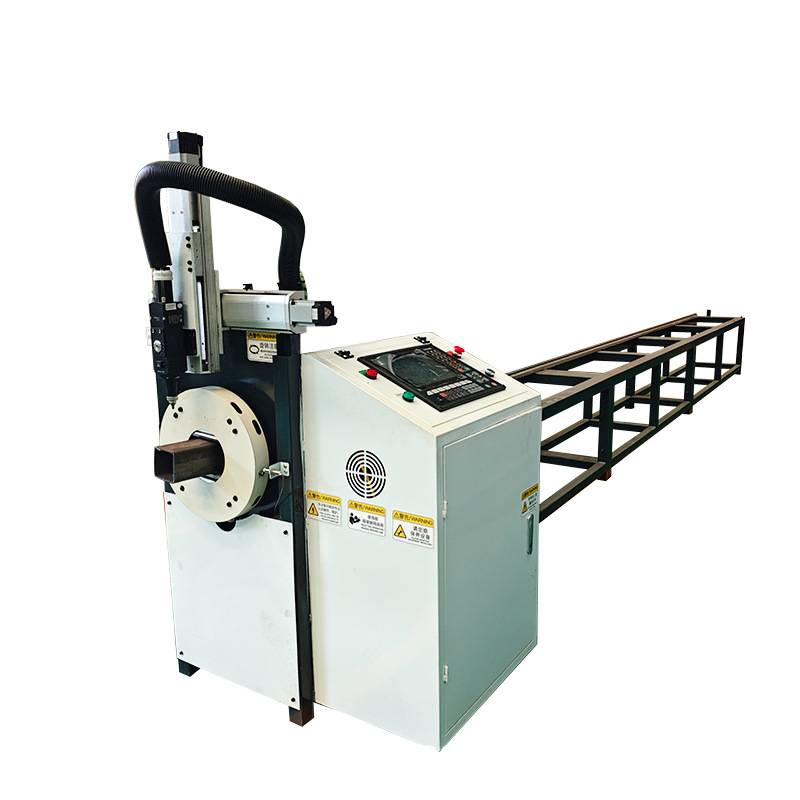
High-Precision Tube Processing for Kitchenware Assembly
Kitchenware manufacturing often involves complex assemblies: shelving units, stove manifolds, and industrial refrigerator frames. Traditional methods involve manual marking, sawing, and drilling. The 12kW Tube Laser collapses these steps into a single automated process.
The precision of the chuck system is critical here. Most high-end 12kW tube lasers utilize a pneumatic double-chuck system. The front and rear chucks provide synchronized rotation with a centering accuracy of ±0.1mm. This allows for the cutting of complex “fish-mouth” joints, where two tubes intersect at an angle. For a kitchenware factory, this means that frames can be “tab-and-slotted” together. Instead of relying on expensive jigs and fixtures for welding, the laser-cut parts snap together like a puzzle, ensuring perfect squareness every time.
In the Mexico City market, where skilled welding labor is becoming more expensive, the ability to produce “self-jigging” parts is a massive operational advantage. It reduces the welding time by 50% and eliminates the human error associated with manual layout.
Integration into the Mexico City Industrial Ecosystem
Operating a 12kW laser in Mexico City presents unique environmental and logistical considerations. The altitude of CDMX (2,240 meters) affects air density, which can impact the cooling efficiency of the water chiller. Engineers should ensure that the chiller unit is oversized by at least 20% to account for the thinner air and potential heat spikes during the summer months.
Furthermore, the local power grid can experience voltage fluctuations. A 12kW fiber laser is a sensitive electronic instrument. It is mandatory to install a high-precision industrial voltage stabilizer and a dedicated grounding system. Without these, the laser source—the most expensive component of the machine—is at risk of premature degradation.
Service and localized support are the final pieces of the puzzle. For a kitchenware factory owner, downtime is the enemy. Selecting a machine with a tube-welded bed and a 12kW source that uses standardized components (such as Raytools or Precitec cutting heads and Yaskawa or Delta servo motors) ensures that replacement parts are readily available within the Mexican industrial corridor.
Data-Driven ROI: The Kitchenware Factory Case
Consider a factory producing 500 units of industrial shelving per month. Using traditional methods (bandsaw and drill press), the labor cost per unit might be $15 USD, with a scrap rate of 5%.
By switching to a 12kW Tube Laser:
– Labor Cost: Drops to $3 USD per unit (automated loading and high-speed cutting).
– Material Utilization: Nesting software reduces scrap to less than 2%.
– Secondary Processing: Grinding and deburring costs are eliminated.
– Capacity: The factory can now produce 2,000 units per month with the same footprint.
The initial investment in a 12kW system is higher than a 3kW or 6kW model, but for galvanized steel, the “sweet spot” of efficiency is 12kW. The speed at which it processes thin-to-medium gauge galvanized tubes allows the machine to pay for itself within 14 to 18 months in a double-shift environment.
Conclusion: Future-Proofing with 12kW Technology
As the “Nearshoring” trend continues to bring more manufacturing demand to Mexico, the standards for kitchenware quality are rising. International clients demand the precision that only high-power fiber lasers can provide. By investing in a 12kW Tube Laser Cutter with a robust tube-welded standard bed, factory owners in Mexico City are not just upgrading a tool; they are upgrading their entire production philosophy.
The combination of structural stability, extreme power density, and specialized processing for galvanized steel creates a formidable competitive advantage. For the engineer, it provides the precision required for complex designs; for the owner, it provides the throughput required for aggressive market growth. In the demanding world of professional kitchenware, the 12kW fiber laser is the new gold standard.













