Engineering Overview: The Strategic Role of 6kW Fiber Lasers in Puebla’s Agricultural Sector
The industrial landscape of Puebla, Mexico, is undergoing a significant transformation. As a hub for both automotive and agricultural manufacturing, the region demands machinery that bridges the gap between high-volume production and extreme precision. For agriculture factory owners and engineers, the transition from traditional plasma or CO2 cutting to 6kW fiber laser technology is no longer a luxury—it is a competitive necessity.
Galvanized steel is the backbone of modern agricultural infrastructure, used extensively in the fabrication of grain silos, irrigation systems, livestock housing, and heavy-duty implements. However, cutting galvanized material presents unique metallurgical challenges, specifically regarding the vaporization of the zinc coating and the potential for edge corrosion. The 6kW fiber laser, characterized by its high energy density and 1.06-micron wavelength, offers the optimal solution for these challenges, providing a balance of speed, edge quality, and cost-efficiency.
The Foundation of Precision: Plate-welded Heavy Duty Bed Engineering
In a high-output environment like a Puebla-based agricultural plant, the structural integrity of the laser machine is the primary determinant of long-term accuracy. A 6kW laser source generates significant kinetic energy during high-speed head movements, requiring a frame that can neutralize vibrations and resist thermal deformation.
The Plate-welded Heavy Duty Bed is engineered using high-tensile carbon steel plates, often ranging from 12mm to 20mm in thickness. Unlike cheaper tube-welded frames, which are prone to resonance and structural fatigue, the plate-welded structure undergoes a rigorous manufacturing process:
1. Stress Relief Annealing: The entire bed is placed in a high-temperature furnace (typically exceeding 600°C) to eliminate internal stresses generated during the welding process. This ensures the frame will not warp over 10 to 15 years of operation.
2. Honeycomb Internal Reinforcement: The interior of the bed is designed with a “honeycomb” or “box-type” structure. This provides exceptional torsional rigidity, allowing the machine to handle accelerations of up to 1.5G without compromising the micron-level precision of the cutting head.
3. Precision Machining: The guide rail and rack mounting surfaces are processed by large-scale gantry milling machines in a single setup. This ensures parallelism and straightness within ±0.02mm.
For the agricultural engineer, this means that a part cut today will have the exact same tolerances as a part cut five years from now, ensuring that modular components for silos or machinery assemblies fit perfectly every time.
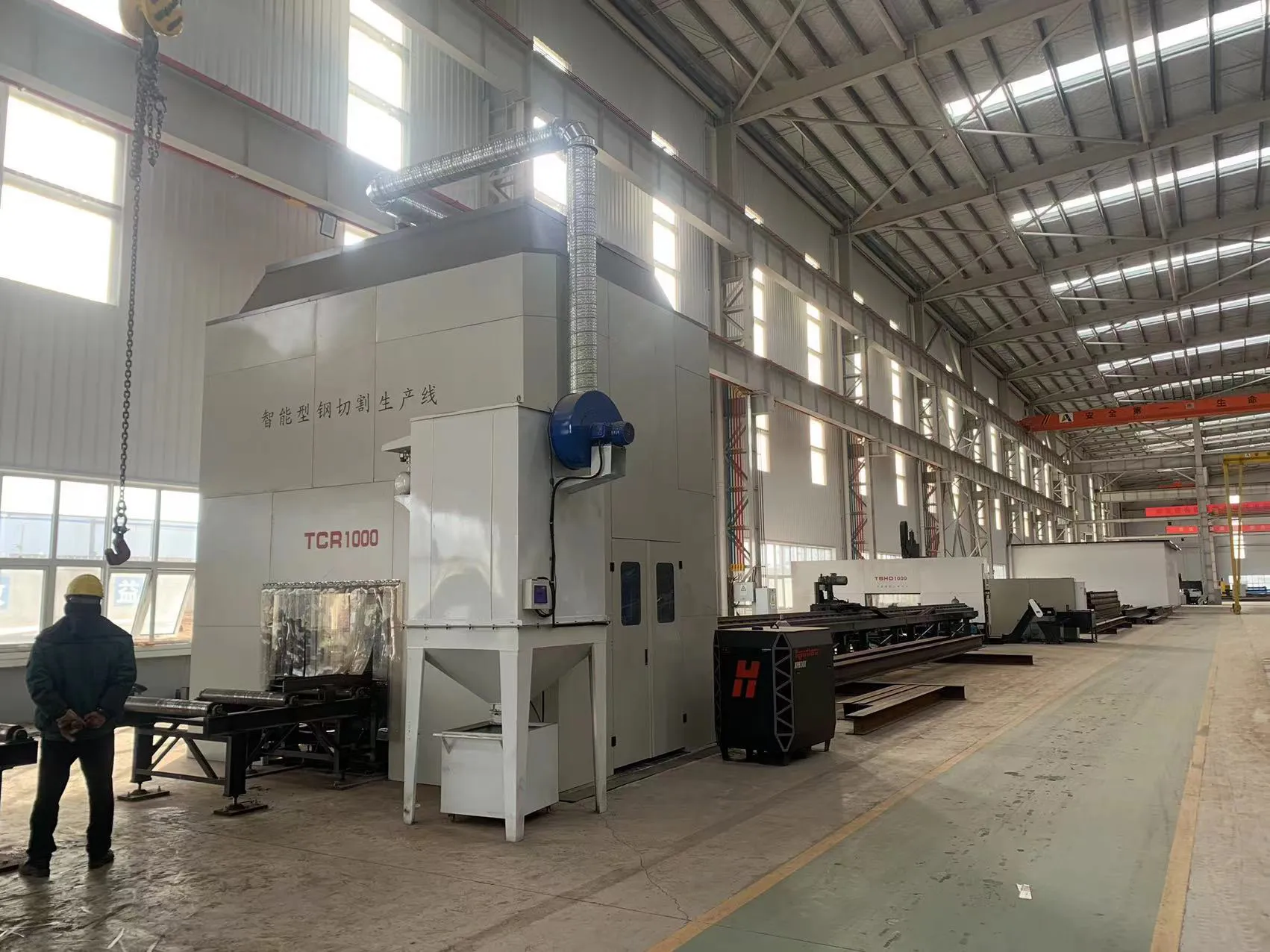
Optimizing Galvanized Steel Cutting: Overcoming the Zinc Barrier
Galvanized steel is carbon steel coated with a layer of zinc to prevent oxidation. While excellent for the longevity of agricultural equipment exposed to the elements, zinc has a much lower melting point (approx. 419°C) and boiling point (approx. 907°C) than the underlying steel (approx. 1500°C). During the laser cutting process, the zinc layer vaporizes rapidly, which can interfere with the laser beam and cause “dross” or slag to adhere to the bottom of the cut.
A 6kW fiber laser provides the necessary power density to overcome these thermal dynamics. By utilizing high-pressure nitrogen (N2) as an auxiliary gas, the machine effectively “blows away” the vaporized zinc and molten steel before it can react with oxygen. This results in a “bright-cut” finish that requires no secondary grinding or post-processing.
Technical Advantages for Galvanized Sheets:
– Reduced Heat Affected Zone (HAZ): The 6kW beam is so concentrated that the duration of heat exposure is minimized, preserving the integrity of the zinc coating near the cut edge.
– High-Speed Processing: For standard 2mm to 4mm galvanized sheets used in silo wall panels, a 6kW system can achieve cutting speeds exceeding 30 meters per minute.
– Anti-Reflective Technology: Modern 6kW sources are equipped with advanced back-reflection protection, which is crucial when cutting highly reflective materials like galvanized steel or aluminum.
Performance Metrics: 6kW Power Dynamics and Throughput
For factory owners in Puebla evaluating the ROI of a 6kW system, the data-driven performance metrics are compelling. When compared to 3kW or 4kW systems, the 6kW variant offers a non-linear increase in productivity, particularly in the “sweet spot” of agricultural fabrication (6mm to 12mm plate).
Thickness and Speed Data (Typical 6kW Performance):
– 1mm Galvanized Steel: 60 – 80 m/min (Nitrogen)
– 3mm Galvanized Steel: 18 – 25 m/min (Nitrogen)
– 6mm Carbon Steel: 4.5 – 6.0 m/min (Oxygen)
– 12mm Carbon Steel: 1.8 – 2.4 m/min (Oxygen)
The increased power allows for the use of larger nozzles and higher gas pressures, which facilitates “High-Speed Air Cutting” on thinner gauges. This can reduce operating costs by up to 40% by eliminating the need for bottled nitrogen or oxygen for certain components.

Integration in Agricultural Manufacturing: From Silos to Seeders
The versatility of the 6kW fiber laser makes it the centerpiece of an agricultural fabrication shop. In Puebla, where the demand for specialized harvest and storage equipment is high, the machine handles a diverse range of tasks:
1. Grain Storage Systems: Cutting large-diameter galvanized sheets for corrugated silo walls. The precision of the laser ensures that bolt holes align perfectly across segments, which is critical for structural safety and weatherproofing.
2. Irrigation Components: Fabricating complex brackets, flanges, and manifolds from stainless and galvanized steel. The ability to cut intricate patterns allows for the design of more efficient water distribution systems.
3. Chassis and Frames: For agricultural trailers and seeders, the 6kW laser can easily handle 16mm to 20mm plate steel, providing the heavy-duty components needed for the rugged terrain of the Mexican highlands.
By moving production in-house with a 6kW laser, Puebla factories can reduce lead times from weeks to days, allowing for “Just-In-Time” manufacturing that responds to seasonal agricultural demands.
Operational Economics and Maintenance for the Puebla Market
Investing in a 6kW fiber laser requires an understanding of the Total Cost of Ownership (TCO). While the initial capital expenditure is higher than lower-wattage machines, the cost-per-part is significantly lower due to the increased throughput.
Key Economic Factors:
– Energy Efficiency: Fiber lasers have a wall-plug efficiency of approximately 30-35%, compared to 10% for CO2 lasers. This results in substantially lower electricity bills, a critical factor given industrial energy rates in Mexico.
– Consumable Longevity: The use of high-quality copper nozzles and protective windows in 6kW heads (like those from Raytools or Precitec) ensures that the machine can run multiple shifts with minimal downtime.
– Local Support and Climate: Puebla’s altitude and climate require a robust cooling system. A 6kW machine must be paired with a dual-circuit industrial chiller that maintains the laser source and the cutting head at constant temperatures (±0.5°C), ensuring stable beam quality regardless of the ambient temperature in the factory.
Conclusion: Strategic Implementation for Engineering Excellence
The adoption of a 6kW Fiber Laser Cutting Machine with a Plate-welded Heavy Duty Bed represents a strategic leap for agricultural manufacturing in Puebla. For the engineer, it provides a tool capable of extreme precision and metallurgical integrity. For the factory owner, it provides a scalable platform that reduces waste, lowers labor costs, and opens the door to more complex, high-value projects.
When specializing in galvanized steel, the 6kW power level is the “industrial standard” that ensures clean edges, rapid production, and long-term reliability. By prioritizing a heavy-duty bed construction, manufacturers ensure that their investment remains a high-precision asset for decades, securing their position in the competitive Mexican agricultural landscape.
As the industry moves toward smarter, more automated production, the 6kW fiber laser stands as the foundational technology that will drive the next generation of agricultural innovation in Puebla and beyond. Engineering excellence begins with the right foundation; in laser cutting, that foundation is a combination of massive structural stability and the raw, controlled power of 6,000 watts.













