Engineering Guide: 1.5kW Fiber Laser Integration for Aerospace Aluminum Processing in Queretaro
The aerospace manufacturing sector in Queretaro, Mexico, has established itself as a global epicenter for high-precision component production. As Tier 1 and Tier 2 suppliers for companies like Bombardier, Safran, and Airbus continue to expand, the demand for machining solutions that balance speed, precision, and structural integrity has never been higher. This guide examines the technical specifications and engineering advantages of the 1.5kW Fiber Laser Cutting Machine, specifically focusing on its application in high-grade aluminum alloy processing and the structural superiority of the plate-welded heavy-duty bed.
In the aerospace context, aluminum alloys—particularly the 2000, 6000, and 7000 series—are prized for their strength-to-weight ratios. However, these materials present unique challenges for laser processing, including high thermal conductivity and high reflectivity. The 1.5kW fiber laser system, engineered with a robust plate-welded bed, provides the stability and beam quality required to meet the stringent tolerances of the Queretaro aerospace cluster.
The Engineering of Stability: Plate-welded Heavy Duty Bed
The foundation of any high-precision CNC machine is its bed. For fiber laser cutting, where the cutting head moves at high accelerations (often exceeding 1.2G), the structural integrity of the frame determines the long-term accuracy of the machine.
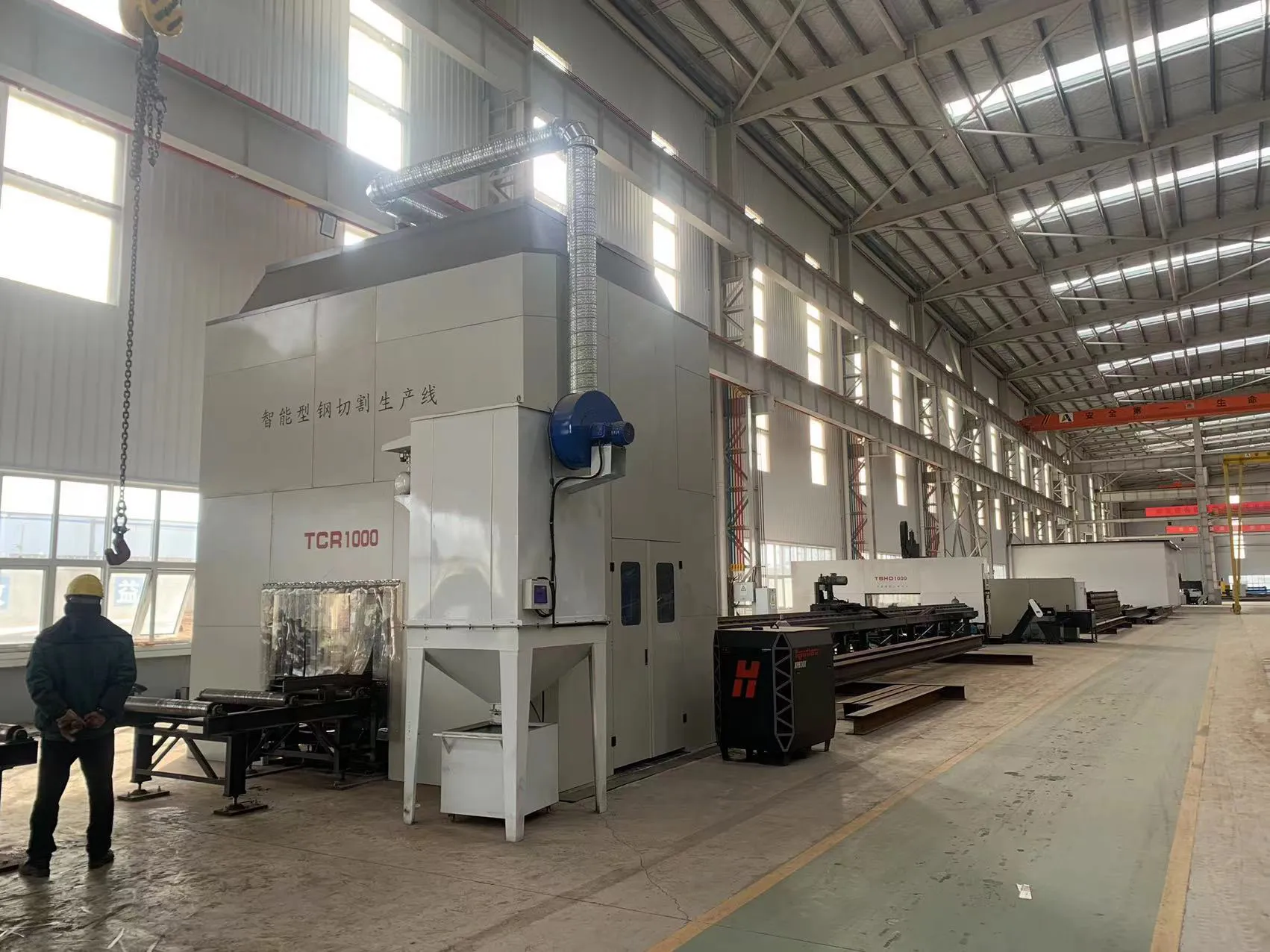
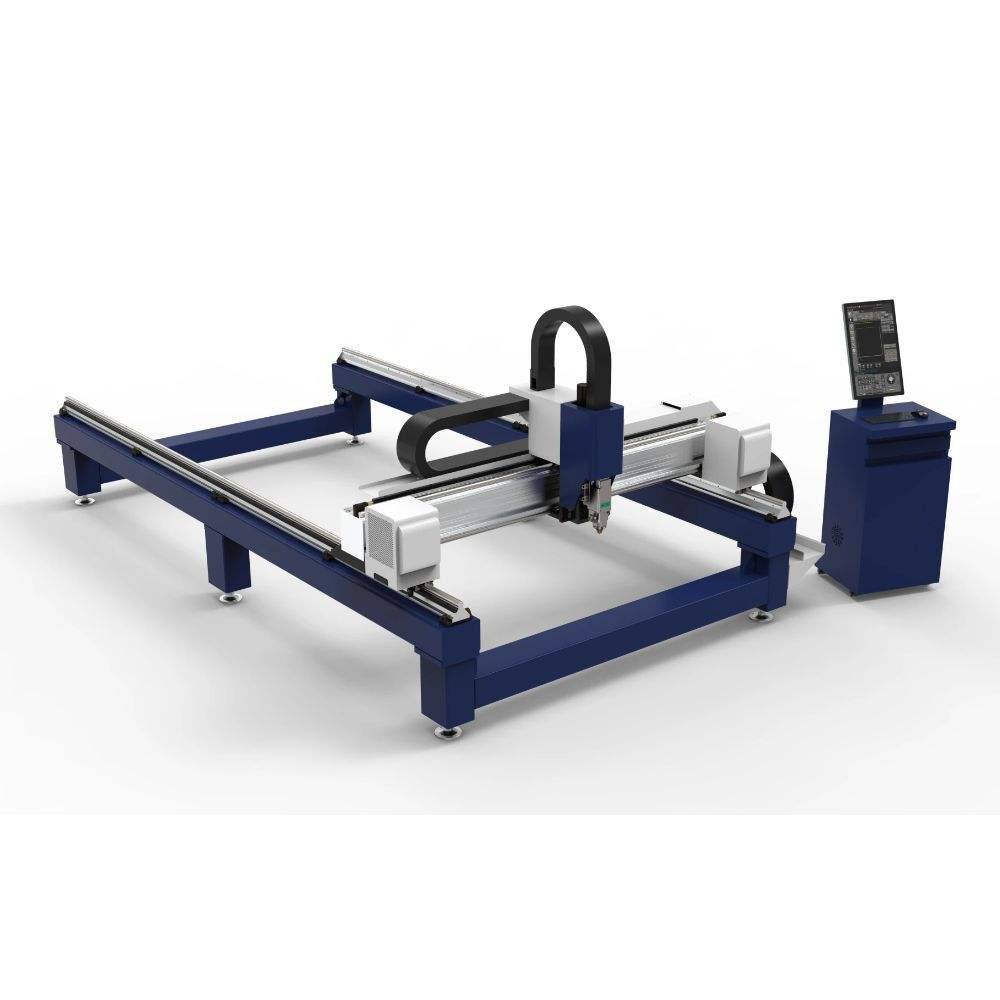
The 1.5kW Fiber Laser system utilizes a plate-welded heavy-duty bed, a significant departure from the lighter tube-welded frames found in entry-level equipment. This bed is constructed from high-tensile carbon steel plates, often ranging from 12mm to 20mm in thickness. The engineering process involves several critical stages:
1. Stress Relief Annealing: After welding, the entire bed undergoes a high-temperature annealing process in a specialized furnace. By heating the frame to approximately 600°C and cooling it gradually, internal stresses generated during the welding process are eliminated. This ensures the bed will not deform over 10 to 15 years of continuous operation.
2. Vibration Dampening: The mass of a plate-welded bed is significantly higher than its counterparts. In the physics of machining, mass equals stability. The higher inertia of the heavy-duty bed absorbs the kinetic energy generated by the high-speed movement of the gantry, minimizing micro-vibrations that could otherwise lead to “chatter” marks on the aluminum surface.
3. Precision Milling: The mounting surfaces for the guide rails and racks are machined using a large-scale five-axis gantry milling machine in a single setup. This ensures parallelism and perpendicularity within microns, which is essential for the 0.03mm positioning accuracy required in aerospace part manufacturing.
Optimizing 1.5kW Fiber Laser Parameters for Aluminum Alloys
Aluminum is a “non-ferrous” metal with high reflectivity. In the early days of CO2 lasers, cutting aluminum was hazardous to the machine’s optics due to back-reflection. Modern 1.5kW fiber lasers operate at a wavelength of approximately 1.064 microns, which is much more readily absorbed by aluminum.
To achieve aerospace-grade results, the 1.5kW system utilizes a specific set of engineering parameters:
Beam Quality (M² Factor): A 1.5kW fiber source typically offers an M² < 1.1. This allows the laser to be focused into an extremely small spot size, increasing the power density. For aluminum alloys, this high power density is necessary to instantly melt the material before the heat can dissipate into the surrounding area, thereby narrowing the Heat Affected Zone (HAZ). Gas Dynamics: For high-precision aluminum cutting, high-pressure Nitrogen (N2) is used as the assist gas. The Nitrogen serves two purposes: it expels the molten aluminum from the kerf and prevents oxidation of the cut edge. This results in a "bright" finish that often requires no secondary deburring or polishing, a critical factor for Queretaro shops looking to reduce labor costs. Reflective Protection: The 1.5kW systems are equipped with optical isolators and back-reflection sensors. If the laser detects a dangerous amount of reflected light—common when piercing 6061 or 7075 aluminum—the system automatically adjusts or shuts down to protect the fiber resonator.
Technical Specifications and Performance Metrics
For engineers and factory owners in the Queretaro region, the decision to invest in a 1.5kW system is often driven by the following data-driven performance metrics:
– Maximum Cutting Thickness (Aluminum): 5mm to 6mm (production speed), up to 8mm (maximum capacity).
– Positioning Accuracy: ±0.03mm per meter.
– Repositioning Accuracy: ±0.02mm.
– Maximum Acceleration: 1.0G – 1.2G.
– Kerf Width: 0.1mm – 0.2mm depending on material thickness.
These specifications ensure that components such as avionics brackets, internal fuselage ribs, and specialized ducting meet the AS9100 quality standards prevalent in the Mexican aerospace corridor.
Impact of the Plate-Welded Bed on Dynamic Response
In laser cutting, the “Dynamic Response” refers to the machine’s ability to change direction rapidly without losing precision. This is particularly important when cutting complex geometries or small-diameter holes in aluminum plates.
A lightweight frame will flex under the torque of the servo motors. This flex causes a “lag” in the cutting head’s position, resulting in ovalized holes or rounded corners where sharp angles were programmed. The plate-welded heavy-duty bed provides a rigid “backbone” that resists these torsional forces. When paired with a lightweight aviation-grade aluminum gantry, the machine achieves a high strength-to-weight ratio for its moving parts while maintaining a rock-solid foundation. This combination allows Queretaro manufacturers to maintain high feed rates without sacrificing the geometric dimensioning and tolerancing (GD&T) required by aerospace blueprints.
Operational Efficiency in the Queretaro Market
Queretaro’s manufacturing environment is characterized by high energy costs and a competitive labor market. The 1.5kW fiber laser offers a strategic advantage in this regard:
Energy Efficiency: Fiber lasers have a wall-plug efficiency of approximately 30-35%, compared to the 10% efficiency of older CO2 technology. This significantly lowers the monthly overhead for local factories.
Maintenance Cycles: The solid-state nature of fiber lasers means there are no mirrors to align and no laser gas to replenish. The plate-welded bed further reduces maintenance by ensuring the machine stays in alignment for years, reducing the need for frequent technician visits and recalibration.
Local Supply Chain Integration: The 1.5kW system is ideal for the “just-in-time” (JIT) manufacturing cycles required by the aerospace industry. Its ability to switch between different thicknesses of aluminum alloys with minimal setup time allows local shops to handle diverse contract requirements from multiple aerospace OEMs.
Conclusion: Engineering the Future of Queretaro Aerospace
The 1.5kW Fiber Laser Cutting Machine represents a specialized solution for the high-precision demands of the Queretaro aerospace market. By prioritizing the structural integrity of a plate-welded heavy-duty bed, engineers ensure that the machine’s high-speed capabilities are matched by long-term accuracy and stability.
For factory owners, this technology translates to lower rejection rates, reduced secondary processing, and the ability to work with the most challenging aluminum alloys in the industry. As the aerospace sector continues to evolve toward more complex and lightweight designs, the combination of robust mechanical engineering and advanced fiber laser technology will remain the cornerstone of productive and profitable manufacturing in Mexico’s leading industrial hub.
Investment in this technology is not merely an equipment purchase; it is a commitment to the precision and reliability that the global aerospace industry demands. By understanding the mechanical advantages of bed construction and the physics of aluminum laser interaction, Queretaro’s engineering firms can position themselves at the forefront of the global supply chain.













