Engineering Excellence: The 1.5kW Precision Laser System for Leon’s Aerospace Sector
The industrial landscape of Leon, Guanajuato, has undergone a significant transformation, evolving from its traditional manufacturing roots into a sophisticated hub for aerospace and automotive engineering. For aerospace factory owners and lead engineers, the requirement for high-precision components is non-negotiable. As global supply chains demand tighter tolerances and faster turnaround times, the 1.5kW Precision Laser System, optimized for galvanized steel, has emerged as a critical asset. This guide explores the technical architecture of this system, specifically focusing on the structural advantages of the tube-welded standard bed and the metallurgical complexities of processing galvanized materials.
Structural Integrity: The Technical Advantage of the Tube-welded Standard Bed
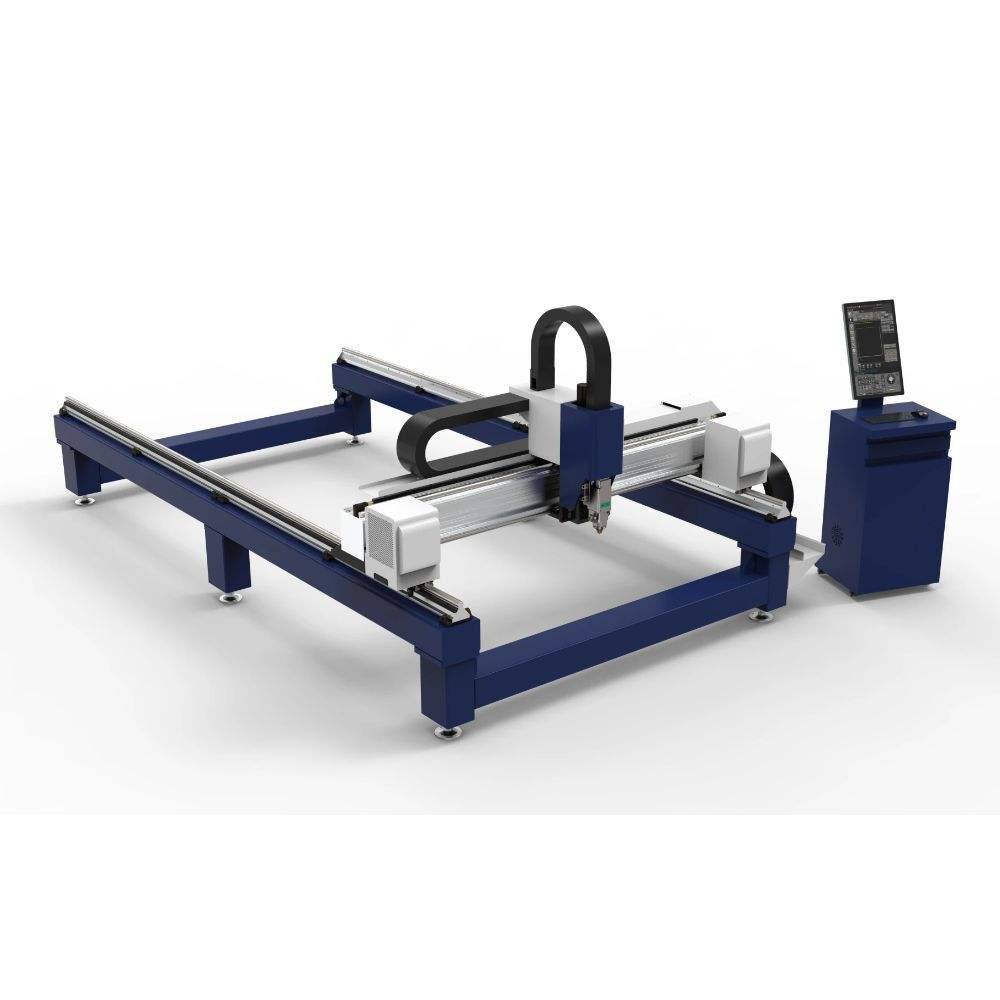
In the realm of aerospace manufacturing, precision is a byproduct of stability. The 1.5kW system utilizes a tube-welded standard bed, a structural choice that distinguishes it from lighter, bolted alternatives. This bed is engineered using high-quality carbon steel tubes, which are welded into a reinforced honeycomb structure.
The engineering rationale behind the tube-welded design is twofold: vibration damping and thermal stability. During high-speed cutting operations, the gantry moves at rapid accelerations. A bed that lacks sufficient mass or structural rigidity will succumb to harmonic vibrations, leading to “chatter” marks on the cut edge. The tube-welded frame is subjected to a rigorous stress-relief annealing process at temperatures exceeding 600°C. This process eliminates internal stresses within the metal, ensuring that the bed remains geometrically stable for over 20 years of continuous operation.
For engineers in Leon, where temperature fluctuations in facilities can impact material expansion, the tube-welded bed offers superior thermal inertia. The hollow sections of the tubes provide a natural cooling path, preventing the localized heat from the laser process from distorting the machine’s alignment. This ensures that the X, Y, and Z axes maintain a positioning accuracy of ±0.03mm, a prerequisite for aerospace-grade components.
Optimizing the 1.5kW Fiber Source for Galvanized Steel
Galvanized steel presents a unique challenge in laser processing due to the zinc coating. Zinc has a significantly lower melting point (approx. 419°C) compared to the underlying steel (approx. 1370°C). When the laser beam interacts with the material, the zinc vaporizes before the steel melts, often creating high-pressure gas pockets that can lead to dross or “blow-back” onto the laser nozzle.
The 1.5kW fiber laser source is the “sweet spot” for galvanized applications ranging from 0.5mm to 4.0mm. At this power density, the beam achieves a high enough energy concentration to vaporize the zinc and melt the steel simultaneously, but without the excessive heat input that would cause the zinc to boil violently and contaminate the cut.
To achieve high-precision results, the system employs specialized nozzle technology and gas pressure regulation. Utilizing Nitrogen (N2) as an auxiliary gas at pressures between 12 and 15 bar allows the laser to “blow away” the molten material before the zinc vapor can interfere with the beam path. This results in a clean, silver-bright edge that requires no secondary finishing—a critical factor in reducing the Total Cost of Ownership (TCO) for Leon’s high-volume aerospace contractors.
Data-Driven Performance: Speed and Precision Metrics
When evaluating a 1.5kW system, engineers must look at the empirical data regarding throughput and kerf width. In aerospace applications, the kerf (the width of the cut) must be minimized to allow for intricate geometries and material nesting efficiency.
1. **Cutting Speed:** On 2.0mm galvanized steel, the 1.5kW system maintains a stable cutting speed of approximately 18-22 meters per minute.
2. **Kerf Width:** The high beam quality (M² < 1.1) allows for a focused spot size of less than 100 microns, resulting in a kerf width of approximately 0.15mm.
3. **Heat Affected Zone (HAZ):** Due to the high-speed processing and the wavelength of the fiber laser (1.06μm), the HAZ is kept to a minimum (typically <0.05mm). This preserves the structural integrity of the galvanized coating adjacent to the cut, preventing premature corrosion in the field.

Integration into Aerospace Quality Management Systems
For factory owners in Leon, the 1.5kW laser system is more than a cutting tool; it is a component of a larger Quality Management System (QMS) compliant with AS9100 standards. The CNC controller integrated into these systems allows for real-time monitoring of laser parameters, including power modulation, frequency, and duty cycle.
High-precision cutting of galvanized steel for aerospace—such as for specialized brackets, ducting, or electronic enclosures—requires repeatable accuracy. The system’s software supports automatic nesting, which optimizes material usage and reduces scrap rates by up to 15%. Furthermore, the integration of capacitive height sensors ensures that the cutting head maintains a constant distance from the material surface, even if the galvanized sheet has slight deformations. This prevents “tip-ups” and nozzle collisions, which are the leading causes of downtime in automated laser cells.
Economic and Regional Context: The Leon Market
Leon’s strategic location within the “Bajío” industrial corridor places it at the heart of Mexico’s aerospace growth. For local manufacturers, the 1.5kW system offers a lower entry barrier than 6kW or 12kW machines while covering 80% of the material gauges used in standard aerospace components.
The power consumption of a 1.5kW fiber laser is remarkably efficient. Compared to older CO2 laser technology, fiber lasers consume approximately 70% less electricity. In a region where energy costs are a significant overhead, this efficiency directly translates to more competitive bidding on international contracts. Additionally, the maintenance requirements for a tube-welded fiber system are minimal; there are no mirrors to align and no laser gas to replenish, allowing Leon-based engineers to focus on production rather than machine upkeep.
Technical Specifications for Engineering Review
To assist in the procurement process, the following technical specifications represent the standard configuration for a 1.5kW precision system optimized for the aerospace sector:
– **Laser Source:** Fiber Laser (IPG or Raycus)
– **Bed Construction:** Heavy-duty Tube-welded Carbon Steel
– **Transmission:** High-precision Rack and Pinion (YYC/APEX)
– **Drive System:** Dual-drive Y-axis with Servo Motors (Yaskawa or Panasonic)
– **Cooling:** Dual-temperature Industrial Chiller
– **Software:** CypCut / CypNest with Aerospace Parameter Library
– **Maximum Acceleration:** 1.0G – 1.2G
Conclusion: The Path Forward for Leon’s Manufacturers
The adoption of 1.5kW precision laser systems represents a strategic upgrade for Leon’s aerospace sector. By prioritizing the structural stability of a tube-welded standard bed and mastering the metallurgical nuances of galvanized steel cutting, factory owners can achieve a level of precision that meets the most stringent international standards.
As the industry moves toward more complex geometries and thinner, high-strength materials, the ability to produce clean, high-accuracy cuts with minimal thermal distortion will be the deciding factor in market leadership. For the engineer, this system provides the reliability and data-driven performance necessary to push the boundaries of what is possible in modern aerospace manufacturing. Investing in this technology is not merely an equipment purchase; it is a commitment to the engineering excellence that defines the future of Leon’s industrial base.













