Engineering Overview: The 30kW Fiber Laser Revolution in Mexico City’s Automotive Sector
The industrial landscape of Mexico City and the surrounding metropolitan area, including the strategic corridors of Querétaro and Puebla, is currently undergoing a massive technological transition. As automotive Tier 1 and Tier 2 suppliers face increasing pressure to deliver high-precision components with shorter lead times, the adoption of ultra-high-power fiber laser systems has become a necessity. Specifically, the 30kW tube laser cutter has emerged as the definitive tool for processing stainless steel components, offering a combination of raw power and surgical precision that was previously unattainable with plasma or lower-wattage CO2 systems.
For an automotive factory owner or lead engineer, the investment in a 30kW system is not merely about cutting thicker materials; it is about the physics of speed and the reduction of the Heat Affected Zone (HAZ). In the context of stainless steel—a material prized for its corrosion resistance and structural integrity in exhaust systems, chassis reinforcements, and fluid delivery lines—maintaining material properties during the cutting process is paramount. A 30kW source allows for “lightning-speed” processing, where the laser dwell time is so minimal that thermal distortion is virtually eliminated, ensuring that the finished tube meets the rigorous tolerances of IATF 16949 standards.
Structural Integrity: The Engineering Behind the Tube-welded Standard Bed
A common misconception in the CNC industry is that the laser source is the only component that determines accuracy. However, at 30kW, the kinetic forces generated by high-speed acceleration and deceleration are immense. To counteract these forces, the engineering of the machine bed is critical. The Tube-welded Standard Bed utilized in our professional-grade systems is engineered specifically to handle the dynamic loads of high-speed tube processing.
Unlike traditional cast iron beds which can be brittle, or simple plate-welded beds that may lack internal damping, the tube-welded structure utilizes high-strength rectangular steel profiles. These profiles are strategically braced with internal reinforcement ribs to create a lattice-like internal structure. This design provides several engineering advantages:
1. Torsional Stiffness: The hollow-core nature of the tube-welded design offers superior resistance to twisting forces during high-speed rotation of the chucks.
2. Vibration Damping: The specific frequency response of the welded steel structure is tuned to dissipate the micro-vibrations generated by the linear motors and the 30kW laser head’s rapid movements.
3. Thermal Stability: The bed undergoes a rigorous stress-relief annealing process in a high-temperature furnace (typically exceeding 600°C) followed by natural cooling over several days. This ensures that the bed will not warp or “creep” over years of operation in the variable climate of Mexico City.
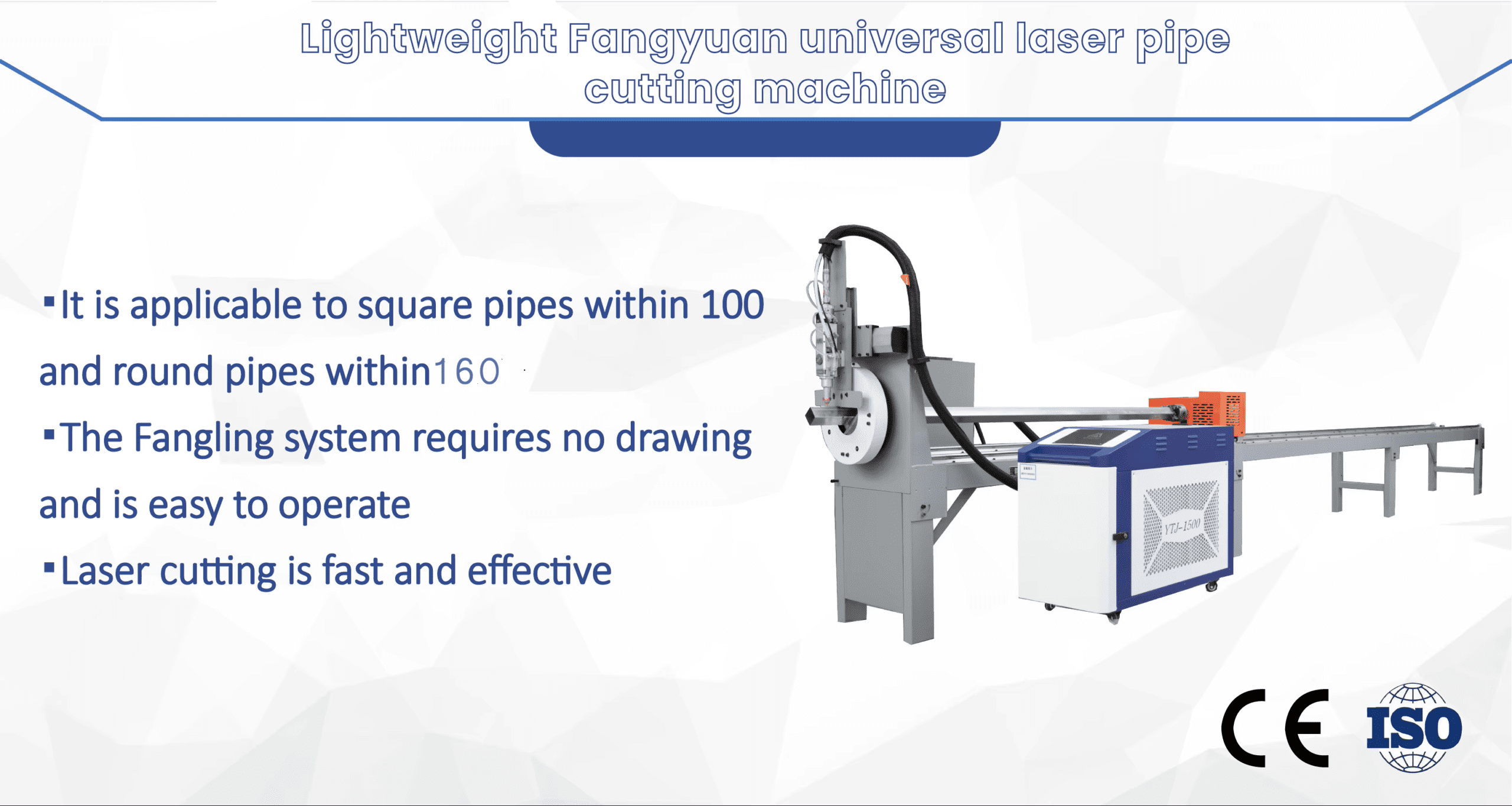
High-Precision Cutting of Stainless Steel: The 30kW Advantage
When processing stainless steel (grades 304, 316, or 409), the primary challenge is the material’s high melting point and its tendency to retain heat. A 30kW fiber laser overcomes these challenges through sheer energy density. By concentrating 30,000 watts of power into a focal spot measured in microns, the machine achieves a state of “sublimation cutting” or high-pressure melt-ejection at speeds that prevent the heat from conducting into the surrounding material.
For automotive applications, such as perforated exhaust tubes or complex structural manifolds, the precision requirements are often within ±0.03mm. The 30kW system enables:
– Zero-Burr Finishing: High-power nitrogen-assisted cutting ensures that the molten stainless steel is ejected instantly, leaving a mirror-like edge that requires no secondary grinding or deburring.
– Complex Geometry Handling: The ability to cut intricate notches, tabs, and slots in round, square, or D-shaped tubes allows for “tab-and-slot” assembly designs, which significantly reduces welding jig costs in the assembly line.
– Thick-Walled Efficiency: While 2kW or 4kW lasers struggle with 10mm stainless steel walls, the 30kW unit processes these thicknesses with the same ease as thinner gauges, maintaining verticality of the cut edge and preventing the “tapering” effect common in lower-power machines.
Technical Specifications and Data-Driven Performance
To understand the ROI for a Mexico City-based manufacturing facility, we must look at the comparative data. In a standard production run of 2-inch diameter stainless steel tubing with a 3mm wall thickness, a 30kW system can increase throughput by over 400% compared to a 6kW system.
– Positioning Accuracy: ±0.03 mm
– Repetitive Positioning Accuracy: ±0.02 mm
– Maximum Rotation Speed: Up to 120 RPM (depending on tube diameter)
– Acceleration: 1.2G to 1.5G
The integration of professional CNC controllers (such as CypCut or equivalent high-end systems) allows for real-time monitoring of gas pressure and laser power modulation. This is particularly important in Mexico City, where altitude and atmospheric pressure can affect gas dynamics. The 30kW system’s software automatically compensates for these variables, ensuring consistent beam quality regardless of the environmental conditions.

Operational Excellence in the Mexican Automotive Market
Mexico City serves as a central hub for logistics and engineering talent. Implementing a 30kW tube laser in this market requires a focus on operational excellence and maintenance. The fiber laser source itself is solid-state, meaning it has no moving parts and a lifespan exceeding 100,000 hours. However, the true value lies in the “Standard Bed” architecture, which allows for easy integration of automated loading and unloading systems.
For factories running three shifts, the automated bundle loader is a critical add-on. It allows the 30kW laser to run autonomously, feeding tubes into the chucks, measuring their length via infrared sensors, and adjusting the cutting program for any “bow” or “twist” in the raw material. This level of automation is what allows Mexican manufacturers to remain competitive against overseas production, by minimizing labor costs and maximizing machine uptime.
Furthermore, the 30kW system is designed for “Clean Cut” technology. By utilizing high-pressure nitrogen, the laser prevents oxidation on the cut surface. For automotive engineers, this is vital; an oxidized edge on a stainless steel tube will lead to weld failures or premature corrosion. By delivering a clean, oxide-free edge, the 30kW laser ensures that the subsequent robotic welding cells can operate at peak efficiency with zero rework.
Sustainability and Resource Management
In the modern industrial environment of Mexico, energy efficiency and resource management are no longer optional. While 30kW represents a high peak power draw, the “wall-plug efficiency” of fiber lasers is approximately 35-40%, which is significantly higher than the 10% efficiency of older CO2 technology. Because the 30kW system cuts so much faster, the total energy consumed per meter of cut is actually lower than that of a 6kW machine.
Additionally, the precision of the nesting software reduces material waste. In stainless steel processing, where material costs are a significant portion of the total part cost, the ability to nest parts with a 1mm gap on a tube can result in thousands of dollars in annual savings. The 30kW laser’s narrow kerf width (the width of the cut) is instrumental in achieving this level of material utilization.
Conclusion: Future-Proofing Your Production Line
The decision to implement a 30kW tube laser cutter with a tube-welded standard bed is a strategic move toward high-tier automotive manufacturing. For the engineers and factory owners in Mexico City, this technology represents the pinnacle of current fabrication capabilities. It addresses the dual needs of high-volume throughput and high-precision accuracy, all while maintaining the structural integrity of stainless steel components.
As the automotive industry pivots toward electric vehicles (EVs), which require lightweight but strong stainless steel frames and battery enclosures, the demand for high-power tube processing will only increase. By investing in a 30kW system today, Mexican manufacturers are not just solving today’s production bottlenecks; they are positioning themselves at the forefront of the next generation of global automotive supply chains. The combination of a robust, stress-relieved bed and the raw power of a 30kW fiber source provides the reliability and performance necessary to dominate the competitive landscape of North American manufacturing.













