Engineering the Future of Vertical Mobility: The 3kW Precision Laser System for Monterrey’s Elevator Industry
The industrial landscape of Monterrey, Nuevo León, is currently undergoing a radical transformation. As the “Sultana del Norte” solidifies its position as a global hub for nearshoring and advanced manufacturing, the demand for high-precision infrastructure components has skyrocketed. Within this ecosystem, the elevator manufacturing sector stands out as a critical beneficiary of technological advancement. To meet the rigorous safety and aesthetic standards of modern vertical mobility, local factories are transitioning toward the 3kW Precision Fiber Laser System. This guide explores the engineering superiority of this system, focusing on its plate-welded heavy-duty bed and its specialized performance on galvanized steel—the backbone of the elevator industry.
The Structural Foundation: Plate-welded Heavy Duty Bed Engineering
In the realm of high-speed laser cutting, the mechanical stability of the machine tool is the primary determinant of long-term accuracy. For elevator manufacturers in Monterrey, where production environments often operate 24/7, a standard frame is insufficient. The 3kW system utilizes a Plate-welded Heavy Duty Bed, an engineering choice that prioritizes structural mass and vibration dampening.
Unlike traditional cast iron beds or thin-walled tube frames, the plate-welded structure is fabricated from high-tensile carbon steel plates, often exceeding 16mm to 20mm in thickness. These plates are joined using high-strength CO2 shielded welding and subsequently undergo a rigorous heat treatment process. This process, known as stress-relief annealing, involves heating the entire frame to over 600°C and cooling it at a controlled rate. This eliminates internal stresses generated during welding, ensuring that the bed remains dimensionally stable for over 20 years of operation.
The high mass of the heavy-duty bed provides a crucial counter-inertial force. When the laser head accelerates at rates of 1.2G to 1.5G to perform intricate cuts on elevator door panels or brackets, the bed absorbs the resulting kinetic energy. This prevents “ghosting” or micro-shaking at the cutting edge, a defect that would otherwise compromise the tight tolerances (±0.03mm) required for elevator assembly.
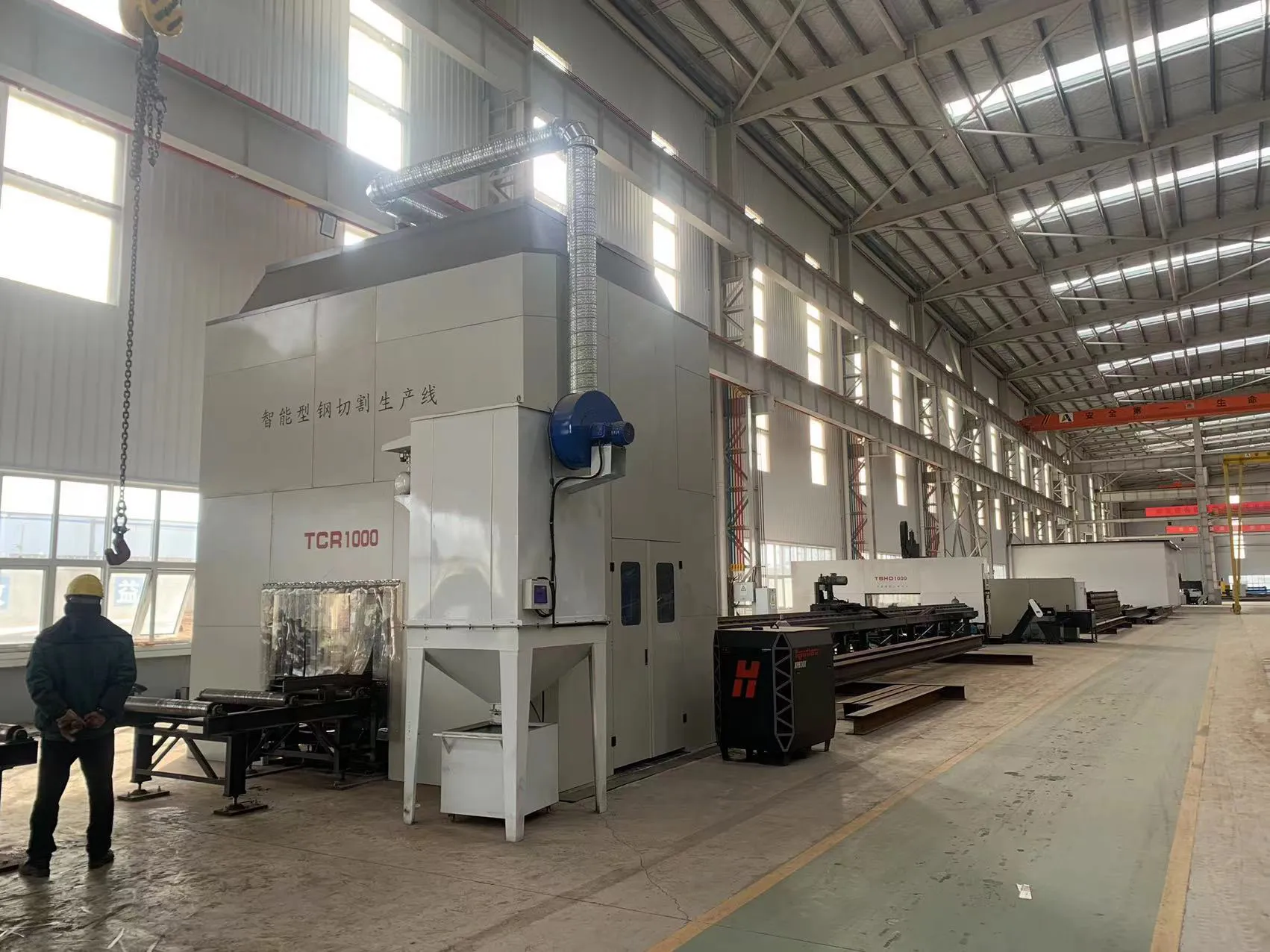
Optimizing 3kW Fiber Laser Performance for Galvanized Steel
Galvanized steel is the material of choice for elevator car frames, guide rail brackets, and safety components due to its superior corrosion resistance. However, from an engineering perspective, it presents unique challenges. The zinc coating has a lower melting point than the steel substrate, which can lead to “zinc vapor interference” and dross formation during the cutting process.
The 3kW fiber laser source is the “sweet spot” for this material. At this power level, the energy density is sufficient to instantaneously vaporize both the zinc layer and the steel, creating a clean kerf. When paired with high-pressure nitrogen (N2) as an auxiliary gas, the 3kW system performs “cold cutting.” The nitrogen acts as a shielding gas, blowing away the molten material before it can oxidize or bond with the zinc. The result is a silver-bright cutting edge that requires zero post-processing or deburring—a significant cost-saving factor for Monterrey factories looking to reduce labor-intensive finishing stages.
Data-driven analysis shows that a 3kW system can process 2.0mm galvanized steel at speeds exceeding 35 meters per minute. For elevator door skins, which are typically 1.2mm to 1.5mm thick, the 3kW system offers a 40% increase in throughput compared to 1.5kW alternatives, while maintaining a significantly lower operational cost per part than 6kW+ systems.
Precision Engineering for Elevator Component Manufacturing
The elevator industry requires a diverse range of parts, from large structural plates to intricate decorative panels. The versatility of the 3kW system is enhanced by its motion control architecture. Utilizing high-precision helical racks and pinions, coupled with Japanese or European servo motors, the machine translates the 3kW of power into surgical precision.
For elevator cabins, the aesthetic finish is paramount. Any thermal deformation or “heat-affected zone” (HAZ) can cause warping in large panels, leading to reflections that appear distorted. The 3kW fiber laser’s narrow beam diameter (typically 10-100 microns) minimizes the HAZ. This ensures that the structural integrity of the galvanized coating remains intact right up to the edge of the cut, preventing future rust points in the humid or varying climates of Northern Mexico.
Furthermore, the integration of “Fly-Cutting” technology allows the laser to cut rows of holes (often found in elevator ventilation panels or ceiling fixtures) without stopping the cutting head. This reduces the non-productive “pierce time” and significantly lowers the mechanical wear on the Z-axis, further leveraging the stability of the heavy-duty bed.

The Monterrey Advantage: Energy Efficiency and ROI
In the competitive industrial landscape of Monterrey, operational efficiency is a key performance indicator (KPI). The 3kW fiber laser system boasts a wall-plug efficiency of approximately 30-35%, which is significantly higher than older CO2 technology. For a factory in the Santa Catarina or Apodaca industrial parks, this translates to thousands of dollars in annual electricity savings.
Moreover, the 3kW power level is optimized for the thickness range most common in elevator manufacturing (1mm to 10mm). While higher power machines exist, they often require larger electrical substations and consume more auxiliary gas without providing a proportional increase in speed for thin-gauge galvanized sheets. The 3kW system offers the best Return on Investment (ROI) by balancing initial capital expenditure with high-speed production capabilities.
The reliability of the plate-welded bed also plays into the economic calculation. In Monterrey’s fluctuating temperatures, the thermal stability of the heavy-duty bed ensures that the machine does not require frequent recalibration. This “set-and-forget” reliability allows engineers to focus on production scheduling rather than machine maintenance.
Technical Specifications and Gas Management
To achieve the best results on galvanized steel, Monterrey’s engineers must pay close attention to gas management. The 3kW system is typically equipped with an automatic dual-gas proportional valve. For galvanized steel under 3mm, nitrogen at 12-15 bar is recommended to achieve the cleanest edge. For thicker structural components (e.g., 6mm guide rail supports), oxygen can be used to increase cutting speed, though this will result in an oxidized edge.
The machine’s software, often a specialized CNC suite like CypCut, allows for “Lead-in/Lead-out” optimization. When cutting galvanized steel, the lead-in is critical; a poorly managed pierce can blow back zinc dust onto the protective window of the laser head. The 3kW systems used in high-end Monterrey facilities include “Three-stage Piercing” protocols, which use varying power levels and gas pressures to melt through the material cleanly before starting the high-speed cut.
Conclusion: Setting the Standard for Industrial Excellence
For elevator factory owners and engineers in Monterrey, the transition to a 3kW Precision Laser System with a Plate-welded Heavy Duty Bed is not just an equipment upgrade; it is a strategic move toward global competitiveness. The combination of structural rigidity, specialized galvanized steel processing, and high-speed efficiency addresses the specific pain points of the vertical mobility industry.
By investing in a machine designed for the rigors of heavy industry, Monterrey’s manufacturers can ensure the highest safety standards, minimize material waste, and meet the aggressive delivery timelines demanded by the booming construction sector. The 3kW system represents the pinnacle of precision engineering, providing the reliability and quality necessary to lift Monterrey’s industrial reputation to new heights.













