Engineering Overview: The 30kW Precision Laser Paradigm in Guadalajara’s Aerospace Sector
The industrial landscape of Guadalajara, Jalisco, has undergone a radical transformation, evolving from a traditional manufacturing base into a high-tech aerospace and electronics hub. For aerospace engineers and factory owners in this region, the demand for precision components—specifically those involving non-ferrous, highly reflective alloys like brass—has reached an inflection point. The introduction of the 30kW Precision Laser System represents a significant leap in throughput and metallurgical integrity. This guide explores the technical architecture of these systems, focusing on the structural superiority of the Tube-welded Standard Bed and the specific physics of high-power brass processing.
In aerospace manufacturing, where tolerances are measured in microns and material fatigue is a primary concern, the choice of laser power and machine stability is critical. A 30kW fiber laser is not merely about “more power”; it is about achieving a power density that allows for high-speed sublimation cutting, minimizing the heat-affected zone (HAZ) and preserving the mechanical properties of the brass substrate.
The Structural Foundation: Engineering the Tube-welded Standard Bed
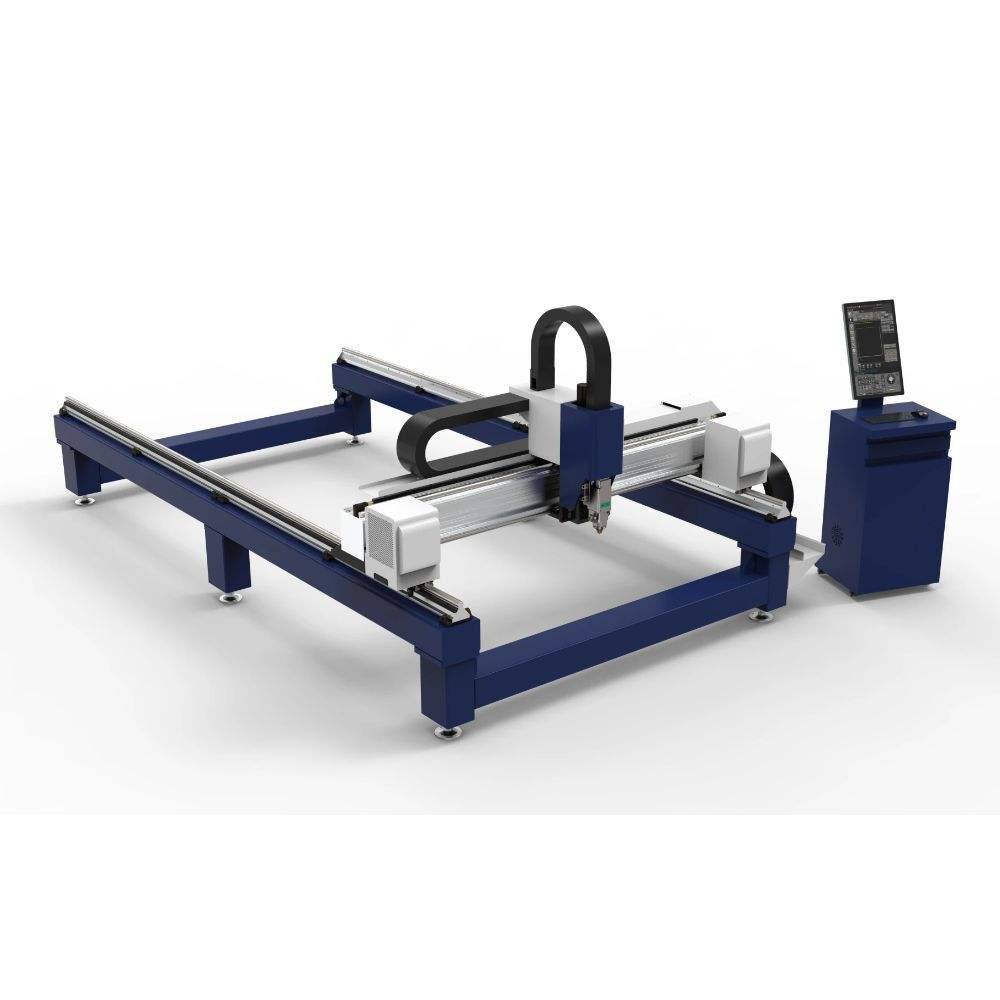
The stability of a 30kW laser system is predicated on its bed architecture. At this power level, the kinetic forces generated by high-speed gantry movements (often exceeding 1.5G acceleration) and the thermal loads from the cutting process necessitate a rigid, vibration-dampening foundation. The Tube-welded Standard Bed is engineered to meet these specific rigorous demands.
Unlike cast iron beds which can be brittle, or simple plate-welded beds which may lack internal rigidity, the tube-welded structure utilizes high-strength carbon steel rectangular tubes. These tubes are strategically reinforced with internal stiffeners, creating a honeycomb-like internal geometry. This design offers a superior strength-to-weight ratio, ensuring that the machine maintains its geometric alignment over decades of operation in the Guadalajara climate, where ambient temperature fluctuations can affect metal expansion.
The manufacturing process of the tube-welded bed involves several critical engineering stages:
1. Stress Relief Annealing: After welding, the entire bed undergoes high-temperature annealing in an electric furnace to eliminate internal residual stresses. This prevents future deformation.
2. Vibration Aging: A secondary stress-relief process that uses resonance to further stabilize the molecular structure of the steel.
3. Precision Machining: The mounting surfaces for the guide rails and racks are processed by a large-scale five-axis CNC milling center in a single setup, ensuring parallelism and perpendicularity within 0.02mm.
High-Precision Brass Cutting: Overcoming Reflectivity and Thermal Conductivity
Brass (a copper-zinc alloy) is notoriously difficult to process with lower-power lasers due to its high reflectivity and high thermal conductivity. In the aerospace sector, brass components are frequently used for bushings, electrical connectors, and fluid manifolds where precision is paramount.
A 30kW system provides the “brute force” energy density required to overcome the initial reflectivity of brass. At 1070nm (the standard wavelength for fiber lasers), brass reflects a significant portion of the beam back toward the laser source. However, at 30kW, the energy density at the focal point is so intense that it transitions the material from solid to vapor almost instantaneously. This “keyhole” effect minimizes the time the material has to reflect the energy, protecting the laser source and ensuring a clean cut.
Furthermore, the high wattage allows for significantly higher cutting speeds. In aerospace applications, speed is a proxy for quality. Faster cutting speeds result in a narrower kerf and a significantly reduced Heat Affected Zone (HAZ). This is vital for maintaining the temper and grain structure of the brass, ensuring that the component meets the structural requirements of AS9100 standards.
Technical Advantages of 30kW Power Density
The transition from 12kW or 20kW to 30kW is not linear; it is exponential in terms of capability. For a Guadalajara-based factory, this translates to:
– Increased Maximum Thickness: 30kW systems can process brass up to 50mm-70mm with high edge quality, a feat previously reserved for waterjet or mechanical milling.
– Nitrogen-Assisted Cutting: At 30kW, nitrogen can be used as the assist gas for thicker sections of brass, preventing oxidation and leaving a bright, mirror-like finish that requires no post-processing.
– Piercing Efficiency: The “Flash Piercing” technology enabled by 30kW power reduces piercing time from seconds to milliseconds, drastically increasing the overall parts-per-hour yield.

Optimizing the Guadalajara Supply Chain
Guadalajara’s proximity to major North American aerospace corridors means that local manufacturers are often competing with Tier 1 and Tier 2 suppliers globally. Integrating a 30kW system provides a distinct competitive advantage in the following areas:
1. Reduced Operating Costs: While the initial capital expenditure (CAPEX) is higher, the cost per part is significantly lower due to the increased speed and reduced need for secondary finishing.
2. Material Versatility: Beyond brass, the 30kW system handles aerospace-grade aluminum and titanium with equal precision, allowing a single machine to service multiple contracts.
3. Local Maintenance and Support: The Guadalajara market has seen a rise in specialized technicians capable of servicing high-power fiber lasers. Utilizing a Tube-welded Standard Bed ensures that mechanical maintenance is simplified, as the structure is less prone to the “bed-sag” common in lower-quality imports.
Data-Driven Performance Metrics
When evaluating a 30kW system for brass, engineers should focus on the following data points:
– Beam Quality (M2): For 30kW, an M2 < 1.2 is ideal for maintaining a tight focal spot over long distances.
- Acceleration: A minimum of 1.2G to 2.0G is required to make the most of the 30kW cutting speeds on thinner gauges.
- Gas Consumption: High-power cutting often requires high-pressure nitrogen. Integrating a nitrogen generation system can reduce operational costs by up to 40% in the Mexican market.
In a comparison test, a 30kW system cut 12mm brass at speeds 300% faster than a 10kW system, with a 50% reduction in the roughness of the cut surface (Ra value). For aerospace connectors, this means a reduction in friction and improved electrical conductivity.
Thermal Management and Optical Protection
A 30kW laser generates significant heat within the cutting head. Precision engineering in these systems includes sophisticated water-cooling circuits that target the collimating lens, the focusing lens, and the protective window. In the Guadalajara environment, where humidity can fluctuate, these systems often include integrated air dryers and dust-sealed optical paths to prevent contamination.
Furthermore, “Back-Reflection Protection” is a critical feature for brass. Modern 30kW systems incorporate optical isolators and sensors that can detect reflected light within nanoseconds, shutting down the beam before damage occurs to the fiber feeding system. This is a non-negotiable requirement for any factory owner looking to process “yellow metals” at high power.
Conclusion: The Future of Aerospace Fabrication in Jalisco
The investment in a 30kW Precision Laser System with a Tube-welded Standard Bed is a strategic move for any Guadalajara-based aerospace firm aiming for global competitiveness. The combination of structural rigidity, which ensures long-term accuracy, and extreme power density, which masters the challenges of brass and other reflective alloys, creates a production environment capable of meeting the most stringent aerospace specifications.
As the industry moves toward more complex geometries and tighter delivery cycles, the ability to cut thick brass with the precision of a scalpel and the speed of a turbine will define the leaders of the Jalisco manufacturing sector. By focusing on data-driven engineering and robust machine architecture, factory owners can ensure their operations are not just current, but future-proofed against the evolving demands of the global aerospace supply chain.













