The Strategic Advantage of 1.5kW Fiber Laser Technology in Tijuana’s Elevator Manufacturing Sector
As Tijuana continues to solidify its position as a premier global hub for advanced manufacturing and maquiladora operations, the demand for high-precision architectural components has reached an all-time high. For elevator factory owners and lead engineers in the Baja California region, the transition from traditional mechanical punching or CO2 laser cutting to specialized 1.5kW fiber laser systems represents more than just an equipment upgrade—it is a fundamental shift in production efficiency.
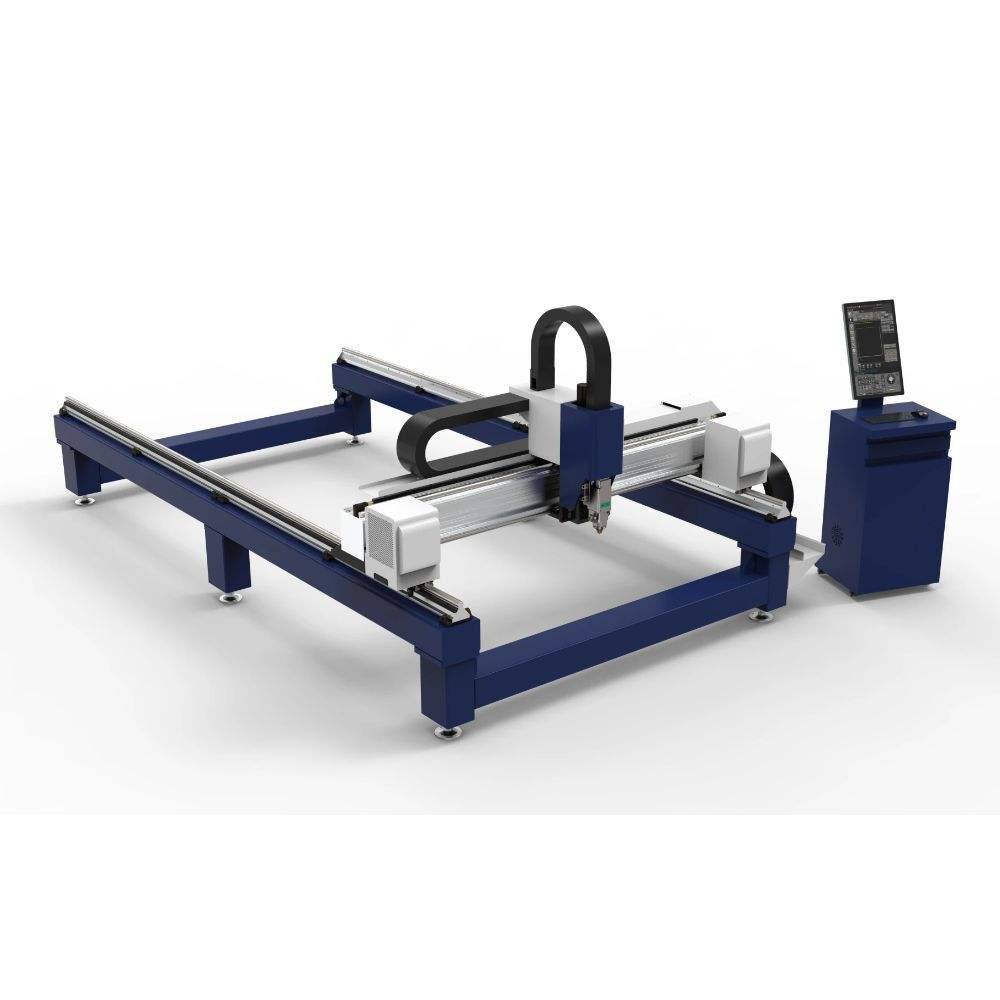
The elevator industry requires a unique combination of structural integrity and aesthetic perfection. Components such as car panels, door frames, and intricate control station plates are increasingly fabricated from aluminum alloys due to their strength-to-weight ratio and corrosion resistance. However, aluminum presents specific challenges, including high reflectivity and thermal conductivity. The 1.5kW Sheet Metal Laser, engineered specifically for these materials and featuring a Plate-welded Heavy Duty Bed, offers a technical solution tailored to the rigorous standards of modern elevator engineering.
Structural Foundation: The Technical Superiority of the Plate-welded Heavy Duty Bed
In high-precision laser cutting, the quality of the finish is dictated as much by the stability of the machine frame as it is by the laser source itself. For a 1.5kW system operating at high acceleration rates, a standard lightweight frame is insufficient.
The Plate-welded Heavy Duty Bed is constructed from high-tensile strength structural steel plates. Unlike cast iron beds which can be brittle, or thin-walled tube frames that vibrate under high-speed direction changes, the plate-welded structure is designed for maximum rigidity.
1. Stress-Relief Annealing: Each bed undergoes a rigorous thermal treatment process. By heating the frame to over 600°C and cooling it slowly, internal stresses from the welding process are eliminated. This ensures that the machine maintains its geometric tolerances (within ±0.02mm) for over 20 years of continuous operation in a high-output Tijuana factory environment.
2. Vibration Damping: Aluminum cutting requires high-frequency stability. The mass of the heavy-duty bed absorbs the kinetic energy generated by the 1.2G to 1.5G acceleration of the gantry. This damping effect prevents “ghosting” or “chatter marks” on the cut edge, which is critical for elevator decorative panels where any imperfection is magnified by polished or brushed finishes.
3. Thermal Stability: Industrial environments in Tijuana can experience significant temperature fluctuations. The plate-welded design, combined with its sheer mass, provides high thermal inertia, preventing the frame from warping or expanding unevenly, which would otherwise compromise the precision of long-form elevator door tracks.
Optimizing 1.5kW Power for Aluminum Alloy Fabrication
While higher wattage lasers exist, the 1.5kW fiber laser is widely considered the “sweet spot” for elevator manufacturing. Most elevator components utilize aluminum sheets ranging from 1.0mm to 5.0mm in thickness. In this range, the 1.5kW source offers optimal beam density and energy efficiency.
Aluminum is a highly reflective material (High Reflectivity Metal). Early fiber lasers struggled with back-reflection, which could damage the laser module. Modern 1.5kW systems are equipped with optical isolators and specialized cutting heads that allow for the continuous processing of 5052 and 6061 aluminum alloys without risk to the hardware.
From a data-driven perspective, the 1.5kW laser delivers:
– Cutting Speeds: Up to 25m/min for 1mm aluminum and approximately 4-6m/min for 3mm aluminum.
– Kerf Width: An incredibly narrow slit (0.1mm – 0.15mm), allowing for tight tolerances in interlocking elevator panel designs.
– Heat Affected Zone (HAZ): The concentrated energy of the fiber source minimizes the HAZ, preventing the warping of thin aluminum sheets—a common issue when using plasma or older CO2 lasers.
High-Precision Cutting for Elevator Aesthetics and Safety
In elevator engineering, precision is not merely an aesthetic choice; it is a safety and assembly requirement. The 1.5kW Sheet Metal Laser utilizes high-precision components to ensure every cut meets aerospace-level standards.
The integration of Japanese Yaskawa or Delta servo motors, paired with high-precision rack and pinion systems (such as YYC or Atlanta), allows the machine to achieve positioning accuracies of ±0.03mm. For elevator engineers, this means that large-scale components, such as 2.5-meter door skins, will align perfectly with the hoisting mechanism without the need for manual filing or secondary adjustment.
Furthermore, the software control systems (such as CypCut) allow for “Lead-in/Lead-out” optimization. This prevents “blow-holes” at the start of a cut, ensuring that the visible corners of an elevator cab are sharp and burr-free. When processing aluminum, the use of Nitrogen (N2) as an assist gas at high pressures (15-20 Bar) ensures that the molten metal is expelled instantly, leaving a silver, oxide-free edge that is ready for immediate welding or anodizing.
Data-Driven Comparison: 1.5kW Fiber Laser vs. Traditional Methods
For Tijuana factory owners evaluating the Return on Investment (ROI), the data clearly favors the 1.5kW fiber laser over traditional CNC punching or CO2 systems.
1. Energy Consumption: A 1.5kW fiber laser typically draws about 15-18kW of total wall power, whereas a comparable CO2 laser requires 50-70kW due to the inefficiency of the gas-discharge excitation and the need for heavy-duty chillers. In the context of Mexico’s industrial electricity rates, this represents a 60-70% reduction in operational energy costs.
2. Maintenance Intervals: Fiber lasers have no moving parts in the light-generating source and no mirrors that require alignment. The BPP (Beam Parameter Product) remains constant, resulting in a 50% lower maintenance cost compared to CO2 systems.
3. Material Utilization: The nesting software provided with these machines can improve material yield by 15-20%. In the elevator industry, where high-grade aluminum alloys are a significant cost driver, reducing scrap directly impacts the bottom line.
The Tijuana Market: Logistics and Local Implementation
Operating in Tijuana offers unique advantages, but it also requires machinery that can withstand high-volume production cycles. The proximity to the United States means that local manufacturers often serve as Tier 2 or Tier 3 suppliers for North American construction projects. These projects demand adherence to ASTM and ISO standards.
By implementing a 1.5kW laser with a Plate-welded Heavy Duty Bed, Tijuana-based elevator factories can offer “Just-In-Time” (JIT) delivery. The speed of the fiber laser allows for rapid prototyping of custom elevator interiors—a growing trend in luxury high-rises in San Diego and Los Angeles. Instead of waiting weeks for a tool-and-die shop to create a punch die for a specific vent pattern, the engineer can simply upload a DXF file and begin cutting within minutes.
Furthermore, the robust nature of the heavy-duty bed ensures that the machine can handle the “three-shift” workload common in the Maquiladora sector. The reliability of the structural frame minimizes downtime caused by recalibration, which is essential for meeting strict shipping deadlines at the Otay Mesa or San Ysidro ports.
Technical Specifications Overview
For the engineering team, the following specifications highlight the machine’s capability:
– Laser Power: 1500W (Fiber)
– Working Area: 3000mm x 1500mm (Standard for elevator panels)
– Max Linkage Speed: 100m/min
– Positioning Accuracy: ±0.03mm/m
– Repositioning Accuracy: ±0.02mm
– Bed Structure: Plate-welded, stress-relieved, 12mm-16mm steel thickness
– Compatible Materials: Aluminum Alloy (1-5mm), Stainless Steel (1-6mm), Carbon Steel (1-14mm)
Conclusion: Engineering the Future of Vertical Transportation
The elevator industry is evolving toward lighter, more efficient, and more customizable designs. Aluminum alloys are at the heart of this evolution. For manufacturers in Tijuana, the 1.5kW Sheet Metal Laser with a Plate-welded Heavy Duty Bed is not just a tool for cutting metal; it is a platform for innovation.
By investing in a machine that prioritizes structural rigidity and optical precision, factory owners can ensure they meet the stringent quality demands of the international market while maintaining a lean, cost-effective production line. The data is clear: the transition to high-precision fiber laser technology is the most significant step an elevator component manufacturer can take to secure a competitive edge in the decade to come.













