Engineering Overview: The 1.5kW Fiber Laser Transition in Leon’s Automotive Sector
The industrial landscape of Leon, Guanajuato, has evolved into a critical nexus for the North American automotive supply chain. As Tier 1 and Tier 2 suppliers transition toward lightweighting strategies to meet global fuel efficiency and electric vehicle (EV) range requirements, the demand for precision aluminum alloy processing has surged. The 1.5kW Precision Laser System represents a strategic equilibrium between capital investment and technical capability, specifically engineered to handle the unique thermal and reflective properties of aluminum alloys such as 5052, 6061, and 7075.
For automotive engineers and factory owners in the Bajío region, the shift from traditional stamping or mechanical shearing to fiber laser technology is driven by the need for tighter tolerances and reduced secondary processing. This guide examines the structural and optical engineering that makes the 1.5kW system a cornerstone for modern automotive component fabrication.
The Structural Foundation: Plate-welded Heavy Duty Bed Engineering
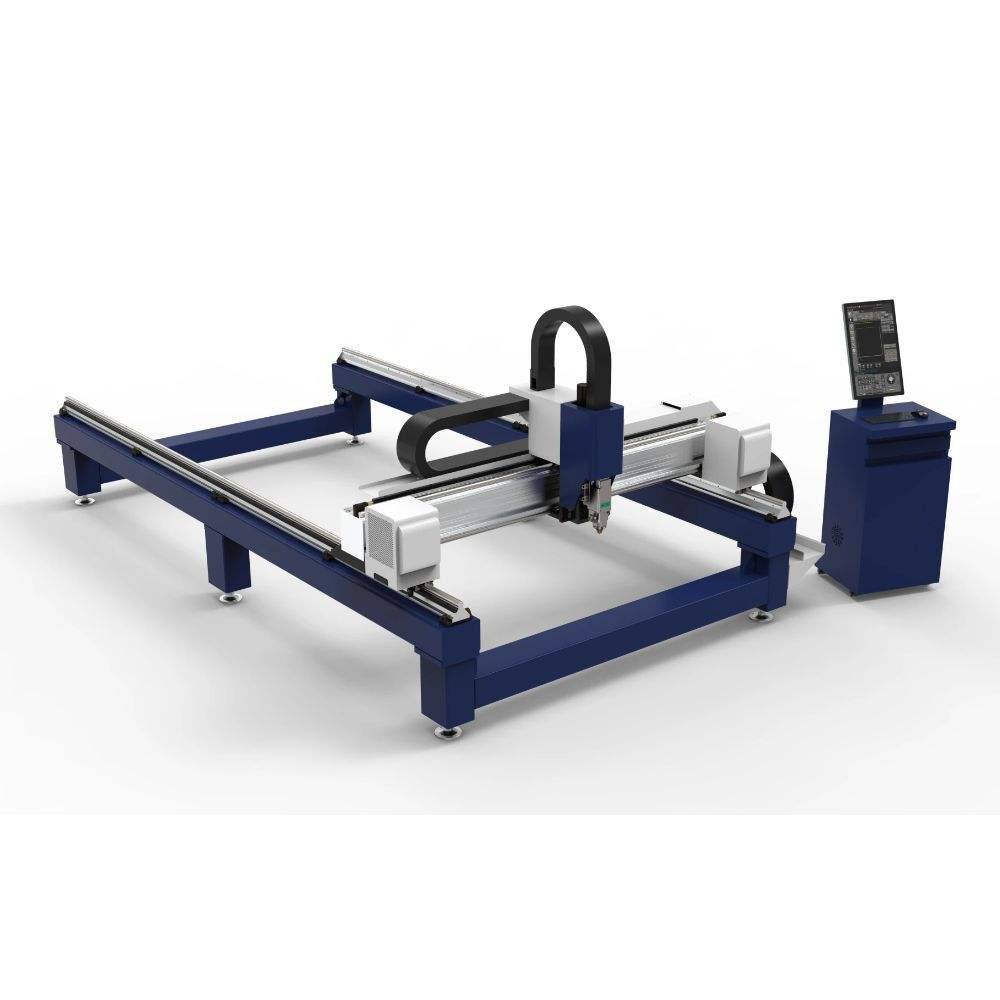
In high-speed laser cutting, the mechanical stability of the machine bed is the primary determinant of long-term accuracy. Unlike lighter tube-welded frames common in entry-level equipment, the 1.5kW Precision Laser System utilizes a Plate-welded Heavy Duty Bed. This structural choice is critical for the high-acceleration environments required in automotive production lines.
The bed is constructed from high-tensile carbon steel plates, often exceeding 12mm to 20mm in thickness. These plates are joined using a honeycomb-style internal reinforcement structure. This design provides several engineering advantages:
1. Thermal Stability: The mass of the heavy-duty bed acts as a thermal sink, absorbing the heat generated during continuous 24/7 operations in Leon’s varied climate. This prevents the frame from warping, which would otherwise lead to beam misalignment.
2. Vibration Damping: During high-speed X/Y axis transitions (reaching accelerations of 1.2G to 1.5G), the inertia can cause microscopic oscillations. A plate-welded structure possesses superior natural frequency characteristics, effectively damping these vibrations to ensure a smooth kerf surface on aluminum parts.
3. Stress Relief Processing: Each bed undergoes a rigorous heat-treatment process. After welding, the structure is placed in a high-temperature annealing furnace to eliminate internal residual stresses. This is followed by vibration aging and natural aging cycles. For the engineer, this means the machine maintains its ±0.03mm positioning accuracy for over a decade of use.
Optimizing 1.5kW Fiber Laser Parameters for Aluminum Alloys
Aluminum is notoriously difficult to process due to its high thermal conductivity and high reflectivity. However, the 1.5kW fiber laser wavelength (approximately 1.06μm) is absorbed much more efficiently by aluminum than the 10.6μm wavelength of legacy CO2 lasers.
When cutting automotive-grade aluminum, the 1.5kW power rating is the “sweet spot” for materials ranging from 0.5mm to 5.0mm. Engineering the cut requires a data-driven approach to gas dynamics and focal point positioning:
Assist Gas Selection: For a clean, oxide-free edge that is ready for welding (crucial for EV battery trays or structural brackets), Nitrogen (N2) is the standard. Operating at pressures between 12 and 18 bar, Nitrogen flushes the molten aluminum out of the kerf before it can react with atmospheric oxygen.
Focal Position Management: Aluminum reflects a significant portion of laser energy until a keyhole is established. The 1.5kW system utilizes an autofocus cutting head that adjusts the beam waist to a “negative focus” (below the material surface). This concentrates energy density to overcome the initial reflectivity of the alloy.
Speed vs. Quality Data:
– 1mm Aluminum: Cutting speeds can reach 25–30 m/min.
– 3mm Aluminum: Optimal speeds range from 4–6 m/min.
– 5mm Aluminum: Stable cutting is achieved at 1.2–1.8 m/min.
Precision Motion Control and Gantry Dynamics
The plate-welded bed supports a high-strength aviation-grade aluminum gantry. By pairing a heavy, stable base with a lightweight, rigid gantry, the system achieves the high “stiffness-to-mass” ratio required for precision paths. In Leon’s competitive automotive market, cycle time is as important as accuracy.
The motion system typically employs Japanese or European servo motors coupled with high-precision helical rack and pinion drives. For the automotive engineer, the focus is on the “Circular Interpolation” accuracy. When cutting holes for fasteners in aluminum chassis components, the roundness tolerance must be strictly maintained. The 1.5kW system’s control software compensates for “backlash” and “pitch error” in real-time, ensuring that a 10mm hole remains 10mm across thousands of repetitions.

Addressing the Reflective Beam Challenge
A significant risk in processing aluminum is “back-reflection.” If the laser beam reflects off the shiny aluminum surface and travels back into the fiber delivery cable, it can cause catastrophic damage to the laser source.
Modern 1.5kW systems engineered for the Leon market include multi-stage optical protection:
– Isolators: Built-in optical isolators prevent back-reflected light from entering the gain medium.
– Sensor Monitoring: Real-time monitoring of back-reflection levels allows the CNC controller to terminate the beam in milliseconds if a dangerous reflection threshold is met.
– Beam Shaping: Advanced collimation ensures the beam profile is optimized to penetrate the material quickly, minimizing the duration of the high-reflection phase during the initial pierce.
Integration into Leon’s Automotive Supply Chain
For factory owners in Leon, the 1.5kW Precision Laser System is not just a tool but a component of a larger Lean Manufacturing strategy. The ability to switch between different aluminum grades and thicknesses without changing tools (unlike mechanical presses) allows for “Just-In-Time” (JIT) production of small to medium batches.
Furthermore, the digital nature of the system allows for seamless integration with CAD/CAM software. Engineers can import DXF or STEP files directly from the design office to the factory floor, reducing the “Art-to-Part” time. In the context of Leon’s growing aerospace and EV clusters, this digital traceability is essential for ISO and IATF 16949 certifications.
Maintenance and Operational Longevity in Industrial Environments
The plate-welded heavy-duty bed requires minimal maintenance compared to other structural designs, but the precision components demand a disciplined schedule. In the dusty or high-temperature environments sometimes found in industrial parks in Guanajuato, the following protocols are recommended:
1. Lubrication Systems: Automatic central lubrication systems ensure that the rack, pinion, and linear guides are consistently oiled, preventing the abrasive aluminum dust from causing premature wear.
2. Dust Extraction: Aluminum dust is highly flammable and explosive (ATEX considerations). A high-volume dust extraction system with a specialized filtration unit is mandatory for safe operation.
3. Chiller Calibration: The 1.5kW laser source and the cutting head require precise temperature control. Dual-circuit water chillers must be maintained with deionized water and anti-corrosion additives to prevent scale buildup in the micro-channels of the laser head.
Conclusion: The Economic and Technical ROI
The 1.5kW Precision Laser System with a Plate-welded Heavy Duty Bed offers a compelling ROI for Leon’s automotive sector. By eliminating the need for expensive dies and reducing the scrap rate of high-cost aluminum alloys, factories can achieve break-even in a significantly shorter timeframe than with traditional methods.
From an engineering perspective, the rigidity of the plate-welded bed ensures that the precision measured on day one—specifically the ±0.02mm repeatability—remains consistent after years of three-shift operations. For the automotive factory owner, this translates to fewer rejected parts, higher throughput, and the technical flexibility to meet the evolving demands of the global automotive industry. As Leon continues to solidify its position as a manufacturing powerhouse, the adoption of such high-precision, structurally superior fiber laser systems will be the defining factor in maintaining a competitive edge.













