The industrial landscape of Tijuana has undergone a significant transformation, evolving from a traditional assembly hub into a sophisticated center for high-precision engineering and manufacturing. For elevator factory owners and engineers operating in this competitive corridor, the demand for high-quality stainless steel components has never been greater. The integration of a 20kW Fiber Laser Cutting Machine represents the current pinnacle of sheet metal fabrication technology, specifically engineered to meet the rigorous standards of the elevator industry.
This guide examines the technical architecture of 20kW fiber laser systems, with a specific focus on the structural advantages of plate-welded heavy-duty beds and the precision requirements for processing high-grade stainless steel.
The Strategic Importance of 20kW Power in Tijuana’s Manufacturing Sector
In the context of Tijuana’s “maquiladora” ecosystem, efficiency and material yield are the primary drivers of profitability. A 20kW fiber laser source is not merely about cutting thicker materials; it is about the radical increase in processing speeds for medium-thickness stainless steel (3mm to 12mm), which constitutes the bulk of elevator cabin and door construction.
At 20kW, the energy density at the focal point allows for “high-speed nitrogen cutting,” which eliminates oxidation and produces a mirror-like finish on the cut edge. This is critical for elevator manufacturers who require “ready-to-assemble” parts that do not necessitate secondary grinding or polishing. For an engineer, this translates to a significant reduction in man-hours and a streamlined production line.
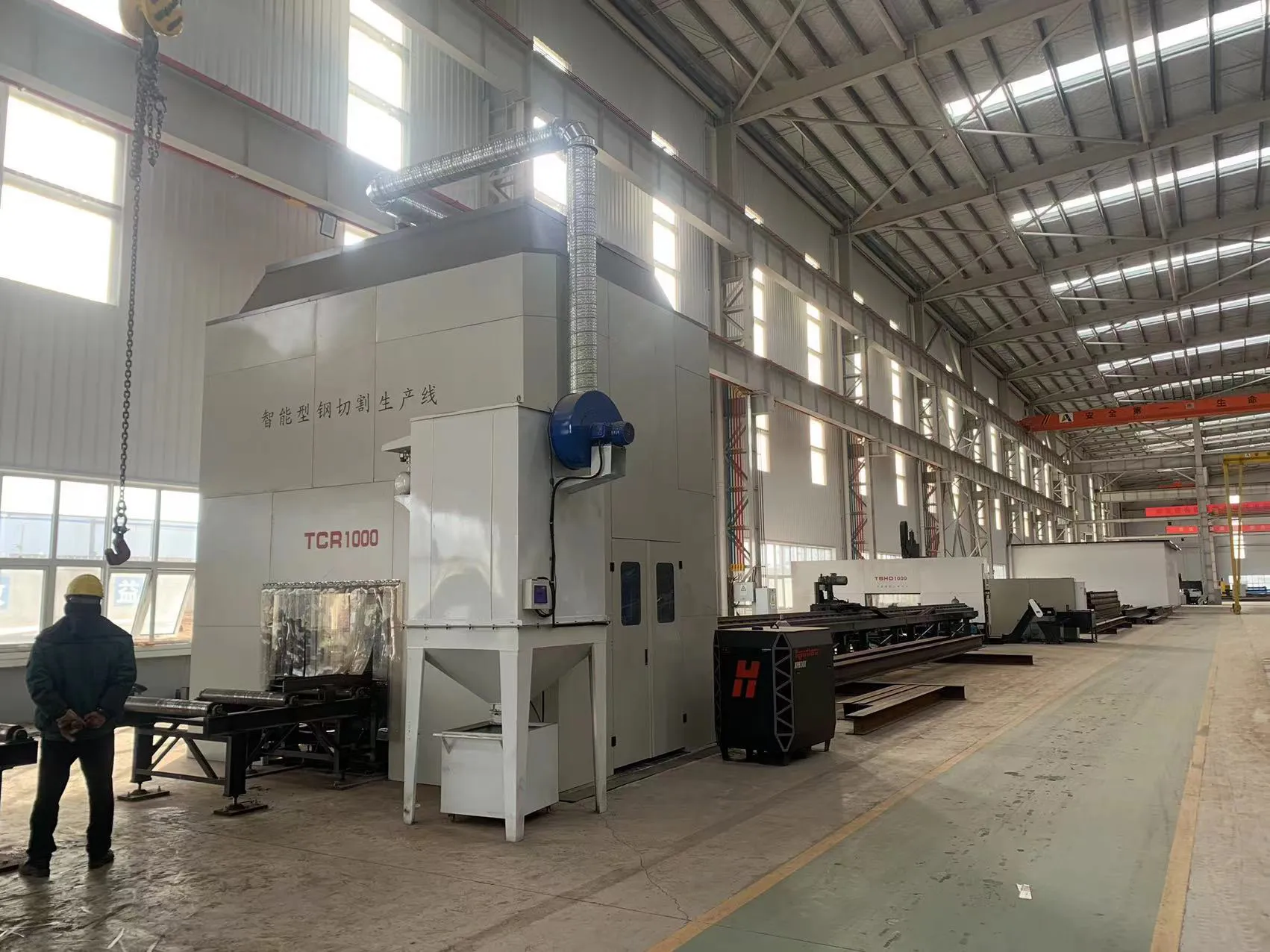
Engineering the Foundation: The Plate-welded Heavy Duty Bed
The performance of a 20kW laser is fundamentally limited by the stability of the machine tool. At such high power levels, the cutting head moves at extraordinary accelerations (often exceeding 2.0G). To maintain micron-level precision under these dynamic loads, the machine bed must possess superior vibration damping and thermal stability.
The plate-welded heavy-duty bed is engineered using high-tensile strength steel plates, typically ranging from 16mm to 20mm in thickness. Unlike lighter tube-welded frames, the plate-welded structure undergoes a rigorous manufacturing process:
1. Stress Relief Annealing: The entire bed is placed in a high-temperature electric furnace (reaching 600°C) to eliminate internal stresses generated during welding. This ensures that the bed will not deform over 20+ years of operation.
2. Vibration Aging: Following annealing, the bed undergoes vibratory stress relief to further stabilize the molecular structure of the steel.
3. Precision Machining: The guide rail and rack mounting surfaces are processed by large-scale five-axis gantry milling centers in a single setup, ensuring absolute parallelism and perpendicularity.
For elevator engineers, this structural integrity means that the large-format panels used for elevator doors (often 2.5 meters or longer) maintain consistent dimensions across the entire cutting area. There is no “tapering” of the cut or loss of accuracy at the extremities of the machine’s travel.
Stainless Steel Processing: Technical Advantages for Elevator Components
Elevator manufacturing relies heavily on Grade 304 and 316 stainless steel, often with brushed (No. 4) or mirrored finishes. The 20kW laser excels in these applications through several technical mechanisms:
High-Speed Air/Nitrogen Cutting: At 20kW, 3mm stainless steel can be cut at speeds exceeding 60 meters per minute. This high velocity minimizes the Heat Affected Zone (HAZ), preventing the warping of thin-gauge decorative panels.
Bright Surface Cutting: By optimizing the focal length and gas pressure, the 20kW system achieves “bright surface cutting” on stainless steel up to 20mm. This results in a smooth, burr-free edge that meets the aesthetic requirements of luxury elevator interiors.
Small Hole Ratio: Traditional lasers struggle with cutting small diameters in thick plates. The 20kW source allows for a 1:1 ratio (e.g., a 5mm hole in 5mm stainless steel) with perfect circularity, essential for bolt holes and mechanical fasteners in elevator structural frames.

Thermal Management and Dynamic Compensation
One of the greatest challenges in high-power laser cutting is thermal expansion. As the laser operates, the internal components and the material itself heat up. A professional-grade 20kW machine incorporates several engineering solutions to mitigate this:
– Z-Axis Follow-up System: A high-response capacitive sensor maintains a constant distance between the nozzle and the plate (within ±0.01mm), even if the stainless steel sheet has slight undulations.
– Active Cooling: Both the laser source and the cutting head utilize dual-circuit water cooling systems. For the Tijuana market, where ambient temperatures can fluctuate, industrial-grade chillers are mandatory to maintain a constant ±1°C variance.
– Intelligent Gas Control: Automated proportional valves adjust nitrogen or oxygen pressure in real-time based on the cutting speed and material thickness, preventing “burn-through” at corners where the machine decelerates.
Data-Driven Performance Metrics
To illustrate the technical leap, consider the following performance data comparing a standard 6kW system to the 20kW heavy-duty model for Stainless Steel (AISI 304):
– 3mm Thickness: 6kW operates at 15m/min; 20kW operates at 65m/min (433% increase).
– 10mm Thickness: 6kW operates at 2.5m/min; 20kW operates at 12m/min (480% increase).
– 20mm Thickness: 6kW struggles with edge quality; 20kW maintains a “bright surface” at 2.2m/min.
For an elevator factory producing 50 cabins per month, this speed differential allows for the consolidation of three older machines into a single 20kW unit, drastically reducing floor space requirements and energy consumption per part.
Operational Integration in the Tijuana Market
Tijuana’s proximity to the United States necessitates compliance with international quality standards (ISO/ASTM). Implementing a 20kW fiber laser allows local manufacturers to compete directly with US-based fabricators by offering shorter lead times and equivalent precision.
Furthermore, the “Heavy Duty” nature of the bed is particularly relevant for the region’s power grid and industrial environment. The mass of the plate-welded bed acts as a mechanical buffer against external vibrations from nearby heavy machinery, common in dense industrial zones like Otay Mesa.
Conclusion for Elevator Engineers and Factory Owners
Investing in a 20kW Fiber Laser Cutting Machine with a plate-welded heavy-duty bed is a strategic engineering decision rather than a simple equipment purchase. For the elevator industry, where the intersection of structural safety and aesthetic perfection is paramount, this technology provides the necessary tools to excel.
The combination of high-wattage throughput and a stabilized mechanical foundation ensures that every stainless steel panel, bracket, and decorative inlay is produced with absolute repeatability. As Tijuana continues to grow as a high-tech manufacturing hub, the adoption of such high-precision instruments will be the defining factor for companies seeking to lead the market in quality and operational efficiency.
By focusing on the structural science of the machine bed and the physics of high-power laser-material interaction, engineers can ensure an ROI that is measured not just in speed, but in the long-term reliability and precision of their production output.













