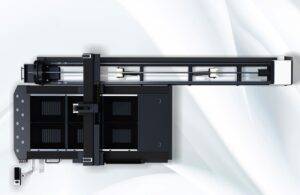
Introduction to 6kW Tube laser cutting in Tijuana’s Industrial Sector
The manufacturing landscape in Tijuana, Mexico, has undergone a radical transformation over the last decade. As a primary hub for the “maquiladora” industry, the city has shifted from simple assembly to high-tech precision engineering. At the forefront of this evolution is the implementation of the 6kW tube laser cutter. This specific power rating—6,000 watts—represents a critical threshold for industrial efficiency, particularly when processing challenging materials like galvanized steel. For engineering firms and manufacturing plants operating near the border, the ability to perform high-speed, high-accuracy laser cutting on tubular profiles is no longer a luxury but a competitive necessity.
A 6kW fiber laser source provides the optimal balance between capital investment and operational throughput. In the context of Tijuana’s diverse industrial base—spanning aerospace, medical devices, and automotive components—the tube laser cutter offers a versatile solution for complex geometries that traditional sawing, drilling, or milling processes simply cannot match. By integrating CNC controls with high-power fiber optics, manufacturers can achieve tolerances within microns while significantly reducing the secondary finishing required for galvanized components.

The Technical Superiority of 6kW Fiber Sources
The transition from CO2 lasers to fiber lasers has redefined the economics of laser cutting. A 6kW fiber laser operates at a wavelength of approximately 1.06 microns, which is more readily absorbed by metals compared to the 10.6 microns of CO2 lasers. This absorption efficiency is particularly beneficial when cutting galvanized steel, where the reflective nature of the zinc coating can sometimes interfere with lower-power beams. At 6kW, the energy density at the focal point is sufficient to instantaneously vaporize the material, creating a narrow kerf and a minimal heat-affected zone (HAZ).
For tube processing, the 6kW source allows for significantly higher feed rates on wall thicknesses ranging from 1mm to 10mm. In Tijuana’s fast-paced production environments, where “Just-In-Time” (JIT) delivery to US-based partners is standard, the speed of the 6kW laser ensures that high-volume orders for structural tubing are met without bottlenecks. Furthermore, the fiber laser’s solid-state design means fewer moving parts and no laser gas requirement, leading to lower maintenance costs and higher uptime.
Processing Galvanized Steel: Engineering Challenges and Solutions
Galvanized steel is a staple in Tijuana’s construction and automotive sectors due to its superior corrosion resistance. However, laser cutting galvanized material introduces unique engineering challenges, primarily due to the zinc coating. Zinc has a much lower melting point than the underlying steel. During the cutting process, the zinc can vaporize and interfere with the laser beam or create turbulence in the assist gas flow, potentially leading to dross (slag) accumulation on the bottom of the cut.
Optimizing Assist Gas for Galvanized Profiles
To achieve a clean, burr-free finish on galvanized tubes, the choice of assist gas is paramount. While oxygen can be used for thicker carbon steels to add exothermic energy, it often results in an oxidized edge that requires cleaning before welding or painting. In the professional engineering context of Tijuana’s export-grade manufacturing, Nitrogen is the preferred assist gas. High-pressure Nitrogen (often exceeding 15-20 bar) acts as a cooling agent and a mechanical force to blow the molten zinc and steel out of the kerf before it can re-solidify.
A 6kW system provides the necessary “push” to maintain high speeds with Nitrogen. This results in a bright, weld-ready edge. For manufacturers in Tijuana serving the medical or food processing industries, where hygiene and coating integrity are vital, the precision of a 6kW Nitrogen-assisted cut ensures that the protective properties of the galvanization remain intact as close to the cut edge as possible.

Managing Zinc Fumes and Environmental Safety
Safety is a critical component of industrial operations in Tijuana, governed by both Mexican STPS regulations and international ISO standards. Laser cutting galvanized steel produces zinc oxide fumes, which are toxic if inhaled. A 6kW tube laser system must be equipped with a high-capacity dust extraction and filtration unit. Modern machines feature zoned extraction, where the vacuum force is concentrated specifically on the area of the tube currently being cut. This not only protects the operator but also prevents the accumulation of fine dust on the machine’s optical components and mechanical ways, ensuring long-term reliability.
Tijuana’s Role as a Hub for Advanced Tube Fabrication
Tijuana’s geographic proximity to California makes it a strategic location for “nearshoring.” Companies across the border demand high-quality components with short lead times. The 6kW tube laser cutter is the engine behind this capability. Unlike flat-sheet lasers, tube lasers handle round, square, rectangular, and even open profiles like C-channels or L-angles. This versatility is essential for the structural frames used in the solar energy sector, a growing industry in the Baja California region.
Integration with CAD/CAM and Industry 4.0
A 6kW tube laser in a professional Tijuana shop is rarely a standalone unit. It is typically integrated into a digital workflow. Engineers use specialized CAD/CAM software to design complex interlocking joints, tabs, and slots. This “nesting” software optimizes the layout of parts on a standard 6-meter or 9-meter tube to minimize scrap. For galvanized steel, which has a higher material cost than raw carbon steel, reducing waste by even 5% can result in thousands of dollars in annual savings.
Furthermore, many shops in Tijuana are adopting Industry 4.0 practices. The 6kW laser can provide real-time data on gas consumption, power usage, and cutting time per part. This data allows production managers to quote more accurately and identify bottlenecks in the fabrication process. When a 6kW laser is paired with automated loading and unloading systems, it can operate “lights-out,” significantly increasing the output of the facility without increasing labor costs.
Maintenance and Operational Longevity in Coastal Environments
Operating high-precision laser cutting equipment in Tijuana presents specific environmental challenges, notably the saline air from the Pacific Ocean. Salt-induced corrosion can affect both the mechanical rails and the electronic cabinets of a fiber laser. Engineering best practices for 6kW systems in this region include the use of climate-controlled enclosures for the laser source and the chiller. Regular maintenance schedules must include the inspection of bellows and the lubrication of linear guides to prevent abrasive wear.
The Importance of Chiller Stability
A 6kW fiber laser generates significant heat. The chiller unit is the heart of the system’s stability. In the fluctuating temperatures of Tijuana, a dual-circuit chiller is required to maintain the laser source and the cutting head at precise temperatures. Any deviation can cause the laser beam to “drift,” resulting in inconsistent cut quality on galvanized tubes. High-quality chillers also feature deionization filters to ensure the cooling water does not conduct electricity, which is vital for the safety of the 6kW fiber modules.
Economic Impact: ROI for Tijuana Manufacturers
The investment in a 6kW tube laser cutter is significant, but the Return on Investment (ROI) is often realized within 18 to 24 months for high-volume shops. By replacing multiple traditional machines (saws, drills, notchers) with a single laser cutting center, a manufacturer reduces floor space requirements and labor overhead. In Tijuana, where industrial real estate in zones like Otay Mesa or El Florido is at a premium, this footprint optimization is a major financial advantage.
Moreover, the ability to offer “value-added” services—such as etching part numbers directly onto galvanized tubes or creating complex decorative patterns—allows Tijuana-based shops to move up the value chain. Instead of competing on price as a commodity supplier, they become essential engineering partners for OEMs (Original Equipment Manufacturers) in the United States and Canada.
Conclusion: The Future of Metal Fabrication in Baja California
As we look toward the future of manufacturing in Mexico, the role of high-power fiber lasers will only grow. The 6kW tube laser cutter represents the current “gold standard” for processing galvanized steel, providing the speed, precision, and reliability required by modern industry. For the engineering community in Tijuana, mastering this technology is the key to maintaining the region’s status as a global leader in manufacturing excellence. By understanding the nuances of laser-material interaction, optimizing assist gas parameters, and leveraging the power of CNC automation, Tijuana’s fabricators are well-positioned to tackle the most demanding projects in the binational market.
Whether it is for the structural skeleton of a new medical facility or the chassis of an electric vehicle, the 6kW tube laser ensures that every cut is precise, every joint is perfect, and every project is delivered to the highest engineering standards.