
Introduction to High-Power Tube Laser Technology in Leon’s Industrial Sector
The industrial landscape of Leon, Guanajuato, has undergone a significant transformation over the last decade. Historically known for its leather and footwear industries, the region has evolved into a powerhouse for automotive, aerospace, and structural engineering. At the heart of this evolution is the adoption of advanced fiber laser technology. The 6kW tube laser cutter represents a critical milestone in this transition, offering the perfect balance of raw power, precision, and operational efficiency required to meet the stringent demands of modern manufacturing.
For engineers and plant managers in Leon, the 6kW fiber source is often considered the “sweet spot” for tube processing. It provides sufficient energy to penetrate thick-walled structural sections while maintaining the high-speed dynamics necessary for thin-walled components used in automotive exhausts and furniture frames. When applied to galvanized steel—a material ubiquitous in the Bajío region’s construction and automotive sectors—the 6kW laser cutting process requires a nuanced understanding of thermodynamics and material science to ensure clean edges and structural integrity.
Why 6kW is the Industrial Standard for Leon’s Manufacturers
In the competitive market of Leon, throughput is as important as quality. A 6kW tube laser cutter offers a substantial leap in productivity compared to lower-power 2kW or 3kW alternatives. The increased power density allows for significantly higher feed rates, which reduces the cost-per-part and enables local shops to compete on a global scale.
Power Density and Cutting Speeds
The primary advantage of a 6kW system is its ability to maintain high cutting speeds across a wide range of wall thicknesses. In tube processing, where the geometry of the workpiece is constantly changing relative to the laser head, the ability to maintain a stable melt pool at high speeds is vital. For galvanized steel, the 6kW source allows for the use of high-pressure nitrogen as an assist gas, which effectively “blows away” the molten metal and vaporized zinc before it can adhere to the cut edge, resulting in a burr-free finish that requires no secondary processing.
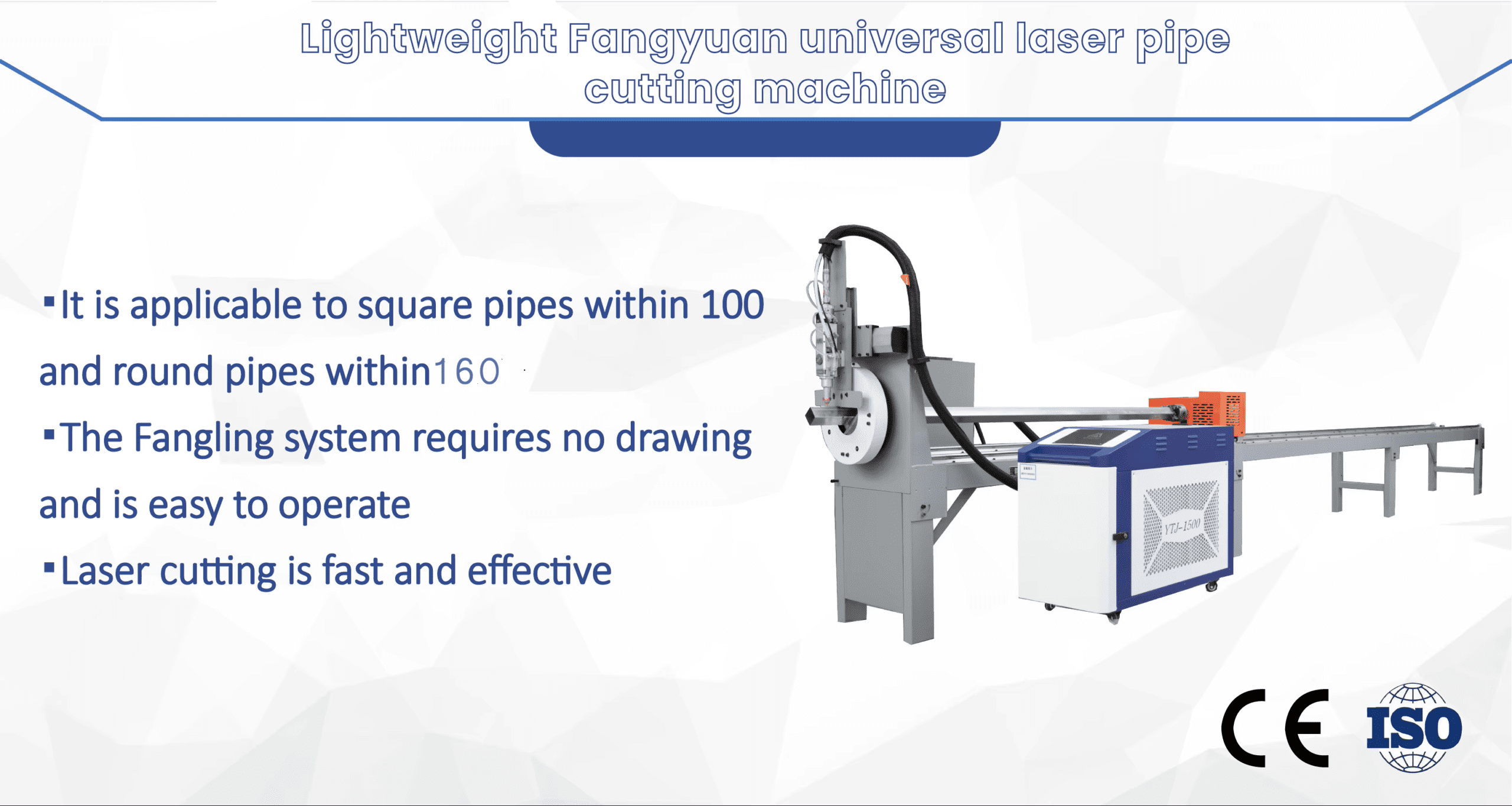
Versatility Across Profiles
Leon’s diverse industrial base requires machines that can handle more than just round or square tubing. Modern 6kW systems are equipped with advanced CNC controllers capable of processing C-channels, H-beams, and custom extruded profiles. This versatility is essential for Tier 2 automotive suppliers in the region who may need to switch between structural chassis components and intricate interior brackets within a single shift.
Navigating the Challenges of Galvanized Steel
Galvanized steel is preferred for its corrosion resistance, but it presents unique challenges during the laser cutting process. The zinc coating, which protects the underlying steel, has a much lower melting and boiling point than the iron base. This disparity can lead to several processing issues if not managed correctly by the operator and the machine’s software.
Managing Zinc Volatilization
When the laser beam strikes galvanized steel, the zinc layer vaporizes almost instantaneously. This vapor can create a “cloud” that interferes with the laser beam’s focus and can even splash back onto the laser head’s protective window. In a 6kW system, the high energy density helps to pierce through this vapor layer more effectively than lower-power machines. However, it is crucial to use specialized nozzles and optimized gas flow parameters to ensure the zinc vapor is directed away from the optics.
Gas Selection: Nitrogen vs. Oxygen
For most galvanized applications in Leon’s metalworking shops, Nitrogen is the preferred assist gas. Using high-pressure Nitrogen prevents the oxidation of the steel edge and helps flush the vaporized zinc out of the kerf. This results in a bright, clean cut that is immediately ready for welding or painting. While Oxygen can be used for thicker mild steel tubes to increase cutting speed through an exothermic reaction, it is generally avoided with galvanized material because it can lead to excessive dross and a charred edge where the zinc has reacted with the oxygen.

Technical Specifications and Machine Architecture
A 6kW tube laser cutter is a complex assembly of high-precision components. For manufacturers in Leon looking to invest, understanding the machine architecture is key to ensuring long-term ROI.
Chuck Systems and Centering Accuracy
The mechanical heart of the tube laser is the chuck system. High-end 6kW machines typically feature pneumatic or electric four-claw chucks that provide self-centering capabilities. This is particularly important for tubes that may have slight deviations in straightness or “bow.” In Leon’s high-volume production environments, the speed at which a chuck can grip and release a tube directly impacts the overall cycle time. Advanced systems now include “real-time centering” where sensors detect the tube’s position and adjust the cutting path millisecond by millisecond to ensure holes are perfectly centered even on imperfect material.
The Fiber Laser Source and Cutting Head
The 6kW fiber source—often manufactured by industry leaders like IPG or Raycus—delivers the beam via a flexible fiber optic cable to the cutting head. The cutting head itself must be equipped with autofocus sensors. Because tubes can vibrate or shift during the rotation, the autofocus system must be incredibly responsive to maintain the correct focal point relative to the material surface. This is especially critical when laser cutting galvanized steel, as any fluctuation in focal height can result in poor edge quality or a “lost cut.”
Local Integration: Leon’s Industrial Ecosystem
Leon is strategically positioned within the “Diamond of Mexico,” making it a logistics hub for the automotive corridor. The implementation of 6kW tube laser cutters here isn’t just about the machine; it’s about the integration into a larger supply chain.
For example, many structural steel suppliers in Leon are now offering “kit-ready” components to construction firms. Instead of sending raw tubes to a job site to be measured, cut, and drilled manually, the 6kW laser allows them to deliver pre-cut, notched, and tabbed tubes that snap together like a puzzle. This “tab-and-slot” design philosophy, enabled by the precision of laser cutting, reduces assembly time on-site by up to 50% and eliminates the need for expensive jigs.
Furthermore, the local availability of technical support and industrial gases (Nitrogen and Oxygen) in Guanajuato makes Leon an ideal location for high-power laser operations. Professional engineering firms in the city are increasingly focusing on “Design for Laser Manufacturing” (DFLM), helping local companies optimize their parts for the 6kW process.
Maintenance Protocols for Longevity
To maintain the precision of a 6kW tube laser cutter, especially when processing galvanized steel, a rigorous maintenance schedule is mandatory. The zinc dust generated during cutting is conductive and abrasive; if not properly managed, it can wreak havoc on the machine’s electronic and mechanical components.
Dust Extraction and Filtration
A high-capacity dust extraction system is non-negotiable. When laser cutting galvanized material, the fumes contain zinc oxide, which is toxic if inhaled. The extraction system must have high-efficiency particulate air (HEPA) filters and be powerful enough to capture fumes at the point of the cut. Operators in Leon should check the filter pressure daily and ensure that the extraction ducting is cleaned regularly to prevent the buildup of flammable residues.
Optical Care
The protective window of the cutting head is a consumable item, but its lifespan can be extended through proper settings. When cutting galvanized steel, the risk of “back-splash” is higher. Operators must ensure that the “pierce” parameters are finely tuned—using a multi-stage piercing process—to minimize the amount of molten metal ejected toward the lens. Regular inspection of the optics under a microscope can identify micro-pitting before it leads to a catastrophic lens failure.
Economic Impact and ROI for Leon Businesses
Investing in a 6kW tube laser cutter is a significant capital expenditure, but the ROI is driven by the elimination of secondary operations. Traditional tube processing involved sawing, drilling, milling, and deburring. A 6kW laser performs all these tasks in a single setup, often in a fraction of the time.
For a metal fabricator in Leon, this means the ability to take on more complex projects with shorter lead times. The precision of the 6kW laser also means less material waste. Advanced nesting software can optimize the layout of parts on a standard 6-meter or 12-meter tube, reducing the “remnant” or scrap piece to just a few centimeters. In the context of rising steel prices, these material savings contribute directly to the bottom line.
Conclusion: The Future of Metal Fabrication in Leon
The 6kW tube laser cutter is more than just a tool; it is a catalyst for industrial sophistication in Leon. By mastering the nuances of laser cutting galvanized steel, local manufacturers can elevate their production standards to meet international benchmarks. As the automotive and construction sectors in the Bajío region continue to demand lighter, stronger, and more complex tubular structures, the 6kW fiber laser will remain the cornerstone of the modern fabrication shop.
For engineers and business owners in Leon, the path forward involves embracing these high-power systems, investing in operator training, and leveraging the precision of fiber laser technology to drive innovation. Whether it is for structural frames, automotive components, or architectural features, the 6kW tube laser cutter provides the speed, power, and accuracy to turn complex designs into reality with unprecedented efficiency.
















