
Engineering Excellence: The 6kW Fiber Laser Integration for Brass Tube Processing in the León Automotive Sector
The industrial landscape of León, Guanajuato, stands as a cornerstone of the Mexican automotive corridor. For Tier 1 and Tier 2 suppliers, the transition toward high-efficiency manufacturing is no longer optional; it is a prerequisite for global competitiveness. The introduction of the 6kW Tube Laser Cutter, specifically optimized for non-ferrous alloys like brass, represents a significant leap in production capability. This guide examines the structural engineering of the tube-welded standard bed and the technical nuances of high-precision brass fabrication within an automotive context.
The Structural Foundation: Engineering the Tube-Welded Standard Bed
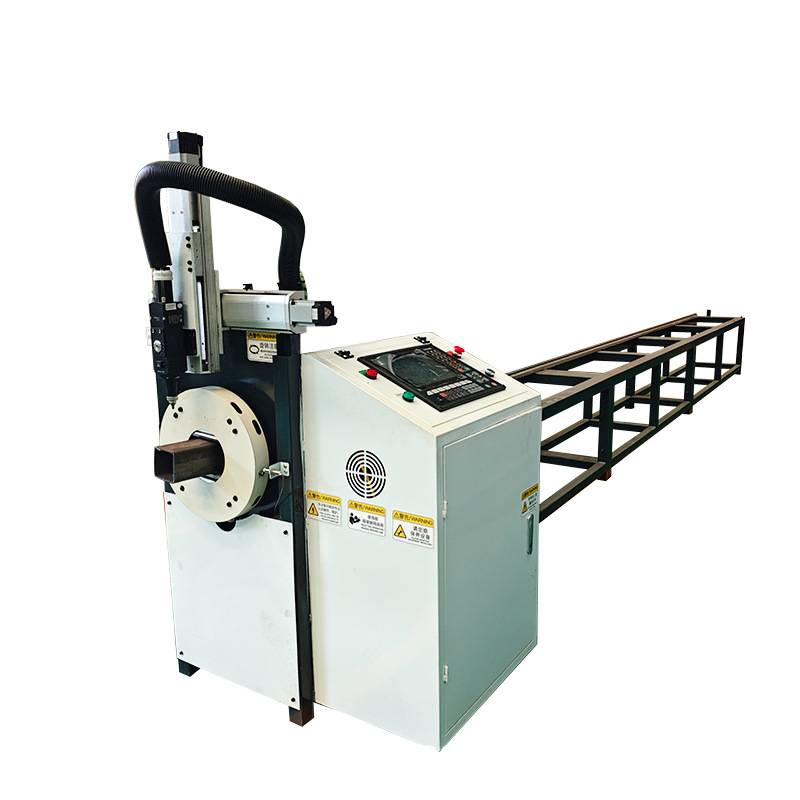
In high-power laser applications, particularly at the 6kW threshold, the structural integrity of the machine bed is the primary determinant of long-term accuracy. Unlike lighter alternatives, the tube-welded standard bed is engineered to withstand the dynamic forces generated by high-speed acceleration and deceleration of the cutting head.
The construction process involves high-quality carbon steel rectangular tubes, which are welded to form a rigid lattice. This design provides a superior strength-to-weight ratio compared to solid plate welding, allowing for faster G-code execution without compromising stability. From an engineering perspective, the critical advantage lies in the vibration-damping characteristics of the hollow-section geometry.
To ensure lifetime precision, these beds undergo a rigorous stress-relief process. After welding, the frame is subjected to high-temperature annealing (typically at 600°C) followed by natural aging. This eliminates internal residual stresses that could otherwise lead to microscopic deformations over years of operation. For automotive factories in León, where production cycles are continuous, this structural reliability ensures that a part cut in year five maintains the same ±0.03mm tolerance as a part cut on day one.

Optimizing 6kW Fiber Technology for Brass Processing
Brass, while essential for automotive electrical components, fuel systems, and decorative trims, presents unique challenges for laser systems due to its high thermal conductivity and reflectivity. A 6kW fiber laser source provides the necessary energy density to overcome the “reflection barrier” inherent in yellow metals.
At lower power levels, the back-reflection of the laser beam can damage the optical resonators. However, modern 6kW systems utilize advanced optical isolators and beam modulation. The 1.06-micron wavelength of the fiber laser is absorbed more efficiently by brass than the 10.6-micron wavelength of traditional CO2 lasers. This efficiency allows for significantly higher feed rates. For instance, a 6kW system can process 3mm brass tubing at speeds exceeding 8 meters per minute, depending on the complexity of the geometry.
The “Standard Bed” configuration facilitates consistent beam delivery across the entire 6-meter or 9-meter tube length. By maintaining a constant focal point through auto-focus cutting heads, the machine compensates for any slight material irregularities, ensuring a dross-free finish that eliminates the need for secondary deburring processes.
Automotive Applications and Precision Requirements
In the León automotive cluster, precision is measured in microns. The 6kW tube laser is designed to meet the rigorous standards of components such as:
1. Heat Exchanger Manifolds: Requiring complex hole patterns in brass tubing to facilitate fluid dynamics.
2. Fuel Line Connectors: Where airtight seals depend on the perpendicularity of the cut.
3. Electrical Busbars: Large-diameter brass tubes used in EV battery cooling systems.
The machine’s pneumatic chuck system plays a vital role here. By utilizing a four-point self-centering mechanism, the system ensures that thin-walled brass tubes—which are prone to deformation under excessive clamping force—are held securely yet gently. The integration of “Real-time Path Compensation” allows the laser to adjust for tube “bow” or “twist,” which is common in bulk-sourced brass materials.
Technical Data: Cutting Performance and Gas Dynamics
The choice of assist gas is critical when engineering the cutting process for brass. While oxygen can be used to increase speed through an exothermic reaction, it often leaves an oxide layer that interferes with subsequent brazing or welding.
For high-precision automotive components, nitrogen is the preferred assist gas. Operating at pressures between 12 and 18 bar, nitrogen acts as a cooling agent and flushes the molten brass out of the kerf instantly. This results in a “bright” cut edge. Data-driven analysis shows that at 6kW, the transition from nitrogen to air-assist (for cost-saving) is viable for non-critical components up to 4mm thickness, provided the compressor system can maintain a stable 20-bar delivery.
Operational Efficiency in the León Industrial Context
The León market is characterized by a demand for high throughput and rapid ROI. The 6kW Tube Laser Cutter addresses these needs through several integrated technologies:
1. Automatic Nesting Software: This reduces material waste—a critical factor given the high market price of brass. Engineers can achieve up to 95% material utilization by nesting complex shapes within the tube’s surface area.
2. Rapid Piercing Technology: The 6kW source allows for “Flash Piercing,” reducing the time spent on each hole by up to 40% compared to 3kW systems. Over a production run of 10,000 units, this equates to hundreds of hours in saved machine time.
3. Low Maintenance Requirements: The fiber laser source has a diode life exceeding 100,000 hours. For a factory in León operating on two shifts, this represents over 15 years of reliable service with minimal optical alignment required.
Safety and Environmental Engineering
Processing brass at high power levels generates specific metal particulates. The 6kW system is equipped with a zoned dust extraction system. As the laser moves along the tube-welded bed, the suction follows the cutting head, ensuring that fumes are captured at the source. This is essential for compliance with Mexican environmental regulations (NOM) and for protecting the health of the machine operators.
Furthermore, the fully enclosed cabinet design protects workers from both the class 4 laser radiation and the high-frequency noise generated during high-pressure nitrogen cutting. For automotive plants aiming for ISO 45001 certification, these safety features are non-negotiable.
Strategic Investment for León Manufacturers
For factory owners in León, the decision to invest in a 6kW tube laser cutter with a tube-welded standard bed is a move toward vertical integration. By bringing brass tube processing in-house, companies can reduce lead times from weeks to hours and gain total control over quality.
The technical synergy between the high-rigidity bed and the high-power fiber source allows for a level of versatility that was previously unattainable. Whether processing thin-walled brass for decorative interior accents or heavy-walled tubing for hydraulic systems, the 6kW system provides the dynamic range required for a modern automotive production line.
In conclusion, the 6kW Tube Laser Cutter is not merely a cutting tool; it is a high-precision instrument engineered for the specific rigors of the automotive industry. By focusing on structural stability through the tube-welded bed and leveraging the physics of 6kW fiber technology for brass, manufacturers in León can position themselves at the forefront of the global supply chain, delivering components that meet the highest standards of accuracy, efficiency, and durability.
















