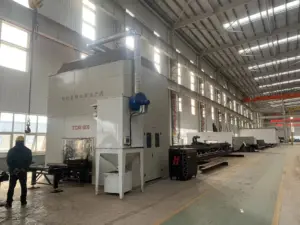
Introduction to 6kW Tube laser cutting in Monterrey’s Industrial Sector
The industrial landscape of Monterrey, Nuevo León, has long been the heartbeat of Mexican manufacturing. As the city evolves into a global hub for automotive, aerospace, and home appliance production, the demand for high-precision component fabrication has reached unprecedented levels. At the center of this technological shift is the 6kW tube laser cutting system, a powerhouse of efficiency designed to handle the rigorous demands of modern engineering.
For manufacturers in Monterrey—ranging from Tier 1 automotive suppliers in Santa Catarina to structural steel fabricators in Apodaca—the transition to high-power fiber laser technology is no longer optional. The 6kW threshold represents a critical “sweet spot” in laser cutting capability. it provides the necessary power density to process non-ferrous metals like aluminum alloy with high speed and exceptional edge quality, while maintaining a lower operational cost compared to legacy CO2 systems.
The Strategic Importance of Monterrey’s Manufacturing Hub
Monterrey’s proximity to the United States border and its robust infrastructure make it a primary destination for “nearshoring.” This economic trend requires local shops to adopt international standards of precision. In the context of tube and pipe processing, traditional methods like sawing, drilling, and milling are being replaced by integrated laser cutting workflows. A 6kW fiber laser allows a single machine to perform multiple operations in one pass, significantly reducing lead times and labor costs for the region’s competitive export market.
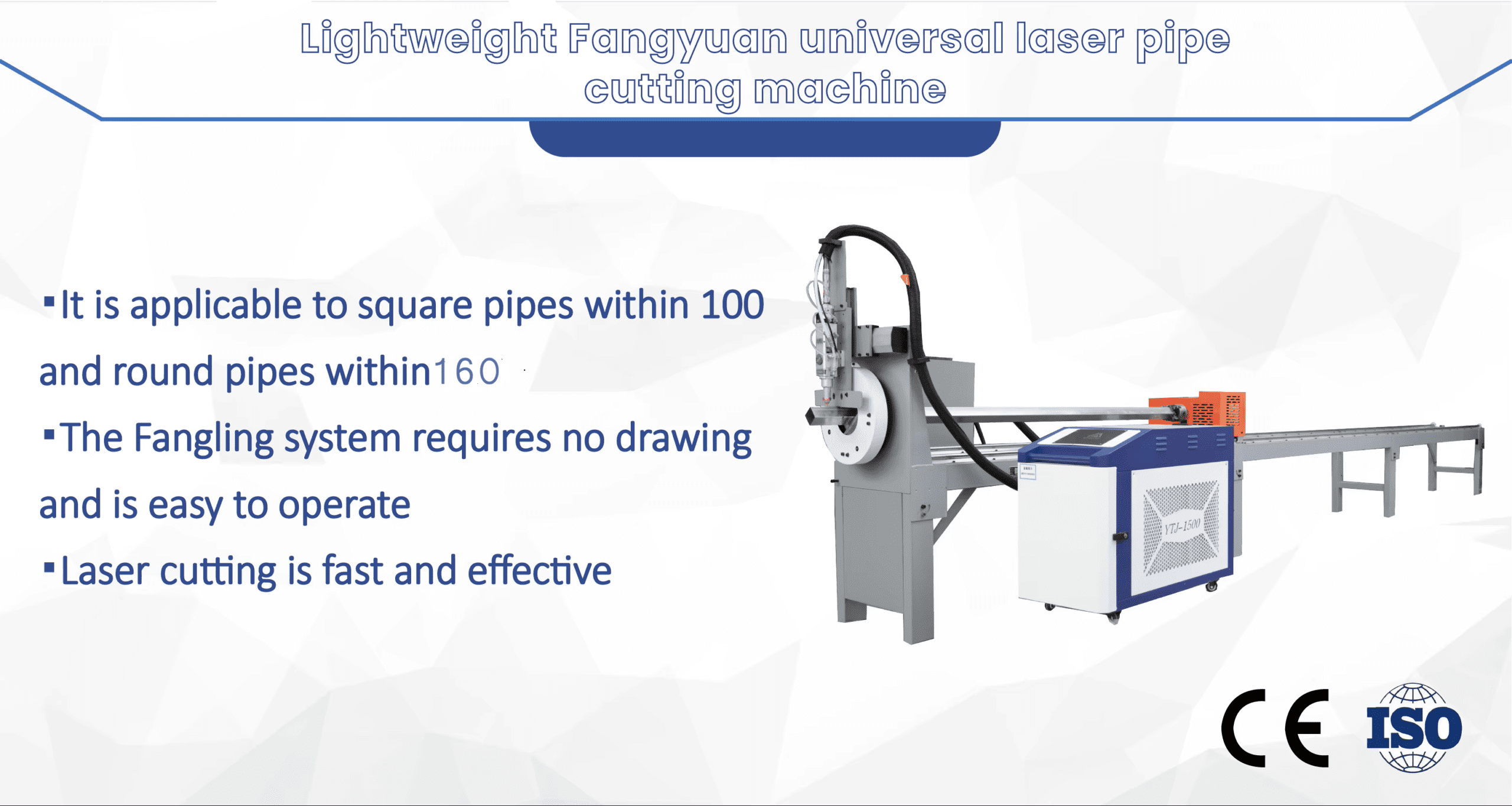
Technical Capabilities of 6kW Fiber Lasers
The 6kW fiber laser is a sophisticated tool that utilizes a solid-state laser source. Unlike CO2 lasers, which use a gas mixture and mirrors, fiber lasers deliver the beam through a flexible fiber optic cable. This results in a much smaller spot size and higher energy concentration.
Power Density and Material Interaction
At 6,000 watts, the laser cutting head generates an immense amount of energy focused into a diameter often less than 0.1mm. This high power density is essential for aluminum alloy processing. Aluminum is naturally reflective and a highly efficient thermal conductor. To successfully cut it, the laser must deliver enough energy to instantly vaporize the metal before the heat can dissipate into the surrounding material. The 6kW power level ensures that the “piercing” phase is nearly instantaneous, preventing the back-reflection that can damage lower-powered laser sources.
Processing Aluminum Alloys: Overcoming Reflectivity
One of the historical challenges in laser cutting was the risk of “back-reflection” when processing polished aluminum. The 1.06-micron wavelength of a fiber laser is absorbed much more readily by aluminum than the 10.6-micron wavelength of a CO2 laser. With 6kW of power, the machine can maintain a stable “keyhole” during the cut, ensuring that the energy is trapped within the kerf rather than being reflected back into the optics. This allows for the continuous processing of 6061-T6, 7075, and 5052 alloys without the risk of equipment failure.
Aluminum Alloy Specifications and Behavior
Aluminum is prized in Monterrey’s aerospace and automotive sectors for its high strength-to-weight ratio and corrosion resistance. However, from a fabrication standpoint, it requires specific parameters to achieve a burr-free finish.
Common Alloys: 6061, 6063, and 5052
Most tube laser cutting applications in Northern Mexico involve 6000-series aluminum.
– **6061-T6:** Frequently used for structural frames and automotive chassis. It is highly weldable but requires precise heat control during laser cutting to avoid weakening the tempered state.
– **6063:** Common in architectural applications and HVAC systems. Its excellent extrudability makes it a staple for complex tube profiles.
– **5052:** Often found in fuel tanks and marine applications due to its superior corrosion resistance.
A 6kW system can comfortably process these alloys in wall thicknesses ranging from 1mm up to 12mm or more, depending on the assist gas and nozzle configuration.
Thermal Conductivity and Heat Affected Zone (HAZ)
Because aluminum conducts heat so rapidly, a slower laser cutting speed can result in a wide Heat Affected Zone (HAZ), which may lead to material warping or loss of structural integrity. The 6kW laser mitigates this by increasing the feed rate. By moving the beam faster across the tube surface, the heat is concentrated only at the point of the cut, leaving the rest of the tube cool and dimensionally stable. This is particularly vital for thin-walled tubes used in EV (Electric Vehicle) battery trays, where tolerances are measured in microns.

Operational Optimization for High-Volume Production
To maximize the ROI of a 6kW tube laser in a high-demand environment like Monterrey, operators must focus on gas dynamics and software integration.
Assist Gas Selection: Nitrogen vs. Compressed Air
The choice of assist gas is the most significant factor in the final edge quality of aluminum laser cutting.
– **Nitrogen:** This is the industry standard for high-quality aluminum processing. Nitrogen acts as a mechanical shroud, blowing away the molten metal without allowing it to oxidize. The result is a shiny, weld-ready edge. For 6kW systems, high-pressure nitrogen (typically 15-20 bar) is required to maintain speed.
– **Oxygen:** Generally avoided for aluminum as it creates a heavy oxide layer on the cut surface, which must be mechanically removed before welding.
– **Compressed Air:** With the high power of a 6kW source, many shops in Monterrey are moving toward ultra-dry, high-pressure compressed air. While it introduces a slight amount of oxidation, the cost savings over bottled nitrogen are substantial, and the speed remains high for non-critical structural components.
Precision Nesting and Material Utilization
Advanced CAD/CAM software is the brain behind the 6kW tube laser. In Monterrey’s high-volume shops, material waste is a significant cost driver. Modern nesting algorithms for tube cutting allow for “common line cutting,” where two parts share a single cut path. Additionally, the software can manage complex “fish-mouth” joints and interlocking tabs, which eliminates the need for manual jigging during the welding process. This “Design for Manufacturing” (DFM) approach is what allows local firms to compete with global manufacturers.
Applications in Monterrey’s Key Industries
The versatility of the 6kW tube laser makes it indispensable across several local sectors.
Automotive and EV Manufacturing
With the arrival of major EV players in the region, the demand for lightweight aluminum tubing has surged. 6kW lasers are used to cut crash cans, instrument panel beams, and seat frames. The ability to cut high-strength aluminum alloys at high speeds ensures that manufacturers can meet the “Just-in-Time” delivery requirements of the automotive assembly lines in Ramos Arizpe and Pesquería.
Aerospace and Structural Engineering
Monterrey’s aerospace cluster requires components that meet stringent AS9100 standards. The 6kW fiber laser provides the repeatability needed for these parts. Whether it is hydraulic lines or internal fuselage bracing, the laser cutting process ensures that every hole, slot, and notch is perfectly aligned, reducing the risk of fatigue failure in flight-critical parts.
Maintenance and Longevity of 6kW Systems
Investing in a 6kW tube laser is a significant capital expenditure. To ensure a lifespan of 10-15 years, a rigorous maintenance schedule is mandatory. In the dusty industrial environments of Apodaca or Santa Catarina, air filtration systems are critical. The laser source itself is remarkably low-maintenance, but the cutting head optics and the slat bed require daily attention.
Operators should monitor the protective window (cover glass) every shift. Any dust or spatter on the glass can absorb the 6kW beam, causing it to overheat and potentially damage the internal lens. Furthermore, the chiller system, which regulates the temperature of the laser source and the cutting head, must be kept at a precise temperature to prevent thermal drift, which can affect cutting accuracy.
Economic Feasibility and ROI for Mexican Manufacturers
While the initial cost of a 6kW system is higher than a 3kW or 4kW model, the Return on Investment (ROI) is often realized faster through increased throughput. A 6kW laser can cut 6mm aluminum nearly three times faster than a 3kW system. In a 24/7 production environment, this extra capacity allows a shop to take on more contracts without increasing their footprint or headcount.
For Monterrey-based companies, the ability to process thicker materials and a wider variety of alloys means they can diversify their client base. A shop that previously only handled thin-walled furniture tubing can now bid on heavy-duty structural projects for the construction and energy sectors.
Conclusion
The 6kW tube laser cutting system represents the pinnacle of current fabrication technology for aluminum alloys. For the industrial sector in Monterrey, it is the key to unlocking higher productivity, superior part quality, and a competitive edge in the global market. By understanding the interaction between high-power fiber lasers and the unique properties of aluminum, manufacturers can optimize their processes to meet the most demanding engineering specifications. As Monterrey continues to grow as a manufacturing powerhouse, the 6kW tube laser will undoubtedly remain at the forefront of this industrial revolution.