
The Evolution of 6kW laser cutting in Tijuana’s Industrial Sector
Tijuana has long been recognized as a global powerhouse for the “maquiladora” industry, serving as a critical bridge between North American design and Mexican manufacturing excellence. As the complexity of components increases, particularly in the medical device, aerospace, and high-end electronics sectors, the demand for precision processing of non-ferrous metals has surged. Among these materials, brass stands out for its unique combination of electrical conductivity, corrosion resistance, and aesthetic appeal. However, brass has historically been a challenge for traditional thermal cutting methods. The introduction of the 6kW fiber laser cutting system has revolutionized how manufacturers in Tijuana approach this “yellow metal.”
A 6kW power rating represents a significant “sweet spot” in industrial laser cutting. It provides enough energy density to overcome the high reflectivity of brass while maintaining a high enough feed rate to ensure economic viability. In an environment like Tijuana, where speed and precision are paramount to meeting Just-In-Time (JIT) delivery requirements for the U.S. market, the 6kW fiber laser has become an indispensable tool for sheet metal fabrication shops.
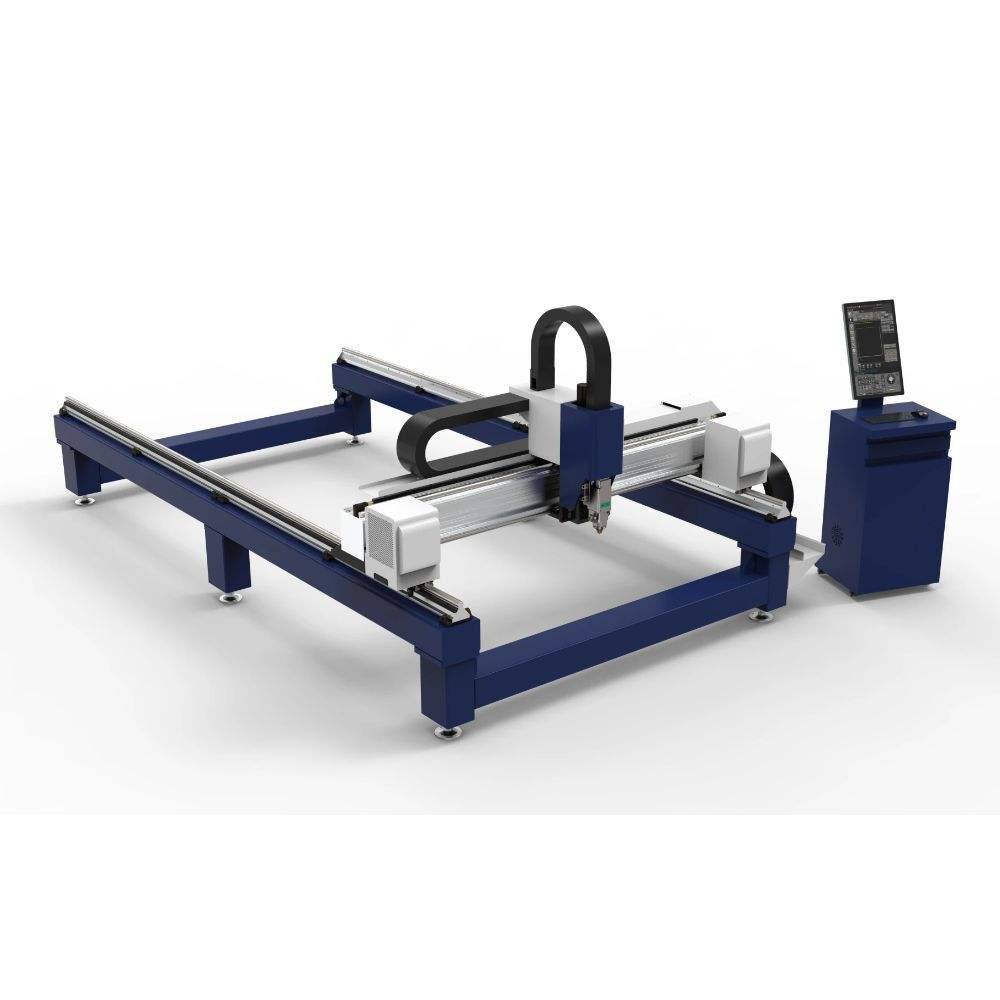
 laser cutting machine” style=”width: 100%; max-width: 800px; height: auto; margin: 20px 0;”>
Understanding the Physics of Laser Cutting Brass
Brass is an alloy primarily composed of copper and zinc. From a laser cutting perspective, it is classified as a “highly reflective” material. In the early days of CO2 laser technology, cutting brass was nearly impossible or extremely hazardous to the machine. The 10.6-micron wavelength of a CO2 laser is largely reflected by the surface of brass, which can send the beam back into the optics, causing catastrophic damage to the resonator.
The 6kW fiber laser operates at a wavelength of approximately 1.07 microns. This shorter wavelength is absorbed much more efficiently by non-ferrous metals. Even with improved absorption, brass remains more reflective than mild steel or stainless steel. The 6kW power level is critical here because it allows the beam to “pierce” the surface reflectivity almost instantaneously. Once the initial melt pool is established, the absorption rate increases significantly, allowing for a stable and continuous laser cutting process. For Tijuana-based engineers, this means the ability to process brass sheets ranging from 1mm to 12mm with high edge quality and minimal dross.
Technical Advantages of 6kW Power for Brass Fabrication
When selecting a laser source, the jump from 3kW to 6kW is not merely about cutting thicker material; it is about the quality of the kerf and the speed of the operation. In the competitive landscape of the Cali-Baja mega-region, throughput is a primary KPI. A 6kW system can cut 3mm brass at speeds exceeding 12 meters per minute, whereas a lower-powered machine might struggle to maintain half that speed without sacrificing edge squareness.
Furthermore, the 6kW source provides a more robust “process window.” In engineering terms, this means the machine is less sensitive to slight variations in material composition or surface finish. Because brass alloys vary (such as C260 “Cartridge Brass” vs. C360 “Free Cutting Brass”), having the extra wattage ensures that the laser cutting remains consistent even if the material batch has higher impurities or a more polished surface that would normally deflect lower-energy beams.
Optimizing Assist Gases for Brass in the Tijuana Climate
In Tijuana’s industrial zones, such as Otay Mesa or Florido, humidity and ambient temperature can fluctuate, affecting the consistency of compressed air systems. When laser cutting brass with a 6kW system, the choice of assist gas is paramount. For most high-quality brass applications, Nitrogen (N2) is the preferred choice. Nitrogen acts as a mechanical force to eject the molten metal from the kerf without causing oxidation. This results in a clean, bright edge that is ready for secondary processes like plating or welding without the need for manual deburring or grinding.
However, some shops in Tijuana utilize Oxygen (O2) for thicker brass sections. While Oxygen speeds up the chemical reaction and allows for thicker cuts, it creates an oxide layer on the edge. For decorative brass components often produced for the hospitality industry in Southern California, this oxide layer is undesirable. Therefore, a 6kW machine equipped with a high-pressure Nitrogen generator is often the gold standard for local shops aiming for the “export-quality” finish required by U.S. clients.
The Importance of Beam Delivery and Back-Reflection Protection
One of the most critical engineering components of a 6kW laser used for brass is the back-reflection isolation system. Despite the higher absorption of fiber wavelengths, the risk of a “bounce-back” during the piercing phase remains. Modern 6kW systems utilized in Tijuana’s top-tier fabrication centers are equipped with optical isolators and sensors that can detect reflected light in microseconds. If a reflection is detected, the system automatically shuts down the beam to protect the fiber cable and the laser source.
For the operator in Tijuana, this means that the machine can run “lights-out” or with minimal supervision on brass jobs that would have previously required constant monitoring. The precision of the cutting head—often featuring auto-focusing lenses—ensures that the focal point is buried slightly into the material, which further helps in stabilizing the melt pool and reducing the chance of reflection.
Applications of Laser-Cut Brass in Tijuana Industries
Tijuana’s industrial base is diverse, and the applications for 6kW laser cutting in brass reflect this variety. In the medical industry, brass components are often used for specialized enclosures or shielding due to their antimicrobial properties and EMI shielding capabilities. The precision of a 6kW fiber laser allows for the intricate geometries required for these small, high-tolerance parts.
In the electronics sector, brass busbars and connectors are common. The ability to use laser cutting for these parts, rather than traditional stamping, allows for rapid prototyping and low-volume production runs. This is a significant advantage for Tijuana’s “NPI” (New Product Introduction) centers, where engineers need to iterate designs quickly before moving to mass production. Furthermore, the automotive sector uses brass for various sensors and decorative trim, where the 6kW laser provides the necessary speed to keep up with high-volume supply chains.
Operational Best Practices for Tijuana Manufacturers
To maintain a 6kW laser cutting system in the unique environment of Tijuana, certain operational protocols must be followed. First is the management of the zinc fumes. Brass contains a significant amount of zinc, which vaporizes during the laser cutting process. Zinc oxide fumes are not only toxic to operators but can also coat the machine’s external optics and linear guides. High-capacity dust extraction and filtration systems are mandatory. Local environmental regulations (SEPROA/PROFEPA) also require specific handling of these particulates.
Secondly, the stability of the electrical grid in certain parts of Tijuana can be a concern for high-power electronics. Most 6kW installations include industrial-grade voltage stabilizers and UPS systems to protect the sensitive laser diodes from power surges or brownouts. Regular maintenance of the chiller system is also vital, as the 6kW source generates significant heat that must be dissipated to maintain a stable beam frequency.
The Economic Impact of 6kW Fiber Lasers on the Region
The transition to 6kW laser cutting technology has allowed Tijuana shops to move up the value chain. By being able to process difficult materials like brass and copper efficiently, local fabricators are no longer just “assembly plants” but are now “advanced manufacturing centers.” This shift attracts higher-paying jobs and more complex projects from across the border. The cost-per-part on a 6kW machine is significantly lower than on older 2kW or 3kW systems when factoring in the speed and the ability to cut thicker gauges in a single pass.
Furthermore, the proximity to San Diego allows for a unique collaborative engineering environment. A design engineer in California can send a CAD file to a Tijuana shop in the morning, and thanks to the high-speed processing of a 6kW laser, have the finished brass prototypes back across the border by the afternoon. This level of integration is what keeps the Tijuana-San Diego region competitive against overseas manufacturing hubs.
Conclusion: The Future of Metal Fabrication in Tijuana
The 6kW sheet metal laser is more than just a piece of equipment; it is a catalyst for industrial growth in Tijuana. As the demand for brass components in green energy (electric vehicles) and high-tech infrastructure continues to grow, the ability to perform high-speed, high-precision laser cutting will be a defining characteristic of successful fabrication shops. By mastering the nuances of assist gas selection, back-reflection protection, and fume management, Tijuana’s manufacturers are well-positioned to remain leaders in the global sheet metal industry. The “yellow metal,” once a headache for laser operators, has now become a testament to the technical prowess of the border region’s engineering community.
















