
Precision Engineering: The 6kW Sheet Metal laser cutting Guide for Brass in Leon
The industrial landscape of Leon has seen a significant transformation with the integration of high-power fiber laser technology. Among the various applications, the 6kW sheet metal laser cutting system stands out as the workhorse for processing non-ferrous metals, particularly brass. Brass, an alloy of copper and zinc, presents unique challenges due to its high reflectivity and thermal conductivity. However, with a 6kW power reserve, fabricators in Leon are now achieving precision and speeds that were previously unattainable with lower-wattage systems or traditional CO2 lasers.
This guide explores the technical intricacies of utilizing a 6kW fiber laser for brass fabrication, focusing on the metallurgical challenges, parameter optimization, and the specific industrial requirements of the Leon manufacturing sector. Whether for decorative architectural elements, electrical components, or automotive fittings, mastering the 6kW platform is essential for maintaining a competitive edge in modern metalworking.
The Physics of Fiber Laser Cutting on Reflective Alloys
Brass is categorized as a “highly reflective” metal. In the context of laser cutting, this means that the material tends to reflect the laser beam’s energy rather than absorbing it, especially in its solid state. A 6kW fiber laser operates at a wavelength of approximately 1.06 microns. This wavelength is absorbed much more efficiently by brass than the 10.6-micron wavelength of a CO2 laser, making fiber technology the industry standard for this material.
The 6kW power threshold is a critical “sweet spot” for brass. At this power level, the energy density at the focal point is sufficient to overcome the material’s initial reflectivity almost instantaneously. Once the surface is breached and a “keyhole” is formed, the absorption rate increases significantly. This prevents back-reflection, which can travel back through the delivery fiber and damage the laser source—a common failure point in older or lower-powered systems.

Technical Specifications and Material Thickness
A 6kW system provides a versatile range for brass thickness. While a 1kW or 2kW laser might struggle with brass over 4mm, a 6kW machine comfortably processes sheet metal up to 12mm or even 15mm with high-quality edge finishes. In the Leon industrial sector, where quick turnaround is vital, the 6kW laser cutting process offers the following speed-to-thickness benchmarks:
- 1mm – 2mm Brass: Cutting speeds can exceed 30-40 meters per minute, providing exceptionally high throughput for mass-produced electrical connectors.
- 5mm – 6mm Brass: The system maintains a stable speed of 4-6 meters per minute, ensuring a clean kerf with minimal dross.
- 10mm+ Brass: At these thicknesses, the 6kW power allows for consistent piercing and a steady feed rate of approximately 0.8 to 1.2 meters per minute.
The ability to handle these variations makes the 6kW laser cutting machine an indispensable tool for Leon’s diverse manufacturing base, which ranges from delicate jewelry components to heavy-duty industrial valves.
Optimizing Assist Gases: Nitrogen vs. Oxygen
The choice of assist gas is paramount when laser cutting brass. The gas serves two purposes: it clears the molten metal from the kerf and protects the cutting head from spatter. For brass, Nitrogen is the preferred choice for most 6kW applications. Nitrogen is an inert gas that prevents oxidation of the cut edge, resulting in a bright, clean finish that often requires no secondary deburring or polishing.
When using Nitrogen, high pressure (typically between 12 and 18 bar) is required to ensure the molten brass is ejected quickly. Because brass has a lower melting point than steel but a higher fluidity, the timing of the gas blast must be perfectly synchronized with the laser pulse. Oxygen is rarely used for brass as it causes heavy oxidation and can lead to an unstable cutting process due to the exothermic reaction, which often results in a jagged edge and excessive dross on the underside of the sheet.
Nozzle Selection and Focal Position
For a 6kW laser cutting system, nozzle geometry plays a vital role in gas dynamics. When cutting brass, a “double-layer” or “high-speed” nozzle is often employed. The diameter of the nozzle (typically 1.5mm to 3.0mm depending on thickness) must be matched to the beam diameter to ensure that the gas flow is laminar and centered. Any turbulence in the gas flow can lead to “striations” or rough lines on the cut surface.
The focal position for brass is usually set “negative,” meaning the focus point of the laser is positioned slightly inside or at the bottom of the material. This creates a wider kerf at the bottom, which facilitates the easy exit of molten metal. For a 6kW system, the precision of the autofocus cutting head allows for real-time adjustments, ensuring that even if the sheet metal has slight warping, the cut quality remains consistent across the entire worktable.
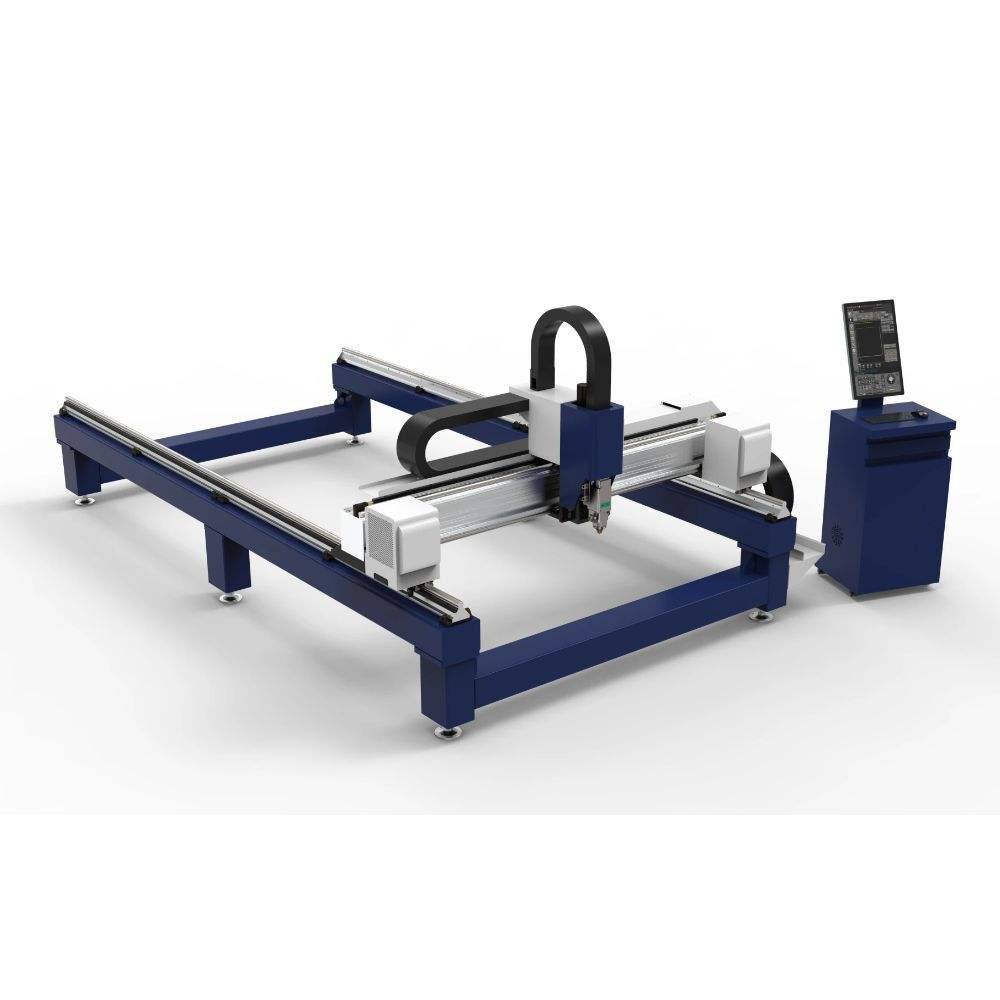
Challenges: Heat Management and Dross Control
One of the primary challenges in laser cutting brass is its high thermal conductivity. Heat dissipates rapidly from the cutting zone into the surrounding material. In Leon’s high-production environments, this can lead to “heat soak,” where the entire sheet becomes hot, causing the material to expand and potentially move during the cutting process. This is particularly problematic for intricate designs or small parts.
To mitigate this, 6kW systems utilize “pulsed piercing” and “cooling points.” By pulsing the laser during the initial pierce rather than using a continuous beam, the heat input is localized. Furthermore, sophisticated nesting software can sequence the cuts to distribute heat evenly across the sheet, preventing localized overheating. Dross—the solidified metal droplets on the bottom of the cut—is controlled by fine-tuning the relationship between cutting speed and gas pressure. If the speed is too high, the gas cannot clear the melt; if too slow, the excess heat creates a larger melt pool than the gas can handle.
The Industrial Impact in Leon
Leon has established itself as a hub for both the automotive and leather industries, but the growth of the metal fabrication sector is equally significant. The adoption of 6kW laser cutting technology has allowed local shops to move away from traditional mechanical shearing and CNC milling for brass parts. The laser offers a level of geometric complexity that mechanical tools cannot match, such as sharp internal corners and micro-perforations.
In the automotive sector, brass is often used for bushings, sensors, and decorative trim. The 6kW laser’s ability to produce these parts with high repeatability and tight tolerances (often within +/- 0.05mm) ensures that local suppliers can meet the rigorous quality standards of global OEMs. Additionally, the decorative and architectural markets in Leon utilize laser cutting for custom brass signage and interior panels, where the aesthetic quality of the cut edge is as important as its dimensional accuracy.
Maintenance and Safety for High-Power Systems
Operating a 6kW laser requires strict adherence to maintenance protocols, especially when processing reflective materials. The protective window (the “cover glass”) is the most vulnerable component. Even a microscopic speck of dust can absorb laser energy, heat up, and shatter the glass or damage the lens. When cutting brass, the risk of “back-splash” from molten metal is higher, requiring frequent inspection of the nozzle and the protective window.
Furthermore, safety is a critical concern. A 6kW fiber laser is a Class 4 laser product. The beam is invisible to the human eye, and even a reflected beam can cause permanent blindness or severe skin burns. In Leon’s fabrication shops, fully enclosed “cabin-style” machines are the standard. These enclosures are equipped with specialized laser-rated glass windows that filter out the specific wavelength of the fiber laser, allowing operators to monitor the process safely.
Conclusion: The Future of Brass Fabrication
The 6kW sheet metal laser cutting system represents a pinnacle of efficiency for brass fabrication in Leon. By combining high power with advanced motion control and gas management, fabricators can overcome the inherent metallurgical challenges of brass. The result is a process that is faster, cleaner, and more versatile than any previous technology. As the industrial demands of the region continue to evolve, the 6kW fiber laser will remain a cornerstone of high-precision manufacturing, enabling Leon to maintain its status as a leader in technical metalwork.
For businesses looking to invest in this technology, the focus should remain on the synergy between machine power, operator expertise, and high-quality auxiliary equipment. With the right parameters and a 6kW platform, the possibilities for brass laser cutting are virtually limitless, ranging from the smallest electronic components to large-scale industrial assemblies.
















